‘Read More Books’ challenge: week 5: 208-259 of the list of 623 of the best books ever!

Are you ready for week five of our Read More Books challenge? 

Read HERE to learn about it. It’s never too late to join in.

Check the ones you may have missed or want to review:

WEEK ONE   WEEK TWO   WEEK THREE   WEEK FOUR   

How did you do with your reading? Even if you didn’t finish the book you selected, it counts if you select one for this week to add to your TBR pile.

208. Dead Souls — by Nikolai Gogol
209. Rabbit, Run — by John Updike
210. The Complete Stories — by Flannery O’Connor
211. The Making of Americans — by Gertrude Stein
212. Crash — by J. G. Ballard
213. The Glass Bead Game — by Hermann Hesse
214. Darkness at Noon — by Arthur Koestler
215. The Plague — by Albert Camus
216. The Soft Machine — by William S. Burroughs
217. Les Liaisons Dangereuses — by Pierre Choderlos de Laclos
218. The Wanderer — by Alain-Fournier
219. Winesburg, Ohio — by Sherwood Anderson
220. Froth on the Daydream — by Boris Vian
221. Trainspotting — by Irvine Welsh
222. The Moviegoer — by Walker Percy
223. The Canterbury Tales — by Geoffrey Chaucer
224. Main Street — by Sinclair Lewis
225. Take It or Leave It — by Raymond Federman
226. Wild Swans: Three Daughters of China — by Jung Chang
227. Nightmare Abbey — by Thomas Love Peacock
228. My Name is Red — by Orhan Pamuk
229. The Second Sex — by Simone de Beauvoir
230. The Awakening — by Kate Chopin
231. From Here to Eternity — by James Jones
232. The Black Sheep — by Honoré de Balzac
233. The Man Without Qualities — by Robert Musil
234. The Way of All Flesh — by Samuel Butler
235. The Wapshot Chronicle — by John Cheever
236. Going Native — by Stephen Wright
237. The Charterhouse of Parma — by Stendhal
238. The Lost Honor of Katharina Blum — by Heinrich Böll
239. The Complete Works of William Shakespeare — by William Shakespeare
240. The Cairo Trilogy: Palace Walk, Palace of Desire, Sugar Street — by Naguib Mahfouz
241. Stranger in a Strange Land — by Robert A. Heinlein
242. In Cold Blood — by Truman Capote
243. The Code of the Woosters — by P. G. Wodehouse
244. The Red and the Black — by Stendhal
245. Sybil, of Two Nations — by Benjamin Disraeli
246. In the Heart of the Heart of the Country & Other Stories — by William H. Gass
247. Paroles — by Jacques Prévert
248. The Maltese Falcon — by Dashiell Hammett
249. Alcools — by Guillaume Apollinaire
250. Wise Blood — by Flannery O’Connor
251. The Magus — by John Fowles
252. The Wonderful Adventures of Nils — by Selma Lagerlöf
253. The Blue Lotus – by Hergé
254. The Naked and the Dead — by Norman Mailer
255. Orlando: A Biography — by Virginia Woolf
256. Hunger — by Knut Hamsun
257. The Time Traveler’s Wife — by Audrey Niffenegger
258. A Tale of Two Cities — by Charles Dickens
259. A Wrinkle in Time — by Madeleine L’Engle
 
I love to hear from you!  From the above list:
  • Which books have you read?
  • Which books do you want to read?
  • Which books are you going to obtain this week?(Even if you are not officially taking the Read More Books challenge I would love to hear about your reading.)

Note: I got permission to share this list on my blog. (Thank you, Stuart!) You could go HERE for the list of “623 of the best books ever written” and see them all at once for yourself, and/or you can follow the list here a few at a time.

Thanks for reading, and … Creative Musings! :)

‘Read More Books’ Challenge: Week 4: 156-207 of the list of 623 of the best books ever!

Are you ready for week four of our Read More Books challenge? 

Read HERE to learn about it. It’s never too late to join in.

Check the ones you may have missed or want to review:

WEEK ONE   WEEK TWO   WEEK THREE

How did you do with your reading? We had an extra week to read between postings this time. Even if you didn’t finish the book you selected, it counts if you select one for this week to add to your TBR pile.

Here is week four’s list:

156. Ironweed — by William J. Kennedy
157. Persuasion — by Jane Austen
158. The Rainbow — by D. H. Lawrence
159. A Dance to the Music of Time — by Anthony Powell
160. The Unbearable Lightness of Being — by Milan Kundera
161. Kim — by Rudyard Kipling
162. Brighton Rock — by Graham Greene
163. One Flew Over the Cuckoo’s Nest — by Ken Kesey
164. The Adventures of Augie March — by Saul Bellow
165. A Bend in the River — by V. S. Naipaul
166. The Hound of the Baskervilles — by Sir Arthur Conan Doyle
167. Housekeeping — by Marilynne Robinson
168. Sophie’s Choice — by William Styron
169. Ethan Frome — by Edith Wharton
170. Buddenbrooks — by Thomas Mann
171. Thérèse Desqueyroux — by François Mauriac
172. The Killer Angels — by Michael Shaara
173. Anne of Green Gables — by L. M. Montgomery
174. If This Is a Man and The Truce — by Primo Levi
175. The Bridge of San Luis Rey — by Thornton Wilder
176. A Moveable Feast — by Ernest Hemingway
177. Dubliners — by James Joyce
178. Ficciones — by Jorge Luis Borges
179. Schindler’s List — by Thomas Keneally
180. The Prime of Miss Jean Brodie — by Muriel Spark
181. Strange Case of Dr. Jekyll and Mr. Hyde — by Robert Louis Stevenson
182. Far from the Madding Crowd — by Thomas Hardy
183. Gilead — by Marilynne Robinson
184. Nausea — by Jean-Paul Sartre
185. The Wings of the Dove — by Henry James
186. The Little Prince — by Antoine de Saint-Exupéry
187. The Red Badge of Courage — by Stephen Crane
188. The Odyssey — by Homer
189. Memoirs of a Geisha — by Arthur Golden
190. Men Without Women — by Ernest Hemingway
191. The Tale of Genji — by Murasaki Shikibu
192. Cannery Row — by John Steinbeck
193. Life of Pi — by Yann Martel
194. In Our Time — by Ernest Hemingway
195. The Pilgrim’s Progress — by John Bunyan
196. Jude the Obscure — by Thomas Hardy
197. Breakfast of Champions — by Kurt Vonnegut
198. Six Characters in Search of an Author — by Luigi Pirandello
199. The Day of the Locust — by Nathanael West
200. The Stand — by Stephen King
201. Austerlitz — by W. G. Sebald
202. Cat’s Cradle — by Kurt Vonnegut
203. The Public Burning — by Robert Coover
204. Harry Potter and the Goblet of Fire — by J. K. Rowling
205. The Wind-Up Bird Chronicle — by Haruki Murakami
206. Man’s Fate — by Andre Malraux
207. Jazz — by Toni Morrison
 
 
I love to hear from you!  From the above list:
  • Which books have you read?
  • Which books do you want to read?
  • Which books are you going to obtain this week?(Even if you are not officially taking the Read More Books challenge I would love to hear about your reading.)

Note: I got permission to share this list on my blog. (Thank you, Stuart!) You could go HERE for the list of “623 of the best books ever written” and see them all at once for yourself, and/or you can follow the list here a few at a time.

Thanks for reading, and … Creative Musings! 🙂

‘Read More Books’ challenge: Week 3: 104-155 of the list of 623 best books ever!

Are you ready for week three of our Read More Books challenge?

Read HERE to learn about it. It’s not too late to join in.

Check WEEK ONE and WEEK TWO of the list.

How did you do with your reading? Even if you didn’t finish the book you selected, it counts if you select one for this week to add to your TBR pile.

NOTE: Next Thursday, Part 10 of Sue Harrison’s writers workshop will be the highlight. Come back October 31 for part four of the reading challenge. This gives you more time to read until the next list of books. 🙂

Here is week three’s list:

104. The Heart is A Lonely Hunter — by Carson McCullers
105. Vanity Fair — by William Makepeace Thackeray
106. Commedia — by Dante Alighieri
107. The Count of Monte Cristo — by Alexandre Dumas
108. An American Tragedy — by Theodore Dreiser
109. White Noise — by Don DeLillo
110. The World According to Garp — by John Irving
111. Atonement — by Ian McEwan
112. Nostromo — by Joseph Conrad
113. The House of Mirth — by Edith Wharton
114. The Brothers Karamazov — by Fyodor Dostoevsky
115. The Good Soldier — by Ford Madox Ford
116. The Name of the Rose — by Umberto Eco
117. The Shipping News — by Annie Proulx
118. The Woman in White — by Wilkie Collins
119. Herzog — by Saul Bellow
120. The Counterfeiters — by Andre Gide
121. My Antonia — by Willa Cather
122. Scoop — by Evelyn Waugh
123. A Room with a View — by E. M. Forster
124. Bible: King James Version
125. Wide Sargasso Sea — by Jean Rhys
126. Love in The Time of Cholera — by Gabriel Garcia Marquez
127. The Remains of the day — by Kazuo Ishiguro
128. The Big Sleep — by Raymond Chandler
129. I, Claudius — by Robert Graves
130. Tropic of Cancer — by Henry Miller
131. Tender is the Night — by F. Scott Fitzgerald
132. Journey to the End of the Night — by Louis-Ferdinand Celine
133. The War of the Worlds — by H. G. Wells
134. A Suitable Boy — by Vikram Seth
135. Possession — by A. S. Byatt
136. A Confederacy of Dunces — by John Kennedy Toole
137. The Bell Jar — by Sylvia Plath
138. Waiting for Godot — by Samuel Beckett
139. The Brief Wondrous Life of Oscar Wao — by Junot Diaz
140. Being and Nothingness — by Jean-Paul Sartre
141. A Thousand Acres — by Jane Smiley
142. The Amazing Adventures of Kavalier and Clay — by Michael Chabon
143. The Gulag Archipelago, 1918-1956: An Experiment in Literary Investigation — by Aleksandr Solzhenitsyn
144. Charlie and the Chocolate Factory — by Roald Dahl
145. Lady Chatterley’s Lover — by D. H. Lawrence
146. JR — by William Gaddis
147. The Histories — by Herodotus
148. Doctor Zhivago — by Boris Pasternak
149. Lucky Jim — by Kingsley Amis
150. Underworld — by Don DeLillo
151. If on a Winter’s Night a Traveler — by Italo Calvino
152. Life — by Georges Perec
153. The Master and Margarita — by Mikhail Bulgakov
154. The Good Earth — by Pearl S. Buck
155. Henderson the Rain King — by Saul Bellow
 
From the above list:
  • Which books have you read?
  • Which books do you want to read?
  • Which books are you going to obtain this week?(Even if you are not officially taking the Read More Books challenge I would love to hear about your reading.)

Note: I got permission to share this list on my blog. (Thank you, Stuart!) You could go HERE for the list of “623 of the best books ever written” and see them all at once for yourself, and/or you can follow the list here a few at a time.

Thanks for reading, and … Creative Musings! 🙂

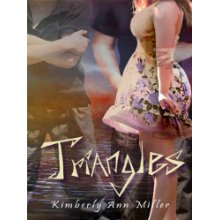
Book Review: Triangles – by Kimberly Ann Miller

Triangles - Kimberly Ann MillerBook: Triangles
Author: Kimberly Ann Miller
Publisher: Spencer Hill Press
Date: June 18, 2013
Genre: young adult
Pages: 216
Price: $9.95
My rating: a fairly good read based on a fascinating concept


I received this book (ARC) from the publisher in exchange for my honest review.

This story is told mostly from the point-of-view of a seventeen-year-old girl, Autumn, who is an unhappy complainer. She gives her sister a hard time, their dad died, their mother is very ill, and we find out she is not happy about a nice guy who is constantly bestowing her with little gifts at work – which she rewards by attempting to get rid of his attention through her rude behaviour toward him.

When Autumn agrees to go on a cruise with her sister she does so with reluctance. It was what she thought would be a good temporary escape, a chance to get away from the pain they are going through in their family life. What she gets on this cruise is a trip through the Bermuda Triangle that is confusing and very strange.

Each time Autumn has an alternate reality experience she is as shocked as before, even though she is aware it is happening. Her life gets more messed up each time a change occurs, but it doesn’t change her rude and hateful attitude.

The author did a convincing job of making Autumn an unlikeable person and – if I remember correctly – she is the only one in the book to use bad language. She comes across as crude, rude, and a hateful brat a lot of the time.

On this cruise she is pursued by two guys, and in each alternate reality shift they also change in personality and circumstance. Terrible things happen, confusing things happen, surprising things happen, and Autumn’s fear is that she will be trapped in the Bermuda Triangle forever and not be able to live the life she is learning she really wants.

Triangles – by Kimberly Ann Miller – is a fairly quick read. The mystery of the Bermuda Triangle is a fascinating topic to write a fictional young adult novel around. Although a few places did not make sense to me and tripped me up a bit, the idea of someone getting caught in the Triangle and living through it is an interesting one. It certainly makes the reader think.

You can find Triangles listed on my BUY THE BOOK! page.

Thanks for reading, and … Creative Musings!  🙂

‘Read More Books’ Challenge: Week 2: 53-103 of the list of 623 of the best books ever!

Are you ready for week two of our Read More Books challenge?

Read HERE to learn about it. It’s not too late to join in.

Check WEEK ONE of the list if you missed it.

There were a few responses to week one’s challenge. How did you do with your reading? Even if you didn’t finish the book you selected, it counts if you select one for this week to add to your TBR pile.

Here is week two’s list of 52 books:

53. A Prayer for Owen Meany — by John Irving
54. Emma — by Jane Austen
55. David Copperfield — by Charles Dickens
56. The Portrait of a Lady — by Henry James
57. The Trial — by Franz Kafka
58. Crime and Punishment — by Fyodor Dostoyevsky
59. A Clockwork Orange — by Anthony Burgess
60. The Age of Innocence — by Edith Wharton
61. Don Quixote — by Miguel de Cervantes
62. As I Lay Dying — by William Faulkner
63. His Dark Materials — by Philip Pullman
64. Brideshead Revisited — by Evelyn Waugh
65. The Golden Notebook — by Doris Lessing
66. Adventures of Huckleberry Finn — by Mark Twain
67. Things Fall Apart — by Chinua Achebe
68. Tom Jones — by Henry Fielding
69. Harry Potter and the Philosopher’s Stone — by J. K. Rowling
70. Song of Solomon — by Toni Morrison
71. Molloy; Malone Dies; The Unnamable — by Samuel Beckett
72. Finnegans Wake — by James Joyce
73. Absalom, Absalom! — by William Faulkner
74. The Life and Opinions of Tristram Shandy, Gentleman — by Laurence Sterne
75. Charlotte’s Web — by E. B. White
76. The Ambassadors — by Henry James
77. Sons and Lovers — by D. H. Lawrence
78. A Farewell to Arms — by Ernest Hemingway
79. Women in Love — by D. H. Lawrence
80. Birdsong — by Sebastian Faulks
81. Gulliver’s Travels — by Jonathan Swift
82. Watership Down — by Richard Adams
83. Gravity’s Rainbow — by Thomas Pynchon
84. Frankenstein — by Mary Shelley
85. Clarissa: Or the History of a Young Lady — by Samuel Richardson
86. The Old Man and the Sea — by Ernest Hemingway
87. Dune — by Frank Herbert
88. The Life and Adventures of Robinson Crusoe — by Daniel Defoe
89. Go Tell It on the Mountain — by James Baldwin
90. All the King’s Men — by Robert Penn Warren
91. The Magic Mountain — by Thomas Mann
92. The Call of the Wild — by Jack London
93. The Tin Drum — by Gunter Grass
94. The 42nd Parallel — by John Dos Passos
95. Under the Volcano — by Malcolm Lowry
96. Disgrace — by J. M. Coetzee
97. The Diary of a Young Girl — by Anne Frank
98. Bleak House — by Charles Dickens
99. Light in August — by William Faulkner
100. Scarlet Letter — by Nathaniel Hawthorne
101. Pale Fire — by Vladimir Nabokov
102. Captain Corelli’s Mandolin — by Louis de Bernieres
103. Howards End — by E. M. Forster
 
From the above list:
  • Which books have you read?
  • Which books do you want to read?
  • Which books are you going to obtain this week?(Even if you are not officially taking the Read More Books challenge I would love to hear about your reading.)

Note: I got permission to share this list on my blog. (Thank you, Stuart!) You could go HERE for the list of “623 of the best books ever written” and see them all at once for yourself, and/or you can follow the list here a few at a time.

Thanks for reading, and … Creative Musings! 🙂

‘Read More Books’ Challenge: Week 1: 1-52 of the list of 623 of the best books ever!

Are you ready for the challenge?

Thanks to Erik of This Kid Reviews Books, my challenge now has a name: Read More Books Challenge.

Please go to THIS SHORT POST first if you don’t know what I’m talking about.

MY OFFER

Because I know you love to read – or read and write – I have decided to give you the list I found, and I got permission to do so. (Thank you, Stuart!) You could go HERE for the list of “623 of the best books ever written” and see them all at once for yourself, and/or you can follow the list here a few at a time.

The reason I thought you might enjoy the list in sections is so that you can see which ones you have already read – a few at a time – and then —

MY CHALLENGE

… you will have a week to buy or borrow the ones you want to read before my next installment of more of the list. I was going to divide it between six posts, but changed that to twelve posts because the shorter lists are easier to work with if you want to shop for a book each week. How’s that for a little incentive for those of us who can find time to read more often? Besides, it might be fun! 🙂 And who doesn’t appreciate an excuse to book shop?

Each Thursday I will post another portion of the list of “623 of the best books ever written” until we get to the end of twelve posts. NOTE: On the fourth Thursday of each month it will not be posted because we have Sue Harrison’s writers workshop that day – and I don’t want to mess with a good thing!

Here are the first 52 books of “623 of the best books ever written” as compiled and listed on a list of books website.

  1. The Great Gatsby — by F. Scott Fitzgerald
  2. The Grapes of Wrath — by John Steinbeck
  3. Nineteen Eighty-Four — by George Orwell
  4. Ulysses — by James Joyce
  5. Lolita — by Vladimir Nabokov
  6. Catch-22 — by Joseph Heller
  7. The Catcher in the Rye — by J. D. Salinger
  8. Beloved — by Toni Morrison
  9. The Sound and the Fury — by William Faulkner
  10. To Kill a Mockingbird — by Harper Lee
  11. The Lord of the Rings — by J. R. R. Tolkien
  12. One Hundred Years of Solitude — by Gabriel Garcia Márquez
  13. Brave New World — by Aldous Huxley
  14. To The Lighthouse — by Virginia Woolf
  15. Invisible Man — by Ralph Ellison
  16. Gone With The Wind — by Margaret Mitchell
  17. Jane Eyre — by Charlotte Brontë
  18. On The Road — by Jack Kerouac
  19. Pride and Prejudice — by Jane Austen
  20. Lord of the Flies — by William Golding
  21. Middle March — by George Eliot
  22. Anna Karenina — by Leo Tolstoy
  23. Animal Farm — by George Orwell
  24. A Passage to India — by E. M. Forster
  25. In Search of Lost Time — by Marcel Proust
  26. Wuthering Heights — by Emily Brontë
  27. The Chronicles of Narnia — by C. S. Lewis
  28. The Color Purple — by Alice Walker
  29. Midnight’s Children — by Salman Rushdie
  30. A Portrait of the Artist as a Young Man — by James Joyce
  31. Winnie-the-Pooh — by A. A. Milne
  32. Heart of Darkness — by Joseph Conrad
  33. Mrs Dalloway — by Virginia Woolf
  34. Slaughterhouse-Five — by Kurt Vonnegut
  35. War and Peace — by Leo Tolstoy
  36. Of Mice and Men — by John Steinbeck
  37. Moby-Dick — by Herman Melville
  38. Little Women — by Louisa Mae Alcott
  39. Native Son — by Richard Wright
  40. The Hitchhiker’s Guide to the Galaxy — by Douglas Adams
  41. Great Expectations — by Charles Dickens
  42. The Sun Also Rises — by Ernest Hemingway
  43. Rebecca — by Daphne du Maurier
  44. The Stranger — by Albert Camus
  45. Alice’s Adventures in Wonderland and Through the Looking Glass — by Lewis Carroll
  46. For Whom the Bell Tolls — by Ernest Hemingway
  47. The Hobbit — by J. R. R. Tolkien
  48. Madame Bovary — by Gustave Flaubert
  49. The Wind in the Willows — by Kenneth Grahame
  50. The Handmaid’s Tale — by Margaret Atwood
  51. Tess of the D’Urbervilles — by Thomas Hardy
  52. Their Eyes Were Watching God — by Zora Neale Hurston

From the above list:

  • Which books have you read?
  • Which books do you want to read?
  • Which books are you going to obtain this week?(Even if you are not taking the challenge I would love to hear about your reading.)

Thanks for reading, and … Creative Musings! 🙂

The Case for Good Taste in Children’s Books – (reprinted by permission)

It has been very hard for me to “buckle down” and “just write”, likely because I feel used up in one way or another almost every day. I’m trying to get back into blogging more because I enjoy it and because I hope I’m posting things of help to you, my readers.

The following article is long but one worth sharing, and I’m doing so with permission. You can check out the publication in which it’s printed: here.

PLEASE NOTE: THIS ARTICLE IS NOT INTENDED FOR YOUNG READERS BECAUSE OF SOME OF ITS CONTENT.

The Case for Good Taste in Children’s Books MEGHAN COX GURDON has been the children’s book reviewer for the Wall Street Journal since 2005. Her work has also appeared in numerous other publications, including the Washington Post, the Washington Examiner, the San Francisco Chronicle, National Review, and the Weekly Standard. In the 1990s, she worked as an overseas correspondent in Hong Kong, Tokyo, and London, and traveled and reported from Cambodia, Somalia, China, Israel, South Korea, and Northern Ireland. She graduated magna cum laude from Bowdoin College in 1986 and lives near Washington, D.C., with her husband and their five children.The following is adapted from a speech delivered at Hillsdale College on March 12, 2013, sponsored by the College’s Dow Journalism Program.ON JUNE 4, 2011, the number one trending topic on Twitter was the Anthony Weiner scandal. I happen to remember that, because the number two topic on Twitter that day—almost as frenzied, though a lot less humorous—had to do with an outrageous, intolerable attack on Young Adult literature . . . by me. Entitled “Darkness Too Visible,” my article discussed the increasingly dark current that runs through books classified as YA, for Young Adult—books aimed at readers between 12 and 18 years of age—a subset that has, in the four decades since Young Adult became a distinct category in fiction, become increasingly lurid, grotesque, profane, sexual, and ugly.Books show us the world, and in that sense, too many books for adolescents act like funhouse mirrors, reflecting hideously distorted portrayals of life. Those of us who have grown up understand that the teen years can be fraught and turbulent—and for some kids, very unhappy—but at the same time we know that in the arc of human life, these years are brief. Today, too many novels for teenagers are long on the turbulence and short on a sense of perspective. Nor does it help that the narrative style that dominates Young Adult books is the first person present tense—“I, I, I,” and “now, now, now.” Writers use this device to create a feeling of urgency, to show solidarity with the reader and to make the reader feel that he or she is occupying the persona of the narrator. The trouble is that the first person present tense also erects a kind of verbal prison, keeping young readers in the turmoil of the moment just as their hormones tend to do. This narrative style reinforces the blinkers teenagers often seem to be wearing, rather than drawing them out and into the open.

Bringing Judgment

The late critic Hilton Kramer was seated once at a dinner next to film director Woody Allen. Allen asked him if he felt embarrassed when he met people socially whom he’d savaged in print. “No,” Kramer said, “they’re the ones who made the bad art. I just described it.” As the story goes, Allen fell gloomily silent, having once made a film that had received the Kramer treatment.

I don’t presume to have a nose as sensitive as Hilton Kramer’s—but I do know that criticism is pointless if it’s only boosterism. To evaluate anything, including children’s books, is to engage the faculty of judgment, which requires that great bugbear of the politically correct, “discrimination.” Thus, in responding to my article, YA book writers Judy Blume and Libba Bray charged that I was giving comfort to book-banners, and Publisher’s Weekly warned of a “danger” that my arguments “encourage a culture of fear around YA literature.” But I do not, in fact, wish to ban any books or frighten any authors. What I do wish is that people in the book business would exercise better taste; that adult authors would not simply validate every spasm of the teen experience; and that our culture was not marching toward ever-greater explicitness in depictions of sex and violence.

Books for children and teenagers are written, packaged, and sold by adults. It follows from this that the emotional depictions they contain come to young people with a kind of adult imprimatur. As a school librarian in Idaho wrote to her colleagues in my defense: “You are naïve if you think young people can read a dark and violent book that sits on the library shelves and not believe that that behavior must be condoned by the adults in their school lives.”

What kind of books are we talking about? Let me give you three examples—but with a warning that some of what you’re about to hear is not appropriate for younger listeners.

A teenaged boy is kidnapped, drugged, and nearly raped by a male captor. After escaping, he comes across a pair of weird glasses that transport him to a world of almost impossible cruelty. Moments later, he finds himself facing a wall of horrors, “covered with impaled heads and other dripping, black-rot body parts: hands, hearts, feet, ears, penises. Where the f— was this?”

That’s from Andrew Smith’s 2010 Young Adult novel, The Marbury Lens.

A girl struggles with self-hatred and self-injury. She cuts herself with razors secretly, but her secret gets out when she’s the victim of a sadistic sexual prank. Kids at school jeer at her, calling her “cutterslut.” In response, “she had sliced her arms to ribbons, but the badness remained, staining her insides like cancer. She had gouged her belly until it was a mess of meat and blood, but she still couldn’t breathe.”

That’s from Jackie Morse Kessler’s 2011 Young Adult novel, Rage.

I won’t read you the most offensive excerpts from my third example, which consist of explicit and obscene descriptions by a 17-year-old female narrator of sexual petting, of oral sex, and of rushing to a bathroom to defecate following a breakup. Yet School Library Journal praised Daria Snadowsky’s 2008 Young Adult novel, Anatomy of a Boyfriend, for dealing “in modern terms with the real issues of discovering sex for the first time.” And Random House, its publisher, gushed about the narrator’s “heartbreakingly honest voice” as she recounts the “exquisite ups and dramatic downs of teenage love and heartbreak.”

The book industry, broadly speaking, says: Kids have a right to read whatever they want. And if you follow the argument through it becomes: Adults should not discriminate between good and bad books or stand as gatekeepers, deciding what young people should read. In other words, the faculty of judgment and taste that we apply in every other area of life involving children should somehow vaporize when it comes in contact with the printed word.

I appeared on National Public Radio to discuss these issues with the Young Adult book author Lauren Myracle, who has been hailed as a person “on the front lines in the fight for freedom of expression”—as if any controversy over whether a book is appropriate for children turns on the question of the author’s freedom to express herself. Myracle made clear that she doesn’t believe there should be any line between adult literature and literature for young people. In saying this, she was echoing the view that prevails in many progressive, secular circles—that young people should encounter material that jolts them out of their comfort zone; that the world is a tough place; and that there’s no point shielding children from reality. I took the less progressive, less secular view that parents should take a more interventionist approach, steering their children away from books about sex and horror and degradation, and towards books that make aesthetic and moral claims.

Now, although it may seem that our culture is split between Left and Right on the question of permissiveness regarding children’s reading material, in fact there is not so much division on the core issue as might appear. Secular progressives, despite their reaction to my article, have their own list of books they think young people shouldn’t read—for instance, books they claim are tinged with racism or jingoism or that depict traditional gender roles. Regarding the latter, you would not believe the extent to which children’s picture books today go out of the way to show father in an apron and mother tinkering with machinery. It’s pretty funny. But my larger point here is that the self-proclaimed anti-book-banners on the Left agree that books influence children and prefer some books to others.

Indeed, in the early years of the Cold War, many left-wing creative people in America gravitated toward children’s literature. Philip Nel, a professor at Kansas State University, has written that Red-hunters, “seeing children’s books as a field dominated by women . . . deemed it less important and so did not watch it closely.” Among the authors I am referring to are Theodor Geisel (Dr. Seuss) and Ruth Krauss, author of the 1952 classic A Hole is to Dig, illustrated by a young Maurice Sendak. Krauss was quite open in her belief that children’s literature was an excellent means of putting left-wing ideas into young minds. Or so she hoped.

When I was a little girl I read The Cat in the Hat, and I took from it an understanding of the sanctity of private property—it outraged me when the Cat and Thing One and Thing Two rampaged through the children’s house while their mother was away. Dr. Seuss was probably not intending to inculcate capitalist ideas—quite the contrary. But it happened in my case, and the point is instructive.

Taste and Beauty

A recent study conducted at Virginia Tech found that college women who read “chick lit”—light novels that deal with the angst of being a modern woman—reported feeling more insecure about themselves and their bodies after reading novels in which the heroines feel insecure about themselves and their bodies. Similarly, federal researchers were puzzled for years by a seeming paradox when it came to educating children about the dangers of drugs and tobacco. There seemed to be a correlation between anti-drug and anti-tobacco programs in elementary and middle schools and subsequent drug and tobacco use at those schools. It turned out that at the same time children were learning that drugs and tobacco were bad, they were taking in the meta-message that adults expected them to use drugs and tobacco.

This is why good taste matters so much when it comes to books for children and young adults. Books tell children what to expect, what life is, what culture is, how we are expected to behave—what the spectrum is. Books don’t just cater to tastes. They form tastes. They create norms—and as the examples above show, the norms young people take away are not necessarily the norms adults intend. This is why I am skeptical of the social utility of so-called “problem novels”—books that have a troubled main character, such as a girl with a father who started raping her when she was a toddler and anonymously provides her with knives when she is a teenager hoping that she will cut herself to death. (This scenario is from Cheryl Rainfield’s 2010 Young Adult novel, Scars, which School Library Journal hailed as “one heck of a good book.”) The argument in favor of such books is that they validate the real and terrible experiences of teenagers who have been abused, addicted, or raped—among other things. The problem is that the very act of detailing these pathologies, not just in one book but in many, normalizes them. And teenagers are all about identifying norms and adhering to them.

In journalist Emily Bazelon’s recent book about bullying, she describes how schools are using a method called “social norming” to discourage drinking and driving. “The idea,” she writes, “is that students often overestimate how much other kids drink and drive, and when they find out that it’s less prevalent than they think—outlier behavior rather than the norm—they’re less likely to do it themselves.” The same goes for bullying: “When kids understand that cruelty isn’t the norm,” Bazelon says, “they’re less likely to be cruel themselves.”

Now isn’t that interesting?

Ok, you say, but books for kids have always been dark. What about Hansel and Gretel? What about the scene in Beowulf where the monster sneaks into the Danish camp and starts eating people?

Beowulf is admittedly gruesome in parts—and fairy tales are often scary. Yet we approach them at a kind of arm’s length, almost as allegory. In the case of Beowulf, furthermore, children reading it—or having it read to them—are absorbing the rhythms of one of mankind’s great heroic epics, one that explicitly reminds us that our talents come from God and that we act under God’s eye and guidance. Even with the gore, Beowulf won’t make a child callous. It will help to civilize him.

English philosopher Roger Scruton has written at length about what he calls the modern “flight from beauty,” which he sees in every aspect of our contemporary culture. “It is not merely,” he writes, “that artists, directors, musicians and others connected with the arts”—here we might include authors of Young Adult literature—“are in a flight from beauty . . . . There is a desire to spoil beauty . . . . For beauty makes a claim on us; it is a call to renounce our narcisissm and look with reverence on the world.”

We can go to the Palazzo Borghese in Rome and stand before Caravaggio’s painting of David with the head of Goliath, and though we are looking at horror we are not seeing ugliness. The light that plays across David’s face and chest, and that slants across Goliath’s half-open eyes and mouth, transforms the scene into something beautiful. The problem with the darker offerings in Young Adult literature is that they lack this transforming and uplifting quality. They take difficult subjects and wallow in them in a gluttonous way; they show an orgiastic lack of restraint that is the mark of bad taste.

Young Adult book author Sherman Alexie wrote a rebuttal to my article entitled, “Why the Best Kids Books are Written in Blood.” In it, he asks how I could honestly believe that a sexually explicit Young Adult novel might traumatize a teenaged mother. “Does she believe that a YA novel about murder and rape will somehow shock a teenager whose life has been damaged by murder and rape? Does she believe a dystopian novel will frighten a kid who already lives in hell?”

Well of course I don’t. But I also don’t believe that the vast majority of 12-to-18-year-olds are living in hell. And as for those who are, does it really serve them to give them more torment and sulphur in the stories they read?

The body of children’s literature is a little like the Library of Babel in the Jorge Luis Borges story—shelf after shelf of books, many almost gibberish, but a rare few filled with wisdom and beauty and answers to important questions. These are the books that have lasted because generation after generation has seen in them something transcendent, and has passed them on. Maria Tatar, who teaches children’s literature at Harvard, describes books like The Chronicles of Narnia, The Wind in the Willows, The Jungle Books, and Pinocchio as “setting minds into motion, renewing senses, and almost rewiring brains.”

Or as William Wordsworth wrote: “What we have loved/others will love, and we will teach them how.”

* * *

The good news is that just like the lousy books of the past, the lousy books of the present will blow away like chaff. The bad news is that they will leave their mark. As in so many aspects of culture, the damage they do can’t easily be measured. It is more a thing to be felt—a coarseness, an emptiness, a sorrow.

“Beauty is vanishing from our world because we live as if it does not matter.” That’s Roger Scruton again. But he doesn’t want us to despair. He also writes:

It is one mark of rational beings that they do not live only—or even at all—in the present. They have the freedom to despise the world that surrounds them and live another way. The art, literature, and music of our civilization remind them of this, and also point to the path that lies always before them: the path out of desecration towards the sacred and the sacrificial.

Let me close with Saint Paul the Apostle in Philippians 4:8:

Whatever is true, whatever is noble, whatever is right, whatever is pure, whatever is lovely, whatever is admirable—if anything is excellent or praiseworthy—think about such things.

And let us think about these words when we go shopping for books for our children.


Copyright © 2013 Hillsdale College. Permission to reprint in whole or in part is hereby granted, provided the following credit line is used: “Reprinted by permission from Imprimis, a publication of Hillsdale College.” 
****

Any comments? I’m interested in knowing your thoughts on this topic.

Thanks for reading, and … Creative Musings! 🙂