Are you a night owl or an early bird?

Have you ever wondered about the writing habits of famous writers? Here are some interesting facts I found about when they preferred to do their writing. 


NIGHT WRITERS:  

night-owl


  • Friedrich Schiller (1759-1805) – German poet, philosopher, physician, historian, playwright
  • Tom Wolfe (1931 – ) – American journalist, author
  • Robert Frost (1874-1963) – American poet
  • Fyodor Dostoevsky (1821-1881) – Russian novelist, short story writer, essayist, journalist, philosopher
  • J. D. Salinger (1919-2010) – American writer known for his novel The Catcher in the Rye
  • Franz Kafka (1883-1924) – German-language writer of novels, short stories; widely regarded as a major figure of 20th-century literature
  • William Faulkner (1897-1962) – American writer of novels, short stories, a play, poetry, essays, screenplays
  • Rachel Carson (1907-1964) – American marine biologist and conservationist whose book Silent Spring and other writings are credited with advancing the global environmental movement.
  • Marcel Proust (1871-1922) – French novelist, critic, essayist
  • John O’Hara (1905-1970) – American writer of short stories; a best-selling novelist before the age of thirty
  • Mary Louise Booth (1831-1889) – American editor (including Harper’s Bazaar), translator, writer
  • James Baldwin (1924-1987) – American novelist, essayist, poet, playwright, social critic
  • Alan Ginsberg (1926-1997) – American poet; a leading figure of both the Beat Generation of the 1950s and the following counterculture
  • Pablo Neruda (1904-1973 ) – Chilean poet-diplomat and politician; 1971 winner of the Nobel Prize for Literature
  • James Joyce (1882-1941) – Irish novelist, short story writer, poet; one of the most influential and important authors of the 20th century
  • T. S. Eliot (1888-1965) – British essayist, publisher, playwright, literary and social critic
  • Honore de Balzac (1799-1850) – French novelist and playwright
  • Danielle Steel (1947 – ) – American novelist currently the best selling author alive and the fourth best selling fiction author of all time
  • Carol Ann Duffy (1955 – ) – Scottish poet and playwright; Britain’s Poet Laureate in May 2009
  • Richard Brautigan (1935-1984) – American novelist, poet, short story writer

old-typewriter


MORNING WRITERS:


At 4:00 A.M.
  •  Sylvia Plath (1932-1963) – American poet, novelist, and short story writer

At 5:00 A.M.

  • Jack London (1876-1916) – American novelist, journalist, social activist; a pioneer in commercial magazine fiction; one of the first to obtain fame and fortune from fiction alone, including science fiction
  • Katherine Ann Porter (1890-1980) – Pulitzer Prize-winning American journalist, essayist, short story writer, novelist, political activist
  • Toni Morrison (1931 – ) – American novelist, editor, Pulitzer and Nobel prize winner

At 5:30 A.M.

  • Anthony Trollope (1815-1882) – English novelist of the Victorian era
  • Kurt Vonnegut (1922-2007) – American writer of novels, short story collections, plays, works of non-fiction
At 6:00 A.M.
  • W. H. Audsen (1907-1973) – English poet; later became an American citizen
  • Graham Greene (1904-1991) – English novelist regarded by some as one of the great writers of the 20th century
  • Ernest Hemingway (1899-1961) – American novelist, short story writer, and journalist
  • Victor Hugo (1802-1885) – French poet, novelist, dramatist of the Romantic movement; one of the greatest and best-known French writers
  • Vladimir Nabokov (1899-1977) – Russian-American novelist and entomologist. First nine novels were in Russian; achieved international prominence after he began writing English prose
  • Edith Wharton (1862-1937) – Pulitzer Prize-winning American novelist, short story writer, designer; nominated for the Nobel Prize in Literature in 1927, 1928 and 1930.

At 7:00 A.M.

  • Johann Wolfgang von Goethe (1794-1832) – statesman and German writer of a wide variety of genres

At 8:00 A.M.

  • Flannery O’Connor (1925-1964) – American writer and essayist; an important voice in American literature, she wrote novels, short stories, reviews, commentaries.
  • Wallace Stegner (1909-1993) – American novelist, short story writer, environmentalist, historian; 1972 Pulitzer Prize winner; 1972 U.S. National Book Award winner

At 9:00 A.M.

  • C. S. Lewis (1898-1963) – British novelist, poet, academic, essayist, medievalist, literary critic, lay theologian, broadcaster, lecturer, Christian apologist; author of the Narnia Chronicles
  • Thomas Mann (1875-1955) – German novelist, short story writer, social critic, philanthropist, essayist; 1929 Nobel Prize in Literature laureate
  • Gabriel Garcia Marquez (1927-2014) – Colombian novelist, short-story writer, screenwriter, journalist
  • Leo Tolstoy (1828-1910) – Russian writer Count Lev Nikolayevich Tolstoy (in English Leo Tolstoy); regarded as one of the greatest authors of all time
  • Gore Vidal (1925-2012) – American writer and a public intellectual with a polished style of writing
  • Virginia Woolf (1882-1941) – an English writer; one of the foremost modernists of the twentieth century
  • Ray Bradbury (1920-2012) – an American fantasy, science fiction, horror and mystery fiction author and screenwriter

At 9:30 A.M.

  • Carson McCullers (1917-1967) – American novelist, short story writer, playwright, essayist, poet

At 10:00 A.M.

  • Somerset Maugham (1874-1965) – British playwright, novelist,  short story writer; among the most popular writers of his era


It amazes me how much one can accomplish at the earliest times in the morning. I wouldn’t be able to function during the rest of the day!

Now my question to you is … are you a writer who prefers a certain time to write or a reader who has a preferred reading time? Or maybe you have a best time for exercise or meditation? What time works best for you, and why?

Thanks for reading, and … Creative Musings!  🙂
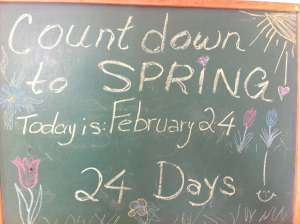
Countdown to SPRING!

I love spring. Currently it’s like pining for a sweetheart who is due home soon.

Today an early morning fog was eating away some of our snow, rotting it so it breaks up and melts more easily. After our recent very cold temperatures the snow froze solid making it harder to move. It’s looking dirty now, but we can be sure there will be a fresh topping for it before our winter weather ends.

On the happy side, look at this:

countdown-to-spring-2017jpg


Wooo Hooo!    * happy dance *

Even if we do get buried in snow again before March 20, I don’t care! It’s going to get warm again, soon, and I look forward to that. In the meantime, I’m not wishing today away. I’m seeing the beauty of winter and enjoying the many robins that came out of the woods yesterday to forage. That’s the first real sign of spring for me. Robins. Probably the sign I love the most is when the peepers start their night song. (Peepers — tiny little frogs.) They make my heart sing. 

Wherever you are, what is your favourite sign of spring?

Thanks for reading, and … Creative Musings!  🙂  
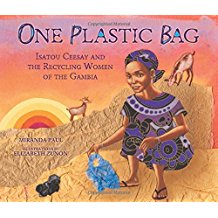
Book Review: One Plastic Bag – by Miranda Paul

one-plastic-bag


Book: One Plastic Bag: Isatou Ceesay and the Recycling 
Women of the Gambia
Author: Miranda Paul
Illustrator: Elizabeth Zunon
Publisher: Millbrook Press
Date: 2015
Genre: children's; age 6-9; gr 1-4
Pages: 32
Price: $19.99
My rating: True story superbly told for children to 
understand its importance

One Plastic Bag: Isatou Ceesay and the Recycling Women of the Gambia was written by Miranda Paul after hearing about this success story and doing extensive research to get it just right.

This is a true story, simplified for the sake of the genre. However, even simplified it is a dramatic and very impressive story of change.

In 1970 Isatou is born in Gambia. She grows up seeing, and then using, plastic bags that seem to be more convenient to use than the handmade baskets she used for carrying things. The problem is the plastic bags, when no longer useful, do not degrade and mix back into the earth like the baskets. They become an unmanageable, unhealthy, dangerous accumulation of garbage in the village and surrounding villages. The plastic bags make it hard for the villagers’ gardens to produce, they strangle the animals necessary to households, and they cause disease. No one knows what to do with the bags once they are no longer useful.

One day Isatou gathers up some of the smelly bags and takes them home. She and some other women wash them and, while they are drying on the line, Isatou watches her sister crocheting. She asks her sister to teach her, and then Isatou comes up with an idea. Secretly, she and a few other women get busy evolving the old plastic bags into useful things – until their impact is noticed over a year later and cannot remain a secret.

One Plastic Bag is a story about how Isatou and her friends make a difference in the world through their recycling efforts. It’s a remarkable accomplishment with very positive environmental results.

Elizabeth Zunon illustrated One Plastic Bag by using her skill of collage. Her work is stunning.

Actual photos are included of the women in the story.

One Plastic Bag by Miranda Paul is a story that will help to bring awareness to young readers. One person CAN make a difference.

You can find One Plastic Bag on my BUY THE BOOK page.

Thanks for reading, and … Creative Musings!  🙂 
Vote on your favourite story!

This morning I woke before dawn, and since I was awake anyway I checked Susanna Hill’s blog. Yep! She’d posted the winning stories in her Valentiny contest. I admit that I was disappointed to see mine was not among them, but I voted on one of the stories listed.  Thank you, by the way, for reading my story that I posted here on my blog on February 14.

valentinywriting-contest2017


Please go HERE to read the top twelve and place your vote. You have to scroll down a ways to do it, and I hope you’ll take the time to read what Susanna says before the vote widget comes up. The stories that made the cut are creative and appropriate for her contest.  Susanna will announce the winner  on Friday.

Do you enjoy entering writing contests? Have you ever won?

Thanks for reading, and … Creative Musings!  🙂
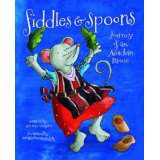
Book Review: Fiddles & Spoons: Journey of an Acadian Mouse – by Lila Hope-Simpson

fiddles-and-spoons


Book: Fiddles & Spoons: Journey of an Acadian Mouse
Author: Lila Hope-Simpson
Illustrator: Doretta Groenendyk
Publisher: DPG: Dery Publishing Group
Date: 2004
Genre: children's historical fiction; age 5-9, gr K-4
Pages: 32
Price: $17.95
My rating: historical event wonderfully-told for children

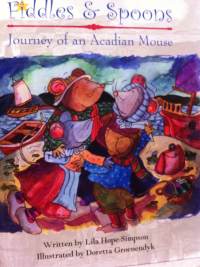
This is one of the beautiful books I purchased at the children’s book fair in 2016, although my copy has a different cover, as you see below. Apparently, the image above is the newer edition which includes more illustrations.

fiddles-spoons-2


Fiddles & Spoons: Journey of an Acadian Mouse is written by Canadian author Lila Hope-Simpson, who, in fact, lives only a few miles from me. Illustrator Doretta Groenendyk is also a local artist.

First of all, look at this dedication – which seems very suited to the times we are living in – that she wrote in her book:  This book is dedicated to uprooted people from every place and time, whose spirits have proven that after adversity, life goes on.       And sometimes, there is even dancing.

Fiddles & Spoons is a historical fiction, fanciful for the child reader. This story is about a mouse family, the expulsion of the Acadians, and the will to survive.

In the small Acadian village of Grand Pré in Nova Scotia, Canada, life was good. Families worked hard to keep their village functioning and to make a life they could be proud of. The men built sturdy dykes to hold back the powerful tides of the Bay of Fundy, creating very fertile farmland along the coast – and those dykes are still there doing what they were intended to do.

Under the floorboards of the homestead of the hardworking Dubois family lived the Souris mouse family. They feasted on the crumbs that fell down through,  particularly enjoying Saturday nights when everyone danced and played their fiddles and spoons.

One night in 1755 it all changed. Soldiers marched in and separated the men from the women and children. Mama Souris was determined to not leave the Dubois family, so she and her family scurried along near the feet of all the people being forced onto boats. It was a long rugged trip until they finally arrived in a new land and were reunited with their loved ones. From there they had to start over. 

Lila Hope-Simpson told this story of an important historical event in a wonderful way, introducing children – and perhaps adult readers – to the Expulsion of the Acadians, which is a memorable part of local, and far-reaching, history. It is not heavy-handed so as to include lurid details of the atrocities committed against an honest, God-fearing people. On the other hand it is not overly gently told so that the drama cannot be felt and understood. 

Doretta Groenendyk‘s illustrations are colourful, playful, effective. I especially like the scenes of Minas Basin and Cape Blomidon which are very familiar to me.

You can find Fiddles & Spoons: Journey of an Acadian Mouse on my BUY THE BOOK page. 

Thanks for reading, and … Creative Musings!  🙂 
Maurice Sendak interview

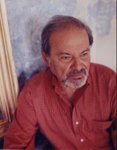
Maurice Sendak – 

maurice-sendak


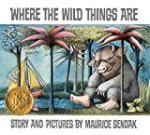
winner of the 1964 Caldecott Medal for Where the Wild Things Are.

where-the-wild-things-are


When I first read that book I wasn’t sure about it. Now I see it as an amazing story. What made the difference?

I was a very timid, sensitive child, so when I first read Where the Wild Things Are as an adult – having not known of it until then, although it was published in 1963 – I think I was concerned it would be scary for children. It really speaks to imagination, to the selfishness of childhood and the resulting escape into imagination and dreaming. That I get.

I was glad to find THIS INTERVIEW from 2004 – Bill Moyers interviewing Maurice Sendak. I hope you will take the time to listen to it. It’s in two parts, and the bonus is that the transcript is under it so you can read along while listening.

What does this stir within you?

Thanks for reading, and … Creative Musings!  🙂
 

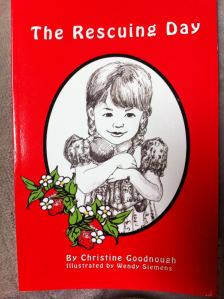
Book Review: The Rescuing Day – by Christine Goodnough

The Rescuing Day


Book: The Rescuing Day
Author: Christine Goodnough
Illustrator: Wendy Siemens
Publisher: PrairieView Press
Date: 2015
Genre: children's; Christian; grades 1-3
Pages: 48; paperback
Price: $7.75
My rating: an easy pleasant read for children

The Rescuing Day is a chapter book by Canadian author Christine Goodnough, sketched illustrations by Canadian illustrator Wendy Siemens.

First of all, look at the pretty red cover! Between the red covers are short chapters just right for a young reader.

It’s summertime. The story starts with Mom suggesting to her two young daughters that they get their room cleaned up quickly, their Saturday rule, so that they can be in the strawberry patch early – before it gets too hot in the sun. Megan has trouble being neat like her older sister so in her hurry she shoves everything out of sight. When she gets back she can’t find her favourite doll. This is a major crisis for a little girl, and the author depicts her feelings well.

In each chapter is an adventure for some members of the family. They have a mischievous little puppy, a younger brother who gets into his own trouble, and somebody is in need of rescuing in one way or another. There is an incident where the children are in need and they think to pray about it. It’s nicely done by Christine Goodnough, in a natural, non-preachy way.

Table of Contents:

Chapters:

  1. Trip to the Strawberry Patch
  2. Damien’s Equipment Gets New Paint
  3. Callista is Lost
  4. Callista to the Rescue
  5. The Naughty Student
  6. Megan Rescues Shaggy
  7. The Wasps’ Nest
  8. Shaggy to the Rescue

You can find The Rescuing Day on my BUY THE BOOK page. 

Thanks for reading, and … Creative Musings!  🙂