SHHHH! This is a library!

Take a stroll with me down memory lane ….

I remember when I was a youngster in school and whole classes would get turns going to the library to read or study. That experience was usually a little nerve-racking for timid little me. I was always so afraid I would accidentally make a noise, perhaps by dropping something or whispering too loudly to the person next to me. Those were the days when libraries were quiet places.

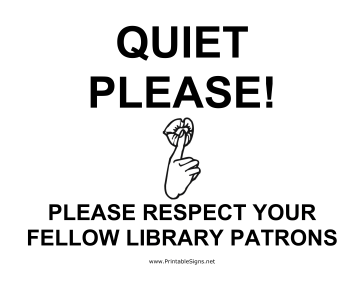
Library_Sign_Quiet_Please


Decades later I used to take my children to the town library to borrow books. It was a small library then with that heady smell of old books, new books .. books, books, books. And it was so nice and quiet. I taught my little girls that we were not to talk out loud in there, even if it was only the librarian with us at any time. A library is a quiet place.

Now, let me tell you about my experience when I was in town for an afternoon one day last month.

After leaving my little Meyya with the groomer I had time to myself, so I decided to walk to the library. I had with me a list of books that I wanted to look for, hoping to borrow a few to see what’s new. When I walked into the library the first thing I noticed was the woman at the counter talking – loudly – to the two librarians.  hmm  I made my way to the children’s section where I attempted to find a book, any book, on my list. Over came a young mother and her little lad. She sat at a computer and began using it while her little guy wandered restlessly around looking at books, calling to her about them now and then, until finally he found a big book – somewhat advanced for him – which he brought to his mother. He asked her to read to him; she said no, she was busy but find one she would enjoy reading to him at home. She didn’t think he would like that one. (I privately wondered why he wouldn’t like it at home if he liked it there in the library. He seemed to want to learn about what it contained. ) She, in a normal speaking voice, proceeded to try to discourage him from choosing that book. He whined. loudly.

Both librarians were still busy so I finally gave up trying to locate any of the books on my list and sat at a table to read the novel I’d brought with me. Next thing I knew, the woman who was still at the counter called across the room to her friend to ask her something, and it continued. Oh my. Frustrated and annoyed I packed up my things and left, not finding out if they even have any of the books I was interested in borrowing.

My next stop was the bookstore. As soon as I walked in I felt my annoyance melt away … in the peaceful, quiet atmosphere.  *sigh*  That’s what I missed in the library. It didn’t have to be quiet in the bookstore and didn’t stay that way, but it was just so pleasant and peaceful. I was delighted to find two children’s books I’d heard about, one I read right there and reviewed on April 28, the other I purchased and will review next week.

Tell me, have you found a difference in your libraries, too? What’s happened to “Shhh, this is a library!”?

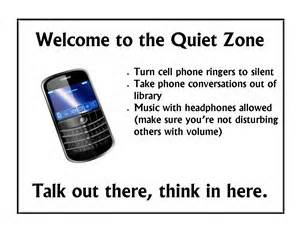
Perhaps this sign would make a difference:

quiet in library


I’ve noticed that many people don’t seem to know what to do with silence! They have to have noise of some kind, or don’t understand the lack of ‘loud’ is perfectly wonderful. What’s your opinion?

Thanks for reading, and … Creative Musings!  🙂


Can you help me find a book?

When I was a little girl (many years ago) in elementary school we didn’t have a local library. The bookmobile is what I remember, and for the small, very shy young girl I was, it was scary and intimidating. The other children were excited to climb on board, pushing their way to the shelves of books, but I would hang back in awe and hesitation.

When I was successfully coaxed into the bus with the other children, the smell of those many books captivated me. How would I ever choose a book? What did I even look for on those floor to ceiling shelves? Oh my! It was amazing and overwhelming.

I wish I could recall the name of the book I was given to read and that I grew to love. Being a slow reader at that time, devouring every word and scene and visualizing everything as I went along, the book I borrowed I never got to finish. It had to go back after awhile so others could enjoy it. What a disappointment! I don’t think it ever came back around to my school, although I timidly asked several times.

Even yet, how much I wish I could find that book again. Now I wonder if I were to put out my very vague descriptions is there anyone out there who will take what I can share and know what I am talking about?

It could be that my memories are of two books combined in my mind, two books that stirred up my imagination and wonder. Here’s all I can remember of them now: 

  • a child looking at herself in the mirror discovered the child looking back at her was not really herself but someone else, and seeing her from a different world she could come to her through the mirror. It seems to me that meant trouble, mischief, but I can’t recall what happened.
  • I think – maybe  in another book – there was a peculiar little man who came to help care for children and he could fly somehow and take them on adventures. He also was dearly loved by the children because he was fun and safe and adventurous. His name may have begun with a P .. but I’m unsure about that;
  • I think the children’s parents would not always agree with what he allowed, even though it was not dangerous or anything;
  • He also only stayed a certain amount of time and then had to move on, maybe because the children had outgrown him so he was going to others to care for them.

Does any of this sound familiar? Oh, how I wish I could remember what those book titles were! I would so love to find them now, especially the one about Mister … somebody, but with only the above to go by it is probably impossible. I have more impressions than memories I can put into words about it. Know what I mean?

If you think you might be able to help me I would be delighted! and very happy. 🙂 Please let me know.

Is there a book you wish you could find from … way back when?

Thanks for reading, and … Creative Musings!  🙂

Book Review: A Dragon’s Work is Never Done – by Stephanie Barrett

A Dragon's Work is Never DoneBook: A Dragon’s Work is Never Done
Author: Stephanie Barrett
Illustrator: Taryn Dufault
Publisher: Stephanie Barrett
Sold by: Amazon Digital Services, Inc.
Date: August 28, 2012
Genre: children’s picture book
Pages: 64
Price: under $10 paper; under $3.00 Kindle
My Rating: A delightfully fun story to capture the imagination
 

What a delightful diversion from novel-reading! I enjoy a good picture book, and this one fits the bill.

Six-year-old Alfie is busy playing with his train set one afternoon when his mother interrupted him to come wash his hands and sit at the table to eat his lunch. She had prepared for him a ham and cheese sandwich slathered with mustard, and she warned him to take small bites and chew carefully. But, Alfie took a “great big whopping bite” and … ohhhh … spicy hot! When he took a deep breath of air out came smoke, just like smoke from a dragon’s nostrils, followed by flames when he burped! He had toasted the top of his cheese and ham sandwich!

The author, Stephanie Barrett, built such a fun story from there. The kitchen in which Alfie was sitting changed, with grass and tree branches growing out of everywhere and right up through the ceiling and out the roof. He was sitting in a forest. When Alfie looked up he saw dragons flying across the sky!

Now, what child wouldn’t love to meet a friendly dragon? Even now I think I would love it. But this adventure was for Alfie, and what an exciting adventure he had! He learned to fly, and helped a dragon scare a princess, guard treasure, and many other interesting things. The dragon always received payment from the people he helped, but I won’t dish out that spoiler.  🙂

A Dragon’s Work is Never Done is not the usual 32-page picture book, so it is a little long for young readers but should keep them interested easily. The marvellous illustrations by Taryn Dufault complement the story with wonderful visuals. 

An added highlight is at the end of the book. There is a Florida postal address with an invitation to write to Marty (the dragon) or Alfie. From reviews I’ve read they do send handwritten replies to the children who write to them. Imagine a letter from a dragon; how cool is that!

A Dragon’s Work is Never Done is the first book in the Alfie’s Sandwich Series. Book two has since been released.

You can find A Dragon’s Work is Never Done listed on my BUY THE BOOK! page.

Thanks for reading, and … Creative Musings!  🙂

Interview with Tara Lazar

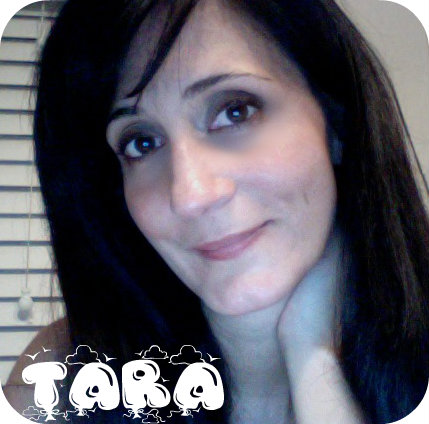
tarablogphoto2013Today I am delighted to welcome Tara Lazar to my blog. Tara is a mover and shaker in the world of children’s books. She graciously agreed to an interview with me to share about her journey and the exciting things she is learning and doing as a writer.

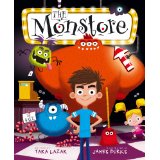
Tara, welcome! Thank you so much for consenting to allow me to pick your brain. First of all, congratulations on the publishing in 2013 of your first picture book The Monstore. It is a fabulous picture book.  (To read my review click here.)

Now, let’s dig right in. Please tell us a little about yourself.

I’m a pajama addict and I have one husband, two daughters, and far too many stuffed animals. I love to laugh. And according to my daughters, I laugh far too loud in far too many public places.


I love to laugh, too, and to make people laugh. Nothing wrong with that! 🙂 When did you first know you wanted to be a writer? Who or what inspired you?

Honestly I knew from just about the time I learned how to write. I would always cheer HOORAY! when a teacher announced it was time for creative writing…while the rest of the class groaned.

All the books of my childhood inspired me—those by Roald Dahl, Judy Blume, Beverly Cleary, Paula Danziger, William Steig and Charles M. Schulz. The kicker was learning that “She Was Nice to Mice” was written by 12-year-old Ally Sheedy. I said to myself, “I can do that, too!” Of course, it took me a little longer to actually do it…


But, you did do it. Yay! As a writer, do you do much reading? How important is it to you to read other authors’ work?

I read daily. It’s a joy, an escape and an education. It’s like a football coach studying the competing team’s plays.

Over the last five years I’ve read so much that I’ve stopped watching almost all TV. I find that it just doesn’t stimulate me the way reading does. I get easily bored with TV. I never thought I’d ever say that. I was a TV kid growing up; you couldn’t unglue me from the set.


You have inspired me already! There’s where I can pick up my reading time instead of idly watching TV to veg, except for some movies. Who were/are your favourite authors? How have they affected your own writing?

Roald Dahl is my favourite author and a quote from The Minpins reflects my attitude towards my own writing: “And above all, watch with glittering eyes the whole world around you, because the greatest secrets are always hidden in the most unlikely places. Those who don’t believe in magic will never find it.”


Oh, I love that inspiring quote! Why are picture books where your heart is?

I love the play of images and text that combine to create the whole—it’s greater than the sum of its parts. I never outgrew my six-year-old need for illustrations in a story.


Many of my readers will have heard about PiBoIdMo – Picture Book
Idea Month. This is your brain child, and a challenge I participated
in three times so far. How did you get this started and why? For our
readers who don’t know much about PiBoIdMo, please tell us about it.

I got started because I was jealous of all the novelists having fun in November with NaNoWriMo. I wanted a challenge for picture book writers. So I created one.

The challenge of PiBoIdMo is to create 30 picture book concepts in 30 days. Just an idea a day—you don’t have to write an entire manuscript (but you can if the mood strikes). Every day in November my blog features author, illustrator and editor guest bloggers who write about their own sources of inspiration, to encourage you along on your journey.


You do so much each year to inspire others through PiBoIdMo; it’s obviously loads of work. How long does it take you to get each year’s challenge set up with all your wonderful guest contributors, exciting prizes, and well-executed scheduling?

Funny, I have no idea how much time it takes! I love doing it, so time isn’t of consequence. I compose my wish list of guest bloggers throughout the year and start sending out invitations in August. By October, I’ve got it all scheduled. Each year I get a little better at organizing it. Organization is not my strong suit.


How has PiBoIdMo affected your own writing over the years, what has it done for you?

Well, I never complete my own darn challenge, that’s for sure! But being so immersed in picture books during the month gives me plenty of inspiration. I usually write a new manuscript in November.


Excellent! Do you have an agent? A critique group?

Yes and yes. I think both are crucial to my career.


The Monstore

How long did it take you to pull this book together to your satisfaction? And then how did you catch the attention of a publisher so The Monstore became a reality? Did you have to change your story much for it to be accepted and ready?

Honestly it was never to the point where I felt comfortable submitting it. I was gun-shy after years of rejections. My crit partner, Corey Rosen Schwartz (author of “The Three Ninja Pigs”), thought it was ready and encouraged me to query agents. It got attention and I signed with Ammi-Joan Paquette of the Erin Murphy Literary Agency. Joan sold it a few weeks afterwards. It was a whirlwind. And it spoiled me. No other sale has been that quick.


What a great start! How did James Burks become the illustrator of The Monstore? Your work and his are an excellent combination.

My editor and art director at Aladdin suggested James. They sent me a link to his online portfolio, explaining he could draw children as well as he could draw monsters—not an easy feat—and I agreed, “Yes, yes, a thousand times YES!”


It is exciting that this year you have another book coming to our bookstores! Please talk about that and what you have lined up for publishing.

I THOUGHT THIS WAS A BEAR BOOK features an alien who gets knocked out of his book and crash-lands into the book of Goldilocks and the Three Bears. Chaos ensues. I then have three more picture books under contract. And hopefully more…and more…


What a delightful story! Three more under contract? Wow! I look forward to the more … and more … 🙂
When do you write? Do you set goals for yourself?

I write all different times of day. While eating lunch, while falling asleep, while taking a shower. I don’t follow any particular structure or routine. In fact, I’m a very anti-routine type of person. I like doing things differently every day, and that means I don’t necessarily write every day. But I am almost always thinking of my stories, and I count thinking as “writing with invisible ink.”


“writing with invisible ink.” That must be what I do as I mull an idea over in my mind quite awhile, the trick is to get it onto paper. What process do you go through when writing and perfecting a story? How do you keep track of your ideas?

I write down ideas as soon as I get them. If the idea is really eating at me, I’ll begin a Word Doc with the title, premise, or first few lines. Sometimes I’ll even write a first draft immediately.

My process is different for every story. Some shoot out like a rocket; I can’t stop them. Others take a lot of “marinating”—that is, letting them sit in my subconscious for weeks or months. And yet others get revised 90 gazillion times, for years.


How do you manage your time with family, speaking engagements, PiBoIdMo, and everything else going on in your busy life?

I’m a fly-by-the-seat-of-my-pants kind of gal. I try not to structure my days and instead gravitate toward what I feel like that day. Plus I have MS, which means every day is different for my body and I can’t really plan too much or else I get exhausted. So I go by feeling. Miraculously, it all seems to balance out. Except the laundry.


Wow! You manage very well with what you have to deal with daily. I have a hard time living by a schedule on the best of days. What interests do you have apart from writing and anything involved with writing?

I used to be a figure skater, but since I was diagnosed with MS, I have not been able to skate. Writing has filled up that spot in my heart.

I also enjoy making jewelry. I taught myself how to wrap wire and bead, and I can sit for hours just creating. Right now I’m making book rings—they’re adorable!


I’m sorry you can no longer skate, that must have been a disappointing loss. It’s wonderful you are such a creative person so you can still find expression through your artistic projects … and I’m so glad you love to write. In closing, do you have any advice for hopefuls?

Have fun writing. Let your enthusiasm shine through. Choose this career because you love it—you love it like you can’t live without it. This business is extremely difficult, and you need that love to pull you through.


Thank you for this excellent advice and inspiring interview, Tara!


Check out Tara Lazar‘s blog here for helpful information for writers, and see what books she has coming up. If you are a hopeful writer of children’s books, and you want to participate in a fun, inspiring, information-filled challenge, while there click on the link for PiBoIdMo.

Thanks for reading, and … Creative Musings!

The Case for Good Taste in Children’s Books – (reprinted by permission)

It has been very hard for me to “buckle down” and “just write”, likely because I feel used up in one way or another almost every day. I’m trying to get back into blogging more because I enjoy it and because I hope I’m posting things of help to you, my readers.

The following article is long but one worth sharing, and I’m doing so with permission. You can check out the publication in which it’s printed: here.

PLEASE NOTE: THIS ARTICLE IS NOT INTENDED FOR YOUNG READERS BECAUSE OF SOME OF ITS CONTENT.

The Case for Good Taste in Children’s Books MEGHAN COX GURDON has been the children’s book reviewer for the Wall Street Journal since 2005. Her work has also appeared in numerous other publications, including the Washington Post, the Washington Examiner, the San Francisco Chronicle, National Review, and the Weekly Standard. In the 1990s, she worked as an overseas correspondent in Hong Kong, Tokyo, and London, and traveled and reported from Cambodia, Somalia, China, Israel, South Korea, and Northern Ireland. She graduated magna cum laude from Bowdoin College in 1986 and lives near Washington, D.C., with her husband and their five children.The following is adapted from a speech delivered at Hillsdale College on March 12, 2013, sponsored by the College’s Dow Journalism Program.ON JUNE 4, 2011, the number one trending topic on Twitter was the Anthony Weiner scandal. I happen to remember that, because the number two topic on Twitter that day—almost as frenzied, though a lot less humorous—had to do with an outrageous, intolerable attack on Young Adult literature . . . by me. Entitled “Darkness Too Visible,” my article discussed the increasingly dark current that runs through books classified as YA, for Young Adult—books aimed at readers between 12 and 18 years of age—a subset that has, in the four decades since Young Adult became a distinct category in fiction, become increasingly lurid, grotesque, profane, sexual, and ugly.Books show us the world, and in that sense, too many books for adolescents act like funhouse mirrors, reflecting hideously distorted portrayals of life. Those of us who have grown up understand that the teen years can be fraught and turbulent—and for some kids, very unhappy—but at the same time we know that in the arc of human life, these years are brief. Today, too many novels for teenagers are long on the turbulence and short on a sense of perspective. Nor does it help that the narrative style that dominates Young Adult books is the first person present tense—“I, I, I,” and “now, now, now.” Writers use this device to create a feeling of urgency, to show solidarity with the reader and to make the reader feel that he or she is occupying the persona of the narrator. The trouble is that the first person present tense also erects a kind of verbal prison, keeping young readers in the turmoil of the moment just as their hormones tend to do. This narrative style reinforces the blinkers teenagers often seem to be wearing, rather than drawing them out and into the open.

Bringing Judgment

The late critic Hilton Kramer was seated once at a dinner next to film director Woody Allen. Allen asked him if he felt embarrassed when he met people socially whom he’d savaged in print. “No,” Kramer said, “they’re the ones who made the bad art. I just described it.” As the story goes, Allen fell gloomily silent, having once made a film that had received the Kramer treatment.

I don’t presume to have a nose as sensitive as Hilton Kramer’s—but I do know that criticism is pointless if it’s only boosterism. To evaluate anything, including children’s books, is to engage the faculty of judgment, which requires that great bugbear of the politically correct, “discrimination.” Thus, in responding to my article, YA book writers Judy Blume and Libba Bray charged that I was giving comfort to book-banners, and Publisher’s Weekly warned of a “danger” that my arguments “encourage a culture of fear around YA literature.” But I do not, in fact, wish to ban any books or frighten any authors. What I do wish is that people in the book business would exercise better taste; that adult authors would not simply validate every spasm of the teen experience; and that our culture was not marching toward ever-greater explicitness in depictions of sex and violence.

Books for children and teenagers are written, packaged, and sold by adults. It follows from this that the emotional depictions they contain come to young people with a kind of adult imprimatur. As a school librarian in Idaho wrote to her colleagues in my defense: “You are naïve if you think young people can read a dark and violent book that sits on the library shelves and not believe that that behavior must be condoned by the adults in their school lives.”

What kind of books are we talking about? Let me give you three examples—but with a warning that some of what you’re about to hear is not appropriate for younger listeners.

A teenaged boy is kidnapped, drugged, and nearly raped by a male captor. After escaping, he comes across a pair of weird glasses that transport him to a world of almost impossible cruelty. Moments later, he finds himself facing a wall of horrors, “covered with impaled heads and other dripping, black-rot body parts: hands, hearts, feet, ears, penises. Where the f— was this?”

That’s from Andrew Smith’s 2010 Young Adult novel, The Marbury Lens.

A girl struggles with self-hatred and self-injury. She cuts herself with razors secretly, but her secret gets out when she’s the victim of a sadistic sexual prank. Kids at school jeer at her, calling her “cutterslut.” In response, “she had sliced her arms to ribbons, but the badness remained, staining her insides like cancer. She had gouged her belly until it was a mess of meat and blood, but she still couldn’t breathe.”

That’s from Jackie Morse Kessler’s 2011 Young Adult novel, Rage.

I won’t read you the most offensive excerpts from my third example, which consist of explicit and obscene descriptions by a 17-year-old female narrator of sexual petting, of oral sex, and of rushing to a bathroom to defecate following a breakup. Yet School Library Journal praised Daria Snadowsky’s 2008 Young Adult novel, Anatomy of a Boyfriend, for dealing “in modern terms with the real issues of discovering sex for the first time.” And Random House, its publisher, gushed about the narrator’s “heartbreakingly honest voice” as she recounts the “exquisite ups and dramatic downs of teenage love and heartbreak.”

The book industry, broadly speaking, says: Kids have a right to read whatever they want. And if you follow the argument through it becomes: Adults should not discriminate between good and bad books or stand as gatekeepers, deciding what young people should read. In other words, the faculty of judgment and taste that we apply in every other area of life involving children should somehow vaporize when it comes in contact with the printed word.

I appeared on National Public Radio to discuss these issues with the Young Adult book author Lauren Myracle, who has been hailed as a person “on the front lines in the fight for freedom of expression”—as if any controversy over whether a book is appropriate for children turns on the question of the author’s freedom to express herself. Myracle made clear that she doesn’t believe there should be any line between adult literature and literature for young people. In saying this, she was echoing the view that prevails in many progressive, secular circles—that young people should encounter material that jolts them out of their comfort zone; that the world is a tough place; and that there’s no point shielding children from reality. I took the less progressive, less secular view that parents should take a more interventionist approach, steering their children away from books about sex and horror and degradation, and towards books that make aesthetic and moral claims.

Now, although it may seem that our culture is split between Left and Right on the question of permissiveness regarding children’s reading material, in fact there is not so much division on the core issue as might appear. Secular progressives, despite their reaction to my article, have their own list of books they think young people shouldn’t read—for instance, books they claim are tinged with racism or jingoism or that depict traditional gender roles. Regarding the latter, you would not believe the extent to which children’s picture books today go out of the way to show father in an apron and mother tinkering with machinery. It’s pretty funny. But my larger point here is that the self-proclaimed anti-book-banners on the Left agree that books influence children and prefer some books to others.

Indeed, in the early years of the Cold War, many left-wing creative people in America gravitated toward children’s literature. Philip Nel, a professor at Kansas State University, has written that Red-hunters, “seeing children’s books as a field dominated by women . . . deemed it less important and so did not watch it closely.” Among the authors I am referring to are Theodor Geisel (Dr. Seuss) and Ruth Krauss, author of the 1952 classic A Hole is to Dig, illustrated by a young Maurice Sendak. Krauss was quite open in her belief that children’s literature was an excellent means of putting left-wing ideas into young minds. Or so she hoped.

When I was a little girl I read The Cat in the Hat, and I took from it an understanding of the sanctity of private property—it outraged me when the Cat and Thing One and Thing Two rampaged through the children’s house while their mother was away. Dr. Seuss was probably not intending to inculcate capitalist ideas—quite the contrary. But it happened in my case, and the point is instructive.

Taste and Beauty

A recent study conducted at Virginia Tech found that college women who read “chick lit”—light novels that deal with the angst of being a modern woman—reported feeling more insecure about themselves and their bodies after reading novels in which the heroines feel insecure about themselves and their bodies. Similarly, federal researchers were puzzled for years by a seeming paradox when it came to educating children about the dangers of drugs and tobacco. There seemed to be a correlation between anti-drug and anti-tobacco programs in elementary and middle schools and subsequent drug and tobacco use at those schools. It turned out that at the same time children were learning that drugs and tobacco were bad, they were taking in the meta-message that adults expected them to use drugs and tobacco.

This is why good taste matters so much when it comes to books for children and young adults. Books tell children what to expect, what life is, what culture is, how we are expected to behave—what the spectrum is. Books don’t just cater to tastes. They form tastes. They create norms—and as the examples above show, the norms young people take away are not necessarily the norms adults intend. This is why I am skeptical of the social utility of so-called “problem novels”—books that have a troubled main character, such as a girl with a father who started raping her when she was a toddler and anonymously provides her with knives when she is a teenager hoping that she will cut herself to death. (This scenario is from Cheryl Rainfield’s 2010 Young Adult novel, Scars, which School Library Journal hailed as “one heck of a good book.”) The argument in favor of such books is that they validate the real and terrible experiences of teenagers who have been abused, addicted, or raped—among other things. The problem is that the very act of detailing these pathologies, not just in one book but in many, normalizes them. And teenagers are all about identifying norms and adhering to them.

In journalist Emily Bazelon’s recent book about bullying, she describes how schools are using a method called “social norming” to discourage drinking and driving. “The idea,” she writes, “is that students often overestimate how much other kids drink and drive, and when they find out that it’s less prevalent than they think—outlier behavior rather than the norm—they’re less likely to do it themselves.” The same goes for bullying: “When kids understand that cruelty isn’t the norm,” Bazelon says, “they’re less likely to be cruel themselves.”

Now isn’t that interesting?

Ok, you say, but books for kids have always been dark. What about Hansel and Gretel? What about the scene in Beowulf where the monster sneaks into the Danish camp and starts eating people?

Beowulf is admittedly gruesome in parts—and fairy tales are often scary. Yet we approach them at a kind of arm’s length, almost as allegory. In the case of Beowulf, furthermore, children reading it—or having it read to them—are absorbing the rhythms of one of mankind’s great heroic epics, one that explicitly reminds us that our talents come from God and that we act under God’s eye and guidance. Even with the gore, Beowulf won’t make a child callous. It will help to civilize him.

English philosopher Roger Scruton has written at length about what he calls the modern “flight from beauty,” which he sees in every aspect of our contemporary culture. “It is not merely,” he writes, “that artists, directors, musicians and others connected with the arts”—here we might include authors of Young Adult literature—“are in a flight from beauty . . . . There is a desire to spoil beauty . . . . For beauty makes a claim on us; it is a call to renounce our narcisissm and look with reverence on the world.”

We can go to the Palazzo Borghese in Rome and stand before Caravaggio’s painting of David with the head of Goliath, and though we are looking at horror we are not seeing ugliness. The light that plays across David’s face and chest, and that slants across Goliath’s half-open eyes and mouth, transforms the scene into something beautiful. The problem with the darker offerings in Young Adult literature is that they lack this transforming and uplifting quality. They take difficult subjects and wallow in them in a gluttonous way; they show an orgiastic lack of restraint that is the mark of bad taste.

Young Adult book author Sherman Alexie wrote a rebuttal to my article entitled, “Why the Best Kids Books are Written in Blood.” In it, he asks how I could honestly believe that a sexually explicit Young Adult novel might traumatize a teenaged mother. “Does she believe that a YA novel about murder and rape will somehow shock a teenager whose life has been damaged by murder and rape? Does she believe a dystopian novel will frighten a kid who already lives in hell?”

Well of course I don’t. But I also don’t believe that the vast majority of 12-to-18-year-olds are living in hell. And as for those who are, does it really serve them to give them more torment and sulphur in the stories they read?

The body of children’s literature is a little like the Library of Babel in the Jorge Luis Borges story—shelf after shelf of books, many almost gibberish, but a rare few filled with wisdom and beauty and answers to important questions. These are the books that have lasted because generation after generation has seen in them something transcendent, and has passed them on. Maria Tatar, who teaches children’s literature at Harvard, describes books like The Chronicles of Narnia, The Wind in the Willows, The Jungle Books, and Pinocchio as “setting minds into motion, renewing senses, and almost rewiring brains.”

Or as William Wordsworth wrote: “What we have loved/others will love, and we will teach them how.”

* * *

The good news is that just like the lousy books of the past, the lousy books of the present will blow away like chaff. The bad news is that they will leave their mark. As in so many aspects of culture, the damage they do can’t easily be measured. It is more a thing to be felt—a coarseness, an emptiness, a sorrow.

“Beauty is vanishing from our world because we live as if it does not matter.” That’s Roger Scruton again. But he doesn’t want us to despair. He also writes:

It is one mark of rational beings that they do not live only—or even at all—in the present. They have the freedom to despise the world that surrounds them and live another way. The art, literature, and music of our civilization remind them of this, and also point to the path that lies always before them: the path out of desecration towards the sacred and the sacrificial.

Let me close with Saint Paul the Apostle in Philippians 4:8:

Whatever is true, whatever is noble, whatever is right, whatever is pure, whatever is lovely, whatever is admirable—if anything is excellent or praiseworthy—think about such things.

And let us think about these words when we go shopping for books for our children.


Copyright © 2013 Hillsdale College. Permission to reprint in whole or in part is hereby granted, provided the following credit line is used: “Reprinted by permission from Imprimis, a publication of Hillsdale College.” 
****

Any comments? I’m interested in knowing your thoughts on this topic.

Thanks for reading, and … Creative Musings! 🙂

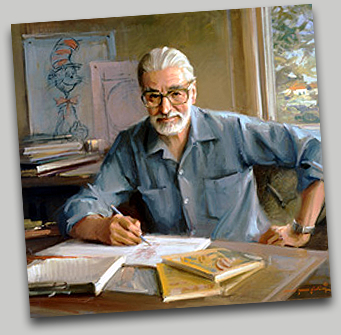
Happy Birthday, Dr. Seuss! and thank you

Before today is gone forever I want to mention the famous and talented Dr. Seuss – Theodor Seuss Geisel.

He was born March 2, 1904 and lived until September 24, 1991. That’s 87.5 years.

I read somewhere that sometime along the way one of his teachers or professors told him he couldn’t draw and his art would not catch on.  hmmm  I guess somebody was wrong!  That goes to prove that you should never give up if you are passionate about your talent. It may be just what the world is waiting for.

If you would like to read lots of information about Dr. Seuss, go here.

No doubt everyone reading this is familiar with something Dr. Seuss wrote. Two books that I particularly enjoyed reading to my daughters are

Green Eggs And Ham                          and

Horton Hears A Who!       

It was a fun challenge to read those long connecting thoughts without stopping to take a breath, and I could never begin to tell you how many times those books were chosen as bedtime stories! I got really good at reading Dr. Seuss – with great enthusiasm! 🙂

Now I’ll join with the throngs of captivated children and admiring readers, writers, illustrators, and everyone else who loves his books, and say:

HAPPY BIRTHDAY, DR. SEUSS! And Thank You!

What Dr. Seuss books were the most popular in your house?

Is there one Dr. Seuss book in particular that you wish you had written?

Thanks for reading, and … Creative Musings! 🙂

PiBoIdMo is over, but for me it has just begun

PiBoIdMo is the other challenge I took on for the whole month of November. I learned about it in 2010 and first took part in it then … but let me explain …

PiBoIdMo – Picture Book Idea Month – is the brain child of Tara Lazar. Check her out here: http://taralazar.wordpress.com/about/

The challenge is to write an idea a day during the 30 days of November.  The idea can be as simple as the name of a character, or the title for a story, or as complete as the whole outline for a story, or something in between. Thirty ideas in thirty days. Sound daunting? I thought so.

In 2010 I did both NaNoWriMo and PiBoIdMo, and succeeded in both. It was exhilarating, exciting, tiring, fun. This year, I tried both again, and if you read my last post you will know that I didn’t get a win in NaNo, but I’m pleased to say that I did again meet the goal for PiBoIdMo. Yay! I got 40 ideas, maybe more depending on how you count them up.

I didn’t think I could do it. Some days the idea well ran dry, but on some other days I got more than one idea for a story so that by the end I had passed the target. whew!

Again, if you have been following my blog, you will know that life has changed a lot for me. Because of that I really wasn’t sure I could dredge up enough creativity, but I very much wanted to try. And I am so glad I did.

Tara Lazar, if you are reading this … Thank you (again) for a fantastic 2011 PiBoIdMo! 2010 was great, but I don’t know if this one was better or if I was more open to seeing more, but … wowsers!!

Last year I took the pledge, read all the daily posts, commented on some, gleaned a little here and there, completed the challenge, and then I put it all aside. I didn’t even get one story pulled together, so I guess in all actuality I broke the pledge. 😦  Sorry, Tara. (Really I should be apologizing to myself as it is not hurting Tara that I did not follow through, it is my own loss.)

This year I took the pledge, read all the daily posts (and was moved to tears a few times – what was that about??), commented on most, absorbed more this year, completed the challenge, and then … then?  Then wow! I had a personal revelation, an awakening in my hopeful heart.

I don’t know ‘where I was’ last year in all of this, but this year… this year! … I realized Tara is making the way for me to move forward as a writer of children’s books. She is giving me all the tools to draw out what I need and what I need to do, and THEN .. after the 30 days were over she didn’t stop there. Just as she had guest bloggers write pre-PiBoIdMo posts this year, she had a few more guest bloggers post for several days afterward. wow!  And somewhere in there I got it. I see now.

I took on PiBoIdMo in 2010 for the challenge and fun of it. I learned things, I worked at it, I succeeded in meeting the goal, and I was delighted that I had some nice story ideas that were worth developing … some day. This year, all of the same things but with one major exception. I have to complete by honouring the pledge. And I think I should do it twice .. to include last year, too.

I realized that this is not just fun and games. If I really want to write children’s books then Tara Lazar has handed to me all I need to do just that! duhhh!

This year, I got it, Tara. I understand.  That is what the tears were about. That is what PiBoIdMo did for me this year. I am learning how to be the writer I want to become. Thank you.

And one of these days I may just say, “Hello, my name is Lynn, and I am a writer.”  One of these days ..  🙂

How about you? Have you had any personal revelations or awakenings lately that have had an impact on you?

Thanks for reading, and … Creative Musings! 🙂