Book Review: Drowning Mermaids – by Nadia Scrieva

Drowning MermaidsBook: Drowning Mermaids
Author: Nadia Scrieva
Publisher: ThunderWords
Date: January 7, 2014
Genre: fantasy
Pages: 316
Price: paperback under $12.00; Kindle – may still be free
My Rating: interesting fantasy that adds dimension to one’s imaginings


There are depths of the ocean no one has ever seen, where no human could possibly survive. Or can they? There are places in the ocean that exist only in one’s imagination. Or do they?

What if a person has mermaid abilities? What if a person has mermaids in the family but doesn’t know it?

In Drowning Mermaids by Nadia Scrieva – book one of the Sacred Breath series – we get to find out the answers to those questions. In this book we follow the life and struggles of Aazuria and her sisters who are living on land despite being better accustomed to living under the ocean waves. There is the fight-to-the-death battle with opposing forces, fisherpersons in grave danger, events and misunderstandings that lead to tragic circumstances. And of course there is the love interest, the impossible dream, the hope for a future worth pursuing.

A warning to young readers: unfortunately there is some nasty language in some places and a few suggestive mature scenes, otherwise this would have been a suitable book for them to read.

Despite what I mentioned in the above paragraph, and some editing that was missed, Drowning Mermaids is a story depicting strong female characters and a storyline that holds one’s interest. If you ever wondered what it would be like to live under water, or if there are really mermaids in the ocean (or in your family), you may like to read Drowning Mermaids by Nadia Scrieva to find out what one creative author thinks about all that. Experience the fantasy.

You can find Drowning Mermaids listed on my BUY THE BOOK! page.

Thanks for reading, and … Creative Musings!  🙂

Book Review: Spaghetti is NOT a Finger Food (and other life lessons) – by Jodi Carmichael

Spaghetti is NOT a Finger FoodBook: Spaghetti is NOT a Finger Food (and other life lessons)
Author: Jodi Carmichael
Illustrator: Sarah Ackerley
Publisher: Little Pickle Press
Date: November 26, 2012 – Kindle; April 1, 2013 – paperback
Genre: chapter book
Pages: 152
Price: Kindle under $5.00; paperback under $7.00
My rating: Excellent way to learn about Asperger’s Syndrome from the child’s point-of-view


The title – Spaghetti is NOT a Finger Food (and other life lessons) – is the first thing that grabbed my attention, and then the happy innocence of the little boy on the front cover. 

For anyone not familiar with Asperger’s Syndrome, this book is such a great way to learn more about how it affects a child. The whole story is told through the voice of an eight-year-old boy who has Asperger’s Syndrome.

Connor is happy, smart, eager, energetic, and gets into trouble easily because of how differently he relates to his surroundings. He doesn’t mean to, it just seems to happen. And it happens in innocent funny ways. The way Connor tells it is both amusing and informative. For example: after one incident at school, when he was sent – yet again – to the principal’s office, he dashed immediately to his favourite blue chair. It was smooth and calming for him. Obviously he had been there enough times before to have tried all the chairs, but it was not said that way, the reader understood it from the way Jodi Carmichael had Connor tell his experience.

Here are the chapter titles:

  1. Mrs. Winters Does Not Like to Be Interrupted
  2. Girls Are Confusing
  3. Mr. O’Brien Does Not Believe Rules Are to Be Broken – Ever
  4. Smooth Things Are Calming
  5. Lunch Time Can Be Tricky
  6. A Library Voice Is Even Quieter Than an Inside Voice
  7. Stools Are for Standing on and Chairs Are for Sitting On
  8. Even Numbers Rule!
  9. Mrs. Rosetti Has the Best Smiley Face
  10. Feelings Are Confusing
  11. Not All People Are Dog People
  12. A Code Yellow Is Serious Business
  13. Stomach Swirls Can Be Both Good and Bad at the Same Time
  14. Kids Love Dog Tricks

Spaghetti is NOT a Finger Food (and other life lessons) by Jodi Carmichael is a very well-written book that educates while it entertains, while the illustrations by Sarah Ackerley add a wonderful dimension. Having the opportunity to see the world from Connor’s perspective is enlightening. Both children and adults can enjoy this chapter book and learn from it.

You can find Spaghetti is NOT a Finger Food (and other life lessons) listed on my BUY THE BOOK! page.

Thanks for reading, and … Creative Musings!  🙂


Book trailer for An Astronaut’s Guide to Life on Earth – by Chris Hadfield

Just a quick post today…

On July 1 I posted my book review of Chris Hadfield’s book An Astronaut’s Guide to Life on Earth. I should have also mentioned again the post I had written about his talk about facing one’s fear; you can watch it here.

An Astronaut's Guide to Life on EarthToday I am posting the trailer for his book, which I would have included yesterday had I thought to look for one.  (Thanks to Erik for the heads-up about this.) It is so funny and I hope you will enjoy it.  Click here to watch it.


Do book trailers increase your interest in a book? Do they help you make a decision about buying a book?

Thanks for reading, and … Creative Musings!  🙂

Book Review: An Astronaut’s Guide to Life on Earth – by Chris Hadfield

An Astronaut's Guide to Life on EarthBook: An Astronaut’s Guide to Life on Earth
Author: Chris Hadfield
Publisher: Random House Canada
Date: October 29, 2013
Genre: memoir; space science
Pages: 336, hardcover
Price: $28.00 – $32.00
My Rating: WOW!  or, A must-read book about life and attitude in Space and on Earth
 

Since July 1 is important for Canada, (HAPPY CANADA DAY TO MY FELLOW CANADIANS!), I have selected a fantastic book to review today.

While at the Credit Union one morning in early June, I noted their news board. On June 25 Chris Hadfield was coming to Truro, about two hours’ drive from where I live in Nova Scotia. Oh. My. Gosh! I excitedly told my sister who went online and obtained tickets for five of us to go hear him speak. I headed to the bookstore to buy his book — and one for my sister for her birthday. What a good decision. This well-written book, An Astronaut’s Guide to Life on Earth, is full of “AMAZING”, not to mention how I feel about Chris Hadfield – the Canadian astronaut who was commander of the International Space Station.

When Chris was nine years old he watched – on a neighbour’s TV on July 20, 1969 – the Apollo moon landing, and knew right then what he wanted to be when he grew up. From that point onward everything he did was to obtain his goal to be an astronaut, even though here in Canada there was not yet a space agency.

In An Astronaut’s Guide to Life on Earth Chris Hadfield tells about his journey. After the Introduction appetizer, he has divided the book into three sections: Part 1 – Pre-Launch; Part 2 – Liftoff; Part 3 – Coming Down to Earth.

Part 1 – Pre-Launch
  1. The Trip Takes a Lifetime
  2. Have an Attitude
  3. The Power of Negative Thinking
  4. Sweat the Small Stuff
  5. The Last People in the World
  6. What’s the Next Thing That Could Kill Me?
Part 2 – Liftoff
                  7. Tranquility Base, Kazakhstan
                 8. How to Get Blasted (and Feel Good the Next Day)
                 9. Aim to Be a Zero
               10. Life off Earth
                11. Square Astronaut, Round Hole
 
Part 3 – Coming Down to Earth
               12. Soft Landings
               13. Climbing Down the Ladder
 

This is an exciting, interesting, incredible adventure told in an easy-to-read way. Chris Hadfield‘s humility and humour shine through as he shares what he has learned and accomplished both on and off Earth. What he had to do to realize his dream is daunting. What he shares about life is sound and inspiring.

The paragraph that spoke to my heart is as follows:

If you start thinking that only your biggest and shiniest moments count, you’re setting yourself up to feel like a failure most of the time. Personally, I’d rather feel good most of the time, so to me everything counts: the small moments, the medium ones, the successes that make the papers and also the ones that no one knows about but me. The challenge is avoiding being derailed by the big, shiny moments that turn other people’s heads. You have to figure out for yourself how to enjoy and celebrate them, and then move on.  – Page 267, An Astronaut’s Guide to Life on Earth
 

 This book is thoroughly enjoyable. It is not only about travelling and living in Space, but also about his work as a fighter jet pilot when he lost several friends in flying accidents. In flowing conversational language he takes us all through the difficult journey that opened his way into NASA and eventually to commanding the space station where he conducted a record-setting number of scientific experiments. He also handled emergencies while in Space and became well-known for his activity on Twitter and his incredible photographs taken during his five-month stay on the space station he had helped build.

If you enjoy non-fiction, An Astronaut’s Guide to Life on Earth by Chris Hadfield is such a good book to spend time absorbing. The information he provides is riveting. Even if you aren’t sure about the genre I recommend you give this book a try. It is so worth it.

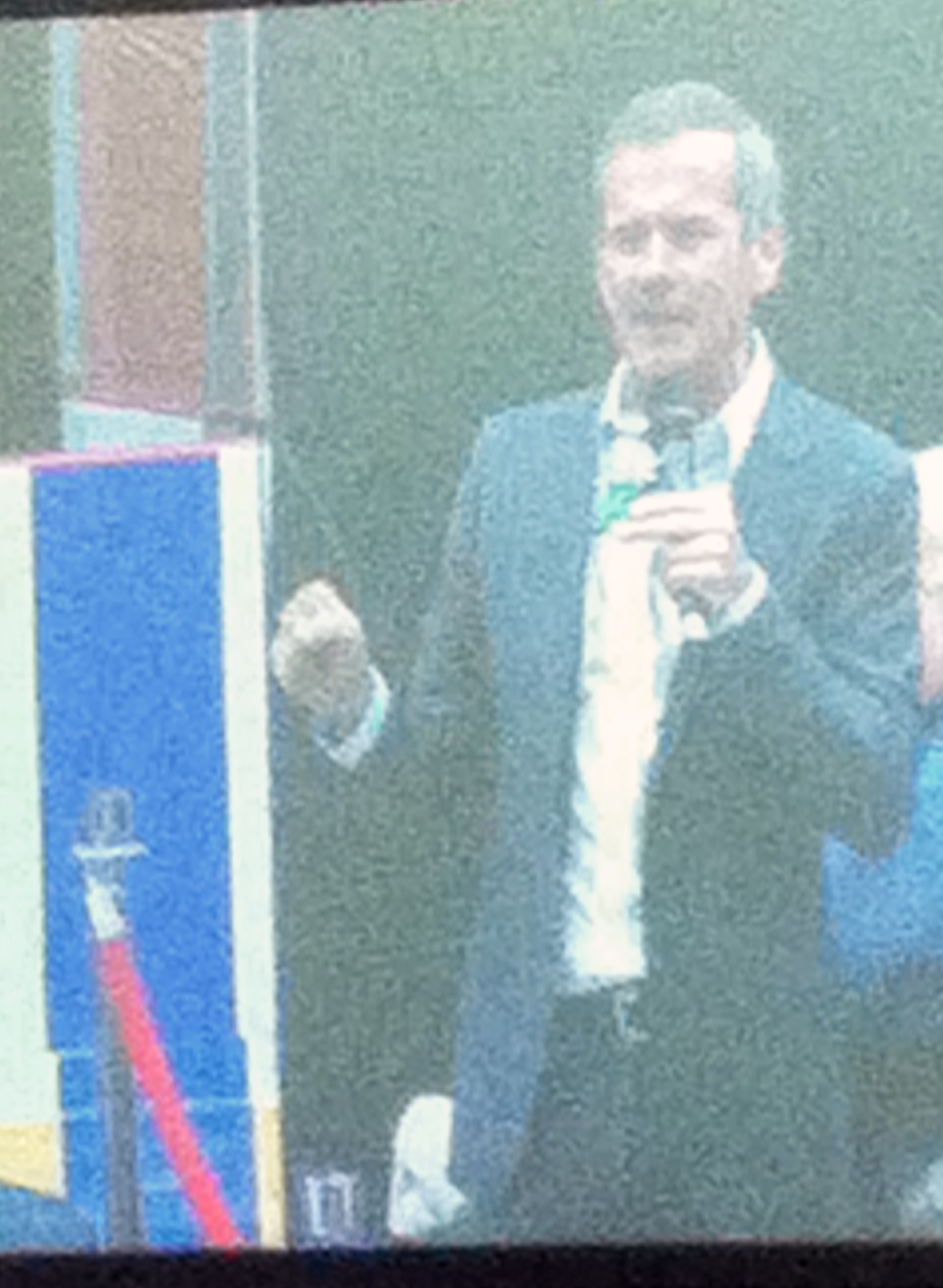
A footnote: Chris Hadfield.2.06-25-14This image of Chris Hadfield is foggy because it was taken off the big screen in the community centre where he spoke. Chris is personable, interesting, funny, focused, well-spoken, humble, (good-looking – does that count?), Canadian … and I am so proud of him. I would have liked to tell him he’s an inspiration to me, but it wasn’t possible to get close enough with approximately 2800 people there.  *alas!*

If you buy only one book this year, may I suggest it be An Astronaut’s Guide to Life on Earth by Chris Hadfield. It will educate and inspire you.

You can find An Astronaut’s Guide to Life on Earth listed on my BUY THE BOOK! page.

 Thanks for reading, and … Creative Musings!  🙂


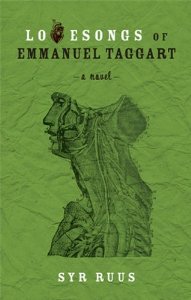
Book Review: Lovesongs of Emmanuel Taggart – by Syr Ruus

Book: Lovesongs of Emmanuel Taggart
Author: Syr Ruus
Publisher: Breakwater Books
Date: August 1, 2012
Genre: fiction, comedy
Pages: 250
Price: $18.95
My rating: great reading for those looking for something different with humour and wit regarding the human condition
 

Having met the author, Syr Ruus, at another author’s (Laura Best) book launch, I made it a point to find this book. (It was on Amazon.)

Lovesongs of Emmanuel Taggart is an adult novel, fictional and amusing.

Emmanuel Taggart is a forty-five-year-old man who feels his life is stuck in a rut. His two sons are grown and out, leaving just his wife and him. One cold February day he feels ill so leaves the office early. From there the story takes the reader on an adventure unlike any this reader has journeyed before – in a good way.

Believing himself to be living his last months of life, Emmanuel Taggart sees doctors, endures tests by specialists, and meets people along the way whom he never would have approached before.  His mind takes him places he wouldn’t have dared to think until then, and he begins – not without feelings of guilt – keeping secrets from his wife. It gets more and more complicated, and more and more amusing, as he convinces himself that he is dying while he spins a web in which he traps … himself.

Syr Ruus tells a marvellous story, one that has twists and turns and delightful visuals to keep the reader devouring the pages. It is enjoyable the way she words things, such as this when Emmanuel’s secretary, Rose, is concerned about him:  “I looked out and saw your car still sitting here in the lot. Then I started thinking you weren’t feeling so good and maybe you passed out or something, and I says to myself, Rose, you better check this out. And here you still are, Mr. Taggart. Are you okay? You don’t look so good.” Shivering. Pulling her coat together to protect her scrawny neck, sleeves blowing empty at the sides.

Can’t you just see those empty sleeves flapping in the breeze, and feel that shivery cold? brrrr

Emmanuel Taggart makes discoveries about himself along the way, and not only about himself. There are surprises – some nice, some awkward, some that shock him. And there are surprises for the reader. This is a novel to add to your library.

Lovesongs of Emmanuel Taggart by Syr Ruus won the H. R. (Bill) Percy Prize from the Writers’ Federation of Nova Scotia. I hope you will read it to find out why this author’s writing is so highly regarded.

You can find Lovesongs of Emmanuel Taggart listed on my BUY THE BOOK! page.

Thanks for reading, and … Creative Musings!  🙂


Interview with Diane Lynn McGyver & book giveaway!

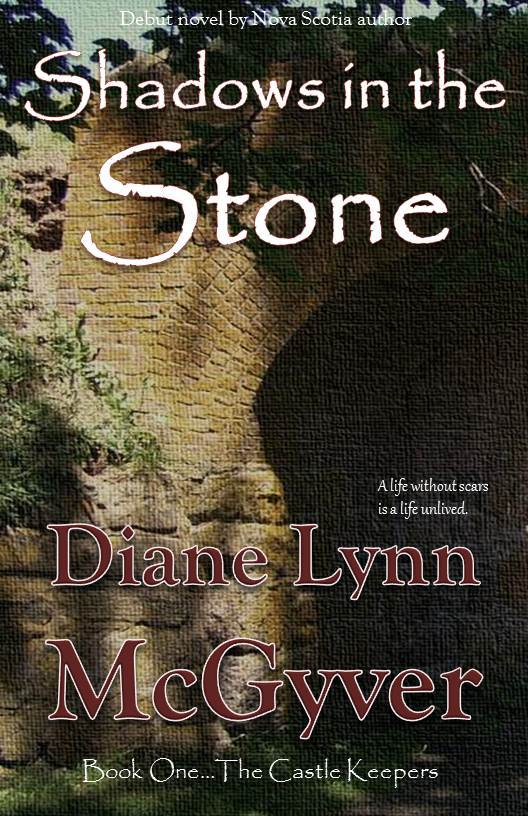
01dlmcgyver-shadows-in-the-stone-smallI’m pleased to introduce to you Diane Lynn McGyver, author of Shadows in the Stone. Please read my review here if you missed it. 

Diane is a Nova Scotia native who is quite the romantic, which you will discover from this interview, and a prolific writer. If you are in NS you may have read her articles.

Diane, welcome to my interview corner. Please tell us a little about yourself.

Lynn, thanks for having me here. So, a little about me: I enjoy tea, chocolate, raw cranberries, tart Cortland apples, ice skating, sitting in a boat for hours and letting the tide move me, gathering around a fire with family and friends, John Denver, walking in snow-covered woods at night, learning, Scottish music, exploring, adventure, stories and laughing. I’ve worn many hats in my life time and worked at more than 25 jobs, looking for satisfaction I never found except in the words of my own stories. I had been told by many I couldn’t keep a job. It wasn’t until I was forty I realised, “the jobs couldn’t keep me.”

It’s good you discovered what does keep you. When did you first know you wanted to be a writer? Who or what inspired you?

I have never not wanted to be a writer, but I was told it was a hobby only. Still, that was all I ever wanted to do from as far back as my earliest memories. If I had to lay blame on one reason why I am a writer, it would be the story itself, or more accurately, the capturing of a story, so it could be read later, perhaps years down the road.

As a writer, do you do much reading? Who were/are your favourite authors or books?

My first response would be: No, I don’t read a lot. But when I think about it, I read every day. If I had to tally up my reading time, it would probably be about six hours a day. I read fiction (novel and short story), nonfiction (for research, learning and pleasure), blogs (for the same reasons), email and various other types of writing.

The authors I enjoy most are Robin Hobb and Dr. Seuss. Oh the Places You Will Go is my most favourite. One by Richard Bach was the book that made me think the most.

Have you ever felt like giving up? When did you finally believe in yourself so you can say “I am a writer”?

I feel like giving up several days a month, but I keep moving in the direction of becoming a more confident writer. I don’t believe I can without a doubt call myself a writer. Perhaps it is because I do so many other jobs or because I can’t make a full living from my writing income. Is being a writer a destination, or is it the journey that makes us writers?

Good question! I think it is in the attitude of one’s will on that journey, and the destination – both say ‘writer.’ Do you have a motto or Bible verse or quote that you try to live by and that helps to keep you going?

I have a few favourite quotes posted at my desk or stored in the shadows of my thoughts for when I need them:

1) Be the hero in your own story.

2) Whether you think you can or you can’t, you’re right.

3) It could always be worse.

Good ones! What do you remember about your very first time to be published, how did that happen?

I was first published in East Coast Gardener magazine in 1998. It was a newspaper-style publication out of Yarmouth, NS. I became aware of it while working at the garden centre Lakeland Plant World in Dartmouth. When I went on maternity leave for my first child I became bored, picked up a pen and thought about submitting an article on gardening to the magazine. To my surprise the editor Carla Allen liked it and wanted to publish it. I was ecstatic. I think I received $25 for the 800-word article. The money didn’t matter though. My writing in print for all to read was the real reward. That one publication was all I needed for me to pursue a writing career.

An exciting start! What have you had published thus far? Of those, what do you most enjoy writing?

In the nonfiction category I’ve had a few dozen articles published in local and national magazines. They were about gardening, genealogy, horses, homemade soap, photography, raising kids and writing. My first column ran for six years. It was all about gardening. My second column focussed on genealogy. It celebrated its eighth year in October. Roots to the Past is currently published in four newspapers in Atlantic Canada.

In the fiction category I’ve published one fantasy novel (Shadows in the Stone), one romance novel (Pockets of Wildflowers), one anthology (Nova Scotia – Life Near Water) and several short stories. 

 My most favourite of all is writing fantasy novels.

There’s no doubt you are a writer, Diane. What process do you go through when writing and perfecting a book or article?

Step one: I write down the story as quickly as possible. I don’t look back and edit or I might stall or get stuck. Step two: I stash it in a drawer for a week or more. Step three: I read and edit it, then I go on the hunt for a list of words I’ve flagged (that, even, was…). Next I read it out loud and edit, then I print it and edit. And then…I read it and edit one last time. Then I send it off to an editor. When I’ve applied their suggestions I read it one more time. Then I’m ready to publish.

That’s something I learned when participating in NaNoWriMo, to not look back and edit along the way. I see it works well for you. What method do you use to keep track of your writing ideas?

I have a computer file where I stash ideas. If I have a title only, I write it on a piece of paper and tape it to the kitchen cupboard door. A few times I’ve dreamt entire books. When this happens, I immediately write a summary of the story, print it and stick it in a duotang.

What inspired you to write Shadows in the Stone?

When I was thirteen I was introduced to Dungeons and Dragons. It shined a new light on dragons, fairies and magic, one that captivated me. I studied the D&D books and played faithfully every Friday night. Yes, while other teens were out doing things that might horrify their parents, I was in a room with like-minded individuals seeking adventure. We didn’t stop until I was about eighteen. Those adventures left a lasting impression, one I wanted to preserve in story. And Shadows in the Stone was born.

How long did it take you to write Shadows in the Stone? Did you have to do any research? And how did you come up with that title?

I began Shadows in the Stone in the early 1980s. I wrote the original draft which didn’t tell the story I wanted to tell, so I started again. The second book was better but still not what I wanted. In 1998, home with my first child, I picked up the story again, and this time nailed it. I spent years rewriting, adding characters, taking them away, researching fairy and druid magic, spells, healing herbs, castles, mediaeval clothing, primitive food and weapons like swords and daggers. Along the way I also worked on my writing skills, learning more about nouns and verbs, dialogue tags, plot, style, characters, point of view, engaging readers and anything else that would make my story better. I invested in several books and dictionaries to help me on my adventure. I read blogs and talked to other writers. It was a long journey but well worth it.

I chose the title Shadows in the Stone because there are many secrets hidden in the shadows of Aruam Castle. Some are good and some are evil. I also love stones and feel they possess their own energy. I’ve used this idea and gave the stones in this story their own powers.

The word stone is used in all three book titles in this trilogy: Scattered Stones (to represent the scattered characters who long to be together) and Healing Stones (to represent the healing that must be done for a happy ending).

I look forward to the books to come! Did you write a little of yourself into any of the characters? Do you have a favourite?

I believe every character has a bit of me in them, including the ones who are not so nice. Bronwyn has my shyness and lack of confidence when it comes to issues of the heart, and he has my sense of honour for doing the right thing even when it doesn’t benefit him. Alaura possesses my dedication to getting the job done which sometimes makes her appear as an unfriendly individual. She also shares my love of nature and horses and learning. I gave Isla my serious side, my curiosity and sense of adventure. Tam is my quiet side; he thinks and does more than he talks. He’s strong, silent and keeps his troubles to himself. I didn’t know he was like this until after I knew him for a few days.

My favourite? That’s a difficult question. I suppose Bronwyn is because he possesses the high sense of honour with a dash of hidden humour I enjoy.

Why did you decide to publish your book in the non-traditional way?

Although I easily had nonfiction articles published since 1998, fiction was another matter. I had submitted several different stories to dozens of editors for more than ten years without success. Many times I had positive notes from editors, and even once was told the story would be accepted except they didn’t have room for it. I read about the many things others did to get published but nothing worked for me. Then I read about only one percent of submitted stories get published. It sounded near impossible for me to get accepted, or at least it would take years to receive the acceptance letter.

The final straw was the summer I submitted Shadows in the Stone to DAW in New York. They wanted the entire manuscript, not just the first few chapters and synopsis. It cost me almost a hundred dollars to submit, and I received only a simple rejection letter after waiting about three months.

That rejection hurt more than the dozens I had received beforehand. I had invested a lot of time, emotion, energy and money in that submission and got nothing for it. For several months afterwards I walked around in a daze, thinking I was going to give up, break the pencil and never write again.

Then I learned about self-publishing. And I learned this powerful quote (or something like this): Don’t let anyone else—not even an editor—tell you your story isn’t good enough for others to read.

I immediately began to learn how to self-publish and never looked back. It was the best decision I made in my writing career.

I can understand why you did what you did, although it’s a tough decision to make. What do you most enjoy about writing?

I most enjoy putting my feet in the shoes of the characters and telling their stories. Writing the first draft is the best part.

How do you find time to write when you are busy with life?

I make it a priority. I write every day without fail. It is the best part of my day. It’s why I rise, how I continue to make sense of the world and what makes me who I am.

What other interests do you have for a change from writing?

I have many interests. I love photography, drawing, painting, raising goats, watching movies, gardening, fishing, biking, hiking, camping, riding, baking, watching the stars, shovelling snow, yoga, reading, archery, boating, dancing, rock collecting, beachcombing, travelling, genealogy and exploring. I like sharing all these things with my kids.

How do you consistently write? Do you have writing goals– daily? Weekly? Monthly? Long range?

I make goals every year and break them down into months. I try to write 1,000 words a day, but I will settle for 500. I have also set goals to what I want to have accomplished in five years and ten years. In the next five years I’m supposed to have fifteen novels and two nonfiction books published. It’s a tough goal, but when I break it down to years and then months, I realise it’s not impossible.

Do you have another project in the works? Any hints you can share with our readers about that?

This year I’m working on several projects that are in various stages. My next romance Twistmas should be out in February. It was supposed to be out in December, but family turmoil threw me off course in the fall. The novella Fowl Summer Nights, a humourous story about a retired Canada Post worker, is due out this spring/summer. I’m excited about this project because it’s my first attempt at writing humour. It makes me laugh out loud, so I hope it makes others do the same.

Also due out this spring or summer is Scattered Stones, the second book in the Castle Keepers series. The fall will see When a Boy Becomes a Crow. It’s another attempt at humour.

Through my pen name Candy McMudd, I will release Throw Away Kitten in the spring. It tells the story about a problem many farmers have with people dropping off unwanted kittens. I’m in discussions with our local vet hospital to see if they will offer the youth novel for sale in their office. A portion of the profit will go into a fund which will pay for spaying or neutering of cats owned by people who can’t afford to get their animals fixed.

Wow! You are busy! What a nice thing to do with your Throw Away Kitten book. Finally, do you have any advice for hopefuls?

My advice is to write. Apply butt to chair and write every day if you can. Don’t give up on your dream. Keep learning about writing. It will inspire you to write more. Attend workshops and join writers groups. Don’t let anyone tell you your writing isn’t important, that no one wants to read it. It is, and you will find readers.

Thank you for this encouraging advice, Diane, and thank you for an interesting and detailed interview. 

Now for the giveaway: Are you interested in winning a copy of Diane Lynn McGyver’s book Shadows in the Stone? Please leave a comment about what most interested you in this interview for your chance to win. At 6 PM EST on Tuesday, February 4, not one name but TWO NAMES will be pulled from the basket! Yes, you have two chances to win!

Diane said, “I’ll give away two eBook copies of Shadows in the Stone with this interview. I’ll provide coupons to Smashwords, so they can choose the format they wish to have.”  

I will be contacting the winners after 6:00 PM EST on February 4, so be sure to check your email. You could be a winner of Shadows in the Stone. 🙂

Thanks for reading, and … Creative Musings! 🙂

Interview with Steve Vernon, and book giveaway!

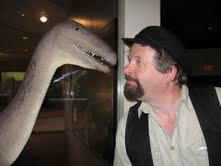
Steve VernonToday it is my pleasure to introduce to you bestselling author Steve Vernon, author of Sinking Deeper OR My awesome brilliant Questionable Heroic Decision to Invent a Sea Monster.  Please read my review HERE.

Steve has published over fifty short stories, as well as the books Halifax Haunts, Wicked Woods, Haunted Harbours, and his children’s picture book, Maritime Monsters. He lives in Halifax, Nova Scotia, Canada.

Steve, it’s my pleasure to welcome you to my author interview corner. 😉 I have been wanting to do this for awhile and now seems a good time. Please get comfy and tell us a little about yourself.  

Hi, Lynn. I’m happy to be here.

A little about myself?

I’m a storyteller – first and foremost. I grew up in Northern Ontario, raised by my grandparents, and came to Nova Scotia when I was seventeen years old to get to know my Mom. I fell in love with the Atlantic Ocean from the first time I saw it and have lived here ever since – although I have hitchhiked across Canada a couple of times.

When did you first know you wanted to be a writer? Who or what inspired you?

The problem with a writer’s memory is it is a bit of a stew pot, in that has been constantly stirred. Trying to pinpoint a memory like that is a little like trying to hunt up my favourite chunk of carrot from somewhere within the middle of the pot. I do remember sending a story to Alfred Hitchock’s Mystery Magazine – back when I was eleven years old. I received an actual hand-written rejection letter – because I believe some slush reader had kids of their own.

I also remember the morning that W.O. Mitchell –  author of Jake and the Kid and Who Has Seen The Wind – came to our English class as a guest author. I’d say right then and right there I decided to myself that I was going to grow up someday and become an author.

I’m still working on that whole “growing up”  part of the equation…

Well, don’t worry, Steve; growing up doesn’t seem to be all it’s cracked up to be (although I still have a long way to go myself). As a writer, do you do much reading? Who were/are your favourite authors or books?

I read every day.

As a writer, I have to.

Whenever someone comes to me and says – “I want to be a writer” – the first thing I ask them is –  “What have you read?”

If they tell me – “Well, I’m not all that much of a reader” – I promptly punch them in the nose – or, if they know karate or are of any potential size I might just shoot them once or twice with a ball of high-caliber sarcasm.

Fact is – WRITERS NEED TO READ.

You can’t a drive a car without gas.

You can’t exhale without inhaling good air.

A fire needs good firewood.

Say it again – WRITERS NEED TO READ.

My favourite authors include Stephen Hunter, Robert Parker, Brian Keene, Joe Lansdale, Bernard Cornwell, Gary Paulsen and Conn Iggulden.

I agree about the reading. Have you ever felt like giving up? When did you finally believe in yourself so you can say “I am a writer”?

For me, giving up has always been an exercise in futility.

The fact is – no matter what I tell myself – sooner or later I find myself sitting down and making up a story. I am a born storyteller – it is something that is genetic in me. So saying that I’m depressed and that life isn’t worthwhile and that I’m going to quit writing and storytelling is about as sensible as me saying that I’m going to quit breathing.

In fact – that’s another one of my rules for determining if someone is a writer or not. If they are driven to do this – to string words together and convey ideas upon the computer screen or a piece of paper – then they are most likely supposed to be some sort of a writer.

It’s like a fellow who wants to be a painter. Odds are – if he is any kind of visual artist at all – he will have already established a LONG career of doodling and crayon coloring.

Writing – for me – is a natural obsession.

I’ll give it up on the day that they dump about thirty or forty shovels full of dirt on my box.

Then we can expect many more books from you. 🙂 Do you have a motto or Bible verse or quote that you try to live by and that helps to keep you going?

“He was an old man who fished alone in a skiff in the Gulf Stream and he had gone eighty-four days now without taking a fish.”

And if anyone out there can’t peg that quote then you really need to make time to read a few more books.

I’m glad to say I recognize those words. 🙂 What do you remember about your very first time to be published, how did that happen?

First story I sold was to a biker magazine –  “OUTLAW BIKER”. They paid $150.00 and a contributor’s copy –  a magazine with more breasts, beards and motorbikes than I had ever seen together at any one time.

Now back then – in the mid-eighties –  that size of a check was about the same as I got paid for several days of flipping hamburgers at a fast food joint – where I was working at the time. So I remember thinking to myself – “Wow, I’m going to be rich.”

It didn’t work out quite as easily as that.

Interesting start! What have you had published thus far? Of those, what do you most enjoy writing?

I could fill a book with everything that I have written. I’ve sold close to a hundred short stories. I’ve got seven regional books out through Nimbus Publishing – (Haunted Harbours: Ghost Stories of Old Nova Scotia, Wicked Woods: Ghost Stories of Old New Brunswick among others). I’ve released about thirteen e-books through Crossroad Press. I have also released eight e-books independently.

Besides that I have written – and sold –  about one hundred fifty book reviews. I have written and sold about a hundred poems. I have written and sold several dozen author interviews. I have written and sold a couple dozen articles and have written and sold one radio play.

I like to keep busy.

Which do I enjoy the most?

Well – I really DO enjoy the work that I get paid for an awful lot. There is a real satisfaction in receiving an actual cheque in the mail for my words.

I could also tell you that I ALWAYS enjoy the work that I am doing at any point in time. Whatever story, novella, novel or script that I am working on – that is the one that I love the most.

However – if I really had to be pinned down to one particular work – I would have to say that Sinking Deeper OR My awesome brilliant Questionable Heroic Decision to Invent a Sea Monster was my absolute favourite work. I really enjoyed creating that young adult novel.

You are a very prolific writer! What process do you go through when writing and perfecting a book or article?

There are two processes that I can tell you about.

The first is the ideal process.

The ideal process consists of writing a manuscript and then putting it away for the next month while I work on something else. Then – after the manuscript has suitably cooled down and I have had enough of a chance to fall out of love with each little turn and twist of phrase and every single plot entanglement – I stomp through it with an eye for continuity and entertainment value.

HOWEVER…

I sometimes end up rattling something off at the very last minute, running my eyeball over the computer screen to see if anything TOO obnoxious happens to stick out, and then throwing it between two pieces of cardstock and calling it a book.

My usual procedure falls somewhere in between those two schools of thought.

What method do you use to keep track of your writing ideas?

I scribble them somewhere, put it under a likely looking heap on my desk and then forget about it. Years later, usually around the January resolution-making season, I stumble across that scribbled note while making an entirely-too perfunctory attempt to clean up this sorry landfill that I call a desk – and I think to myself –  “Hey, that would probably make a pretty good story.”

Then I most likely will put that note back under another heap of scrap paper to mature a little longer.

It is – in hindsight – sort of a compost-heap approach to writing.

Funny! 🙂  What inspired you to write Sinking Deeper OR My awesome brilliant Questionable Heroic Decision to Invent a Sea Monster?

That’s an easy question.

Let’s see if I can make the answer a little more confusing than it needs to be.

For starters – I wrote that novel because I REALLY wanted to write something for all of the kids that I visit through the WRITERS IN THE SCHOOL program. My ghost story collections are VERY popular amongst junior high and high school students – but I REALLY wanted to come up with an actual chapter-by-chapter novel for that age group.

So I came up with Sinking Deeper OR My awesome brilliant Questionable Heroic Decision to Invent a Sea Monster.

If you want me to get philosophical about it –  the book is actually my ode to the oral storytelling tradition. Granddad Angus is sort of a role model for myself – the kind of storyteller that I would like to grow up to become – assuming I ever get around to actually growing up.

I am VERY proud of this particular novel –  especially now that it has made the shortlist of BOTH the Hackmatack and the Silver Birch award. That is an awesome achievement for a writer who really did not know what he was doing at the time that he did it.

You have good reason to be proud of this novel. It looks as if you might have had fun writing this book. How long did it take you to write it? Did you have to do any research? 

I had a lot of fun writing this book.

Research was minimal. I had spent a couple of years – off and on – living in the town of Yarmouth. I worked in a fish plant, raked blueberries, worked in a cotton mill and indulged in all manner of small town activity. I woke to bagpipes every morning of the two years that I spent attending Kings College University. I even threw a caber quite a few summers back. Dropped it to a reasonable eleven o’clock position – which isn’t too shabby for a beginning caber chucker.

As for the sea monster – well, I had been thinking about that particular idea since I was a kid.

Did you write a little of yourself into any of the characters? Do you have a favourite?

I’d have to say that I want to be Granddad Angus – and I probably was Roland – as a child growing up.

Did you find any part of the story difficult to pull together? If so, how did you stick with it?

Writing for kids is HARD work.

Don’t let ANYONE tell you that writing for children is easy.

I put more sweat into the creation of that novel SINKING DEEPER and the writing of my children’s picture book MARITIME MONSTERS than ANY of my other works.

I stuck with it because I have bills to pay. If in doubt I ALWAYS apply a working man’s ethic to my craft. My muse wears work boots and punches that time clock like it was a religion.

That sounds productive. How did you go about finding a publisher?

Well – I’ve got several publishers –  but I’d have to say the publisher that has done the MOST to help make me the writer I am today is Nimbus Publishing. I connected with them on my very first ghost story collection – way back in 2004  – when I pitched my book at the First Annual Halifax Word on the Street Pitch the Publisher’s event.

Pitch the Publisher was basically a sort of Dragon’s Den for writers. You are given a very few moments to tell three different maritime publishers about your book – and WHY they ought to publish it. The event has gone on every year since 2004 – but as far as I have been told my book Halifax Haunts: Ghost Stories from Old Nova Scotia was the very first book to actually make the leap from a pitch session to a published work.

The book remains my bestselling work – with over ten thousand copies sold to date – which isn’t all that bad for a Canadian regional press.

Fantastic! Tell us what honours this book (Sinking Deeper) has received thus far and what is coming up.

As I mentioned – the book has made the short list for both the Hackmatack and the Silver Birch awards for Children’s Fiction. There is no cash prize involved – but both award committees have made certain that copies of Sinking Deeper have been bought and placed in school libraries across the maritimes and Ontario. That – in itself – is a huge benefit – and I am exceedingly grateful for this opportunity.

As a result I will be taking part in school and library readings across the maritimes – and possibly a few in Ontario – although transportation is an issue. I will be appearing at the OLA Conference this year – at the Follett Table on February 1st – at 11:30am. Any of you writer-types or librarians attending I’d be happy to meet with you.

I hope someone reading this can take you up on the invitation. Congratulations  on making the short lists! Do you have another job you go to daily? If so, how do you find time to write when you are busy with life?

Oh yes – I have a day job.

It pays the bills.

As to how I find the time to write – I get up early and drink a LOT of coffee.

What other interests do you have for a change from writing?

I garden a little, shovel snow – (hey, it’s Canada) – and work out a little. I read and I watch WAY too many old movies thanks to the Turner Network.

Fortunately we don’t have snow all year! I understand about old movies; I like the Turner Network, too. How do you consistently write? Do you have writing goals – daily? Weekly? Monthly? Long range?

Writing goals have unfortunately been relegated to the realm of forgotten New Year’s resolutions.

I write as often as I can – as well as I can – not nearly often enough.

And yet you are an accomplished author. Do you have another project in the works? Any hints you can share with our readers about that?

I’m currently working on completing a young adult serial/series that is available in Kindle and Kobo format. The work is entitled Flash Virus and it consists of six separate episodes that will eventually form a stand-alone book. I am currently halfway through Episode Five. The first episode is free – in both Kindle and Kobo – and I have given away about 8-10 thousand copies through both networks.

It’s basically the end-of-the-world as told by a teenager.

The protagonist – Briar Gamble – has to react when his school is “invaded” by evil cellphones and a creepy pale-faced mad genius whom the kids refer to as Captain Albino.

You want a taste of it – here’s the first sentence.

“So as near as I could tell the end of the world began roughly about the time that Billy Carver’s butt rang – about halfway through the War of 1812.”

Eight to ten thousand free copies? Wow! (I am reading one of those.) And that first sentence is a good hook. 🙂 Finally, do you have any advice for hopefuls?

Read every day – not just what you like to read – but read other stuff as well. Read action novels, political tomes, fairy tales, ghost stories, historical yarns, romance novels.

Feed the fire.

Grow yourself an iron-hard rhinoceros hide. This is NOT a profession for the easily discouraged.

Explore your imagination.

Don’t forget to tell a story.

Beginning, middle, end – save the artistic timelines for Quentin Tarrantino and the like.

Don’t give up the day job and remember to have fun.

If all else fails, go and fly a kite.

Great advice! Thank you, Steve, for this enjoyable and informative interview. You certainly gave us a different slant on things.  🙂
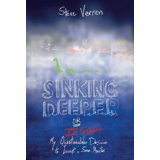
Sinking Deeper by Steve VernonNow for the giveaway: Are you interested in winning a copy of Steve Vernon’s YA novel – “Sinking Deeper OR My awesome brilliant Questionable Heroic Decision to Invent a Sea Monster”? Please leave a comment about this interview for your chance to win. At 6 PM EST on Tuesday, February 5, one name will be pulled from the basket and I will contact the winner for a mailing address so Steve can send the winner a book!   :) Be sure to check back.

 Thanks for reading, and … Creative Musings!  🙂