Sue Harrison’s Writing the Third Dimension, Part 28: One More Time – Fourth Draft

Welcome back! For the rest of this year we invite you to return here, specifically on the fourth Thursday of each month for the newest installment of Sue Harrison’s teaching: Writing The Third Dimension. You can read and learn from all the fabulous segments from 2013-2015 by clicking on the page title WRITING THE THIRD DIMENSION, found under Writers’ Helps & Workshops on the drop-down menu. Please feel free to ask questions and leave comments for Sue. Now for the topic for month twenty-eight:

*****

“Writing the Third Dimension” – part 28: One More Time – Fourth Draft

In my growing-up years, our elementary school classrooms each  included a two-shelf “library,” and, during the first ten weeks of every school year, I would work my way through all the library books. Then I would read through to the end of my reading book, and then my social studies book. After that, I would sit at my desk during rainy recesses and be bored. Until I “took up” drawing.

In the third grade, I was fascinated with Disney characters, and I drew my way from Snow White to Cinderella, Mickey and Minnie and on to Dumbo, and all the rest. I kept my drawings in a notebook in my desk, a “family” that I belonged to during my school days. As I became more adept at drawing, I noticed an odd phenomenon. When I completed a drawing, I was delighted with it. It looked perfect to my eyes, but the next day, when I took it out, I would notice that somehow overnight in my desk, that drawing had become far less than perfect, and usually the whole thing had a persistent slant one way or the other.

IMG_1862

One of my imperfect drawings! Ilagix is an Aleut word that means peace in the sense of friendship.

Now as an adult and a novelist, whatever gets “put away” as a perfect scene is never perfect the next day and even becomes worse the next week or the next month. When I’m up-close to my work, I just don’t see the imperfections. I need a little distance. I handle that need in two ways.

First, I let my writing “rest. ” Unfortunately, with deadlines clamoring, that rest period is usually limited to a couple of weeks, a month at most. That’s why my second solution to this problem is so important. I have readers. In the writing world, these readers are called Beta Readers.

These folks are friends who aren’t afraid to tell me about the book’s imperfections. They don’t mind sharing their ideas, and they don’t get their feelings hurt if I choose not to implement their suggestions.

My readers fall into two categories. Some read scenes only, and they read for specific knowledge areas. My father, for example, has degrees in soil sciences and agriculture. He reads my “plant and soil” sections. My husband reads action scenes. Other friends read for animal husbandry and others for topography. Some read the hunting scenes, and others concentrate on the details of my setting.

My second group of readers read the whole manuscript. When my mother was able to edit, she read my manuscripts for typos and grammar. Her gift was languages, and she was particularly good at catching the problems in the writing itself. I have one reader who is an expert at personality disorders, and several who bring the younger-generation focus to the manuscript.

With my current manuscript, I also plan to hire a professional editor. His specialty is reading for flow, market appeal, and vision, but I won’t send him my manuscript until I’ve made the corrections and changes suggested by my Beta Readers.

When I’ve received their suggestions, I do one huge marathon session that lasts about a week, maybe two, and write in their corrections. That’s it for Fourth Draft.  If you guess that it ranks right up there as one of my favorites, you’re right! And I marvel at the ideas and the wisdom of those people so willing to help me for nothing but my gratitude and a paltry mention in the Writer’s Acknowledgements.

How do you feel about letting others read your work? Nervous, anxious to share, shy, reluctant?

Strength to your pen,

Sue

 *Writing the Third Dimension, copyright, 2010 Sue Harrison*

Sue HarrisonBestselling author, Sue Harrison, has written two bestselling Alaska trilogies: The Ivory Carver Trilogy and The Storyteller Trilogy – all of which went digital in May 2013. She also wrote a middle readers’ book SISU. Prior to the publication of her novels, Harrison was employed at Lake Superior State University as a writer and acting director of the Public Relations Department and as an adjunct instructor in creative writing and advanced creative writing. For more information, click here. To inquire about booking Sue for workshops or speaking engagements this year, click here.

Thanks for joining us! Please feel free to leave your questions and comments. We invite you to come back June 25, 2015, for part 29.

 

Sue Harrison’s “Writing the Third Dimension”, part 27: One More Time – Third Draft

Welcome back! For the rest of this year we invite you to return here, specifically on the fourth Thursday of each month for the newest installment of Sue Harrison’s teaching: Writing The Third Dimension. You can read and learn from all the fabulous segments from 2013-2015 by clicking on the page title WRITING THE THIRD DIMENSION, found under Writers’ Helps & Workshops on the drop-down menu. Please feel free to ask questions and leave comments for Sue. Now for the topic for month twenty-seven:

*****

“Writing the Third Dimension” – part 27: One More Time – Third Draft

I love writing Third Drafts! Third Drafts don’t involve the hard mental work necessary in writing a First Draft, and Third Drafts rise above the disillusionment of the Second Draft. By the time I’m writing a Third Draft, I’ve accepted the fact that my novel is not, and never will be, perfect. Acceptance escorts me into that place of hope where happy novelists live. Perhaps, just perhaps, my book will touch someone’s heart.

During the Second Draft of a novel, I dissect the book – scene by scene and chapter by chapter. I rewrite it the same way. With the Third Draft, I read the novel in one big gulp.  Here’s the process:

1. I read the novel, usually the version that “resides” on my computer.

2. As I read, I leave myself notes where changes are necessary. Sometimes I need to cut or expand descriptive passages. Sometimes, I need to delete a repetitive scene or an “already-been-said” dialog. If I find that I should add a chapter or two or even three, I write myself a short paragraph, within the text, that tells me what action needs to occur, which characters are involved, and what motivates those characters.

3. After I’ve read the entire novel, I go back and make the noted changes.

4. If I’ve added any new chapters, I read them through several times to smooth the edges and make sure they meld into the rest of the novel.

5. I print out the whole thing, three-hole punch the pages, and place them into a binder.

6. That’s it. Third Draft done!

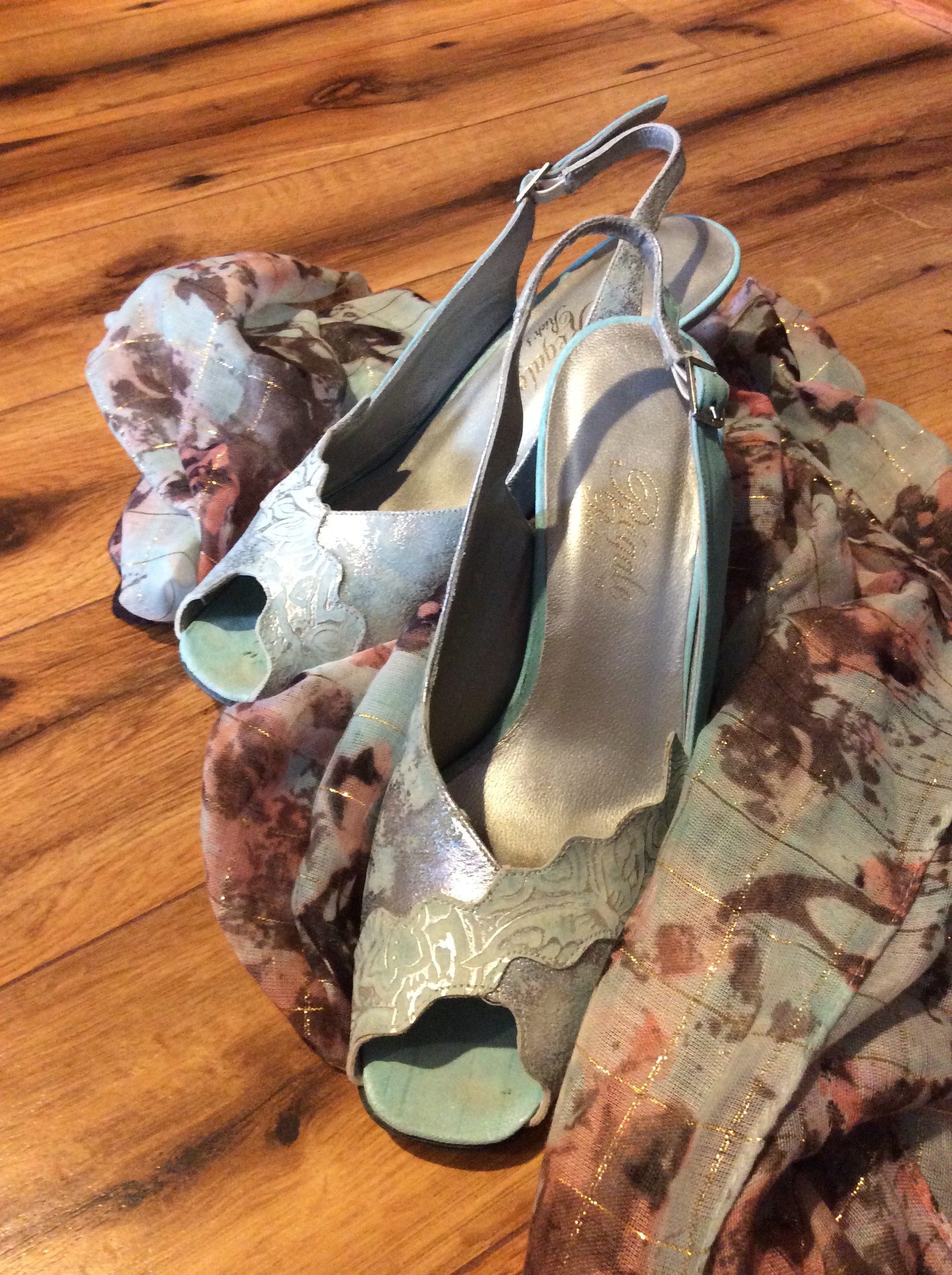
This is another celebration time for me. My husband and I will have a dinner “out” or maybe go to a movie, or I might just stop at our local shoe store…. *grin*

shoes


Question for you: How do you celebrate the small victories in your life?

Strength to your pen!

Sue

 *Writing the Third Dimension, copyright, 2010 Sue Harrison*

Sue HarrisonBestselling author, Sue Harrison, has written two bestselling Alaska trilogies: The Ivory Carver Trilogy and The Storyteller Trilogy – all of which went digital in May 2013. She also wrote a middle readers’ book SISU. Prior to the publication of her novels, Harrison was employed at Lake Superior State University as a writer and acting director of the Public Relations Department and as an adjunct instructor in creative writing and advanced creative writing. For more information, click here. To inquire about booking Sue for workshops or speaking engagements this year, click here.

Thanks for joining us! Please feel free to leave your questions and comments. We invite you to come back May 28, 2015, for part 28.


Sue Harrison’s “Writing the Third Dimension” – Part 26: One More Time – Second Draft

Welcome back! Over the next several more months we invite you to return here, specifically on the fourth Thursday of each month for the newest installment of Sue Harrison’s teaching: Writing The Third Dimension. You can read all the segments by clicking on the page title WRITING THE THIRD DIMENSION, found under Writers’ Helps & Workshops on the drop-down menu. Please feel free to ask questions and leave comments for Sue. Now for the topic for month twenty-six:

*****

“Writing the Third Dimension” – part 26: One More Time – Second Draft

You’ve just accomplished something that few people ever do. You’ve finished the First Draft of your novel. You’ve written it down on paper, or it’s on your computer, or floating around on The Cloud somewhere. I hope you treated yourself to a wonderful celebration.

I also hope you’ve completed that celebration, because the Second Draft looms large.

In my experience, the Second Draft is always easier than the First Draft; however, I’ve also found that each Second Draft turns out to be more difficult than I thought it would be.

Here’s why. When I complete the First Draft, I envision my novel as an amazing work of literature. I’m at the top of my form. I can hear the critics’ applause. Then I begin the Second Draft. The first chapter usually goes very well. Second, not quite so well. By the end of the third chapter, I’m winded. In the fourth, I’m horrified. This novel is NOT amazing. It’s not even CLOSE to amazing. Oh, rats, oh rubbish. The critics will boo and hiss. Oh my poor, poor readers — I’ve let them down eternally. *Sigh* *Whimper*

You get the picture. It’s not the rewriting that’s so tough. It’s the discouragement. I’m not perfect, and, far worse, neither is my novel.

I wallow in self-pity for an hour or two. Then I raid the cupboards for something fattening, and I eat it.

candies


Then I decide that none of that has helped my ego or the novel, so I do the brave thing. I go back and attack the Second Draft not as the wimp that I am, but as the warrior I intend to become, which means I don’t do the easy stuff. I don’t worry about typos, spelling, or even research. Second Draft is all about “major repairs.” I concentrate on two  areas — point-of-view-character development and plotline. I work chapter by chapter, and, within each chapter, I work scene by scene.

I ask myself these two questions:

1. Does this chapter or scene advance my plot onward and upward toward that far off eventual climax? If not, I chart out a quick outline of what I need to do to make the plot work.

2. Do my characters’ actions illustrate what the reader will eventually discover about those characters regarding their motivations,  emotional baggage, needs, and abilities?

Then I rewrite the scene or the chapter.

Over the years, I’ve adopted a “Second Draft coping mechanism.” During Second Draft, I seldom skip backwards within the novel to make minor changes in earlier chapters simply because in Chapter Forty-Seven or Chapter Sixty-Two I decided to add some odd little quirk. I leave myself a note within the manuscript. For example, [“Sue, go back and give Jorn unusually large hands.”] I do the same thing with areas that need more research. [“Sue, look up Eastern European elm trees — shape of leaves.”]

I’ve found that if I go backwards in the manuscript during the Second Draft to make minor changes, I tend to get caught in a loop, and I keep rewriting the same few chapters over and over again, because it’s easier than going on with the remainder of the novel to address plotline failures and weak characterization.

Yes, as I write the Second Draft, I’ll rearrange my words, shorten or lengthen descriptive passages, and sometimes throw in new scenes or new minor characters. Sometimes even a whole new chapter. Nonetheless, in my novels, Second Draft is all about admitting and correcting imperfections on the “big screen” of plot and characterization.

Question for you: Do you write your first draft by hand, record it as an “audible,” or do you work on a typewriter or  a computer? (There’s no wrong answer on this. Every writer should do what is comfortable for him or her. I’m just curious.)

Strength to your pen!

Sue

*Writing the Third Dimension, copyright, 2010 Sue Harrison*

Sue HarrisonBestselling author, Sue Harrison, has written two bestselling Alaska trilogies: The Ivory Carver Trilogy and The Storyteller Trilogy – all of which went digital in May 2013. She also wrote a middle readers’ book SISU. Prior to the publication of her novels, Harrison was employed at Lake Superior State University as a writer and acting director of the Public Relations Department and as an adjunct instructor in creative writing and advanced creative writing. For more information, click here. To inquire about booking Sue for workshops or speaking engagements this year, click here.

Thanks for joining us! Please feel free to leave your questions and comments. We invite you to come back April 23, 2015, for part 27.

Sue Harrison’s “Writing the Third Dimension” – part 25: The End

Welcome back! Over the next several more months we invite you to return here, specifically on the fourth Thursday of each month for the newest installment of Sue Harrison’s teaching: Writing The Third Dimension. You can read all the segments by clicking on the page title WRITING THE THIRD DIMENSION, found under Writers’ Helps & Workshops on the drop-down menu. Please feel free to ask questions and leave comments for Sue. Now for the topic for month twenty-five:

*****

“Writing the Third Dimension” – part 25: The End

You’ve worked so hard writing the first draft of your novel, and finally, finally, there you are — one last chapter left to go. After a marathon that has required every ounce of your strength and endurance, you can see the finish line.

You gulp in a deep breath, and, on a huge burst of adrenalin, you tie up remaining threads of the plot and proudly type those two words you have been striving toward throughout the whole, long process:

THE END

TaDa!! Celebrate!!

InflatableBalloons

I hate to burst your balloons, but, before you celebrate, you need to answer a few questions. If you answer “yes,” then you really have finished your first draft. If you answer “no,” you need to go back and work on those last few chapters. Groan!

Don’t get discouraged. Even if you need to rewrite, you can handle it. After all, you’ve already written hundreds of pages. This will be easy-peasy. Well, almost easy-peasy.

Let’s dive into those Before-You-Celebrate questions:

1. Last month we talked about the climax of your novel. Does your final page take place only a chapter or two after the climax?  Yes? Then hooray! If not,  you may need to shorten this after-climax portion. You risk losing your readers’ attention if you prolong the unwinding that occurs after the novel’s emotional high.

2. In your excitement at nearing the end of your novel, have you continued to show your scenes rather than tell them to the reader? It’s so tempting to rush through that last chapter.

3. Did you avoid the classic error of allowing one of your characters to indulge in a long-winded monologue to tie up any loose ends? Good! Then celebrate. If not, rewrite so that some of the information is doled out in a short scene or two, and any necessary monologue is brief!

4. And by the way, did you tie up all those loose ends? If you are planning a sequel, then a few loose ends are fine! If not, you need to weave them into the natural progression and outcome of your storyline.

5. Did you refuse to end your novel with a “Deus ex machina” scene? In ancient Greek plays, the endings were often based around a Greek god coming down in a “machine” (a basket hooked to a pulley system) to “magic” away all the problems. Don’t allow a contrived ending to spoil your previous hard work.

All right. Now, are all your answers YES? Hooray!! Then Celebrate! (And next month, we’ll talk about second drafts. Mwahahaha….)

Tell me about your first draft experience. Do you enjoy writing first drafts or is that the most difficult part of the process for you?

Strength to your pen!

Sue

*Writing the Third Dimension, copyright, 2010 Sue Harrison*

Sue HarrisonBestselling author, Sue Harrison, has written two bestselling Alaska trilogies: The Ivory Carver Trilogy and The Storyteller Trilogy – all of which went digital in May 2013. She also wrote a middle readers’ book SISU. Prior to the publication of her novels, Harrison was employed at Lake Superior State University as a writer and acting director of the Public Relations Department and as an adjunct instructor in creative writing and advanced creative writing. For more information, click here. To inquire about booking Sue for workshops or speaking engagements this year, click here.

Thanks for joining us! Please feel free to leave your questions and comments. We invite you to come back March 26, 2015 for part 26.

Sue Harrison’s “Writing the Third Dimension” – part 24: Way up High in the Sky

Welcome back! Over the next several more months we invite you to return here, specifically on the fourth Thursday of each month for the newest installment of Sue Harrison’s teaching: Writing The Third Dimension. You can read all the segments by clicking on the page title WRITING THE THIRD DIMENSION, found under Writers’ Helps & Workshops on the drop-down menu. Please feel free to ask questions and leave comments for Sue. Now for the topic for month twenty-four:

********

“Writing the Third Dimension” – part 24: Way up High in the Sky

When my husband graduated from college, we decided to celebrate with a trip to the Rocky Mountains. As we drove west across the plains, we scanned the edge of the horizon for those fabled peaks, but mile after mile, no matter how carefully we looked, we couldn’t see any mountains. We did notice a hazy jagged band of white clouds, but we ignored them, until we finally realized that they weren’t clouds at all. They were the snow-capped peaks of the Rockies, not at the horizon as we had envisioned, but way up high in the sky. We were amazed!

800px-Mount_Massive (Photo by Rick Kimpel Jr., Common Domain)

As you know, mountain peaks and valleys are often used as a metaphor for the plot line of a story. When your readers approach the high climax of your novel, you want them to catch that same feeling of awe that Neil and I experienced when we first saw the Rocky Mountains. From chapter one, page one, you have guided your readers toward a moment of emotional intensity: joy or heartache or amazement or happiness or fulfillment. Carrying your readers to that high level requires a bit of magic beyond my ability to explain, but I hope the following tips help as you work to achieve that goal.

1. Your reader will not be lifted to a climactic level of emotion unless the character they love most or hate most is experiencing a similar emotional high or emotional release.

2. You need to ramp up the intensity of your novel through the rhythm of your words and the length of your sentences and paragraphs. (You might want to review Writing the Third Dimension #18, Tension.)

3. For the primary climax of  your novel, you should narrow your focus to the main plot line and the main characters.

4. The climax is not something tacked on or patched in, it’s the natural fulfillment of the plot line.

5.  And of course, you show, don’t tell. Nothing breaks the rise of emotion like a short, pat sentence as a substitute for action. “He released his anger.” “She would love him forever.” “The butler did it.”  ARGH! NO! Don’t tell me. Give me an action scene. Please…

I’ve had two very separate experiences when writing the climax of a novel. Usually, the words just flow, and the first draft, although not perfect, is better than I had hoped. But sometimes I have to write the climax again and again and again. How do I know when it’s right? It makes me smile, and it makes me cry. What better place for a writer to be than way up high in the sky, standing on top of the world, ready to give his or her readers the gift of tears, the gift of a smile?

Strength to your pen!

Sue

*Writing the Third Dimension, copyright, 2010 Sue Harrison*

Sue HarrisonBestselling author, Sue Harrison, has written two bestselling Alaska trilogies: The Ivory Carver Trilogy and The Storyteller Trilogy – all of which went digital in May 2013. She also wrote a middle readers’ book SISU. Prior to the publication of her novels, Harrison was employed at Lake Superior State University as a writer and acting director of the Public Relations Department and as an adjunct instructor in creative writing and advanced creative writing. For more information, click here. To inquire about booking Sue for workshops or speaking engagements this year, click here.

Thanks for joining us! Please feel free to leave your questions and comments. We invite you to come back February 26, 2015, for part 25.

Sue Harrison: “Writing the Third Dimension” – part 23: Books, Books, Books!

Welcome back! Over the next several more months we invite you to return here, specifically on the fourth Thursday of each month for the newest installment of Sue Harrison‘s teaching: Writing The Third Dimension. You can read all the segments by clicking on the page title WRITING THE THIRD DIMENSION, found under Writers’ Helps & Workshops on the drop-down menu. Please feel free to ask questions and leave comments for Sue.

** Note: Last year we took a break from WTTD in December, but this year Sue has prepared a special post which is up a week early to give you time to shop. Therefore, there is no post from Sue on December 25, the fourth Thursday of this month.

Now for the topic for month twenty-three:

********

“Writing the Third Dimension” – part 23:  Books, Books, Books!

To celebrate the busy, happy, and frantic holiday season, my 2014 Christmas card to you is a very short post about the question I’m asked most frequently by new writers.

The Question: What’s the one most important thing I can do to help develop my writing skills?

The Answer: Read!

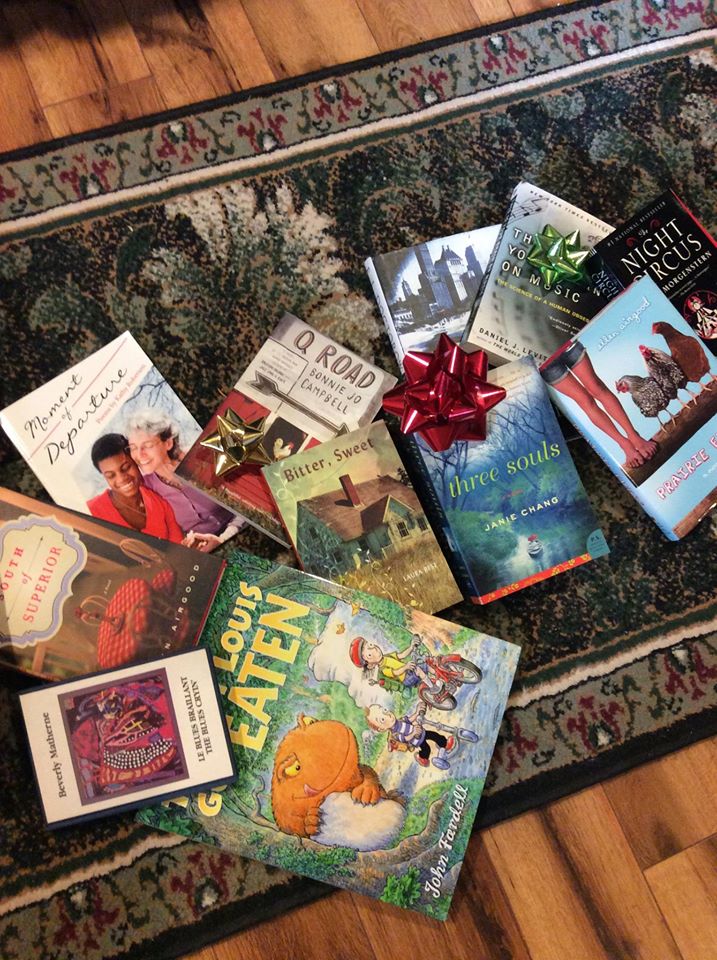
booksSo, during this holiday season, which for me means a Christmas celebration and for many others means Hanukkah or Kwanzaa or even December birthdays, my suggestion is to give books — to others and to yourself! Merry Christmas, Happy Hanukkah, Joyous Kwanzaa, Happy Birthday, and Happy New Year!

Strength to your pen!

Sue

 *Writing the Third Dimension, copyright, 2010 Sue Harrison*

Sue HarrisonBestselling author, Sue Harrison, has written two Alaska trilogies: The Ivory Carver Trilogy and The Storyteller Trilogy, and a middle readers’ book SISU. Prior to the publication of her novels, Harrison was employed at Lake Superior State University as a writer and acting director of the Public Relations Department and as an adjunct instructor in creative writing and advanced creative writing. For more information, click here. To inquire about booking Sue for workshops or speaking engagements this year, click here.

Thanks for joining us! Please feel free to leave your questions and comments. We invite you to come back January 22, 2015 for part 24!

PS: If you need some book suggestions please check out my BUY THE BOOK! page, and my BOOK REVIEWS page.

Sue Harrison’s “Writing the Third Dimension” – Part 22: Flying – By the Seat of Your Pants

Welcome back! Over the next several more months we invite you to return here, specifically on the fourth Thursday of each month for the newest installment of Sue Harrison’s teaching: Writing The Third Dimension. You can read all the segments by clicking on the page title WRITING THE THIRD DIMENSION, found under Writers’ Helps & Workshops on the drop-down menu. Please feel free to ask questions and leave comments for Sue. Now for the topic for month twenty-two:

********

“Writing the Third Dimension” – part 22: Flying – By the Seat of Your Pants

My husband and I have major differences when it comes to attacking a project. He’s the plan-and-research guy. I’m the gal who starts right away and screeches to a halt in the middle of the mess to realize that I don’t know where I am or how I got there.

In the world of book-writing, these two approaches are generally labeled as Planner (or Plotter) versus Pantster. Pantster refers to”flying by the seat of your pants.” I’m a Planner with my research, which I define, lay out, and adamantly pursue. I also get to know my characters very well before I write their “stories.” However, when it comes to writing the story, I’m pretty much a Pantster. I love the creativity and freedom writing as a Pantster engenders.

IMG_05431(I AM glad my husband is a Planner, because he is also a pilot, and I DO NOT want my pilot to fly by the seat of his pants!)

If you are a Planner, you’re probably doing just fine with your first draft. You’re following your outline and you’re staying on track.

If you are, like me, a Pantster, you may have followed your creative urges and pushed your novel into an entirely different – or new and improved – plotline. That’s not necessarily a bad thing, but it may include painting yourself into a corner. I know what I’m talking about. I’ve spent a lot of time in that corner!

Experience has taught me a few tricks about agilely exiting from corners without ruining a great paint job (i.e., your new and improved plot line.)

1. Don’t get discouraged. Writing is hard work, especially first and second draft writing. Everyone needs to reread and edit, even Planners.

2. If you’re stuck, go back to the beginning of your novel and read what you’ve written. As you read, jot down the ideas, main characters, and developments in each chapter. Use only a few sentences per chapter.

3. When a chapter veers off in strange, unproductive directions (It doesn’t advance the plot.), note that, but don’t stop to rewrite at this point.

4. Read until you think your novel has reached the “Great Desert of Hopelessness.”

5. Stop.

6. Contemplate. Where do you want to go? If you don’t have the end of your novel rattling around in your head somewhere, this is the time to formulate your last chapter.

7. Write the last chapter. You will likely change this, but for now, in this painted-into-the-corner moment, it gives you a goal.

8. Again start at the beginning of your novel, and this time jot down any “travel” notes beside your chapter notes. How do you need to change this chapter to eventually arrive at your last chapter?

9. Rewrite. Don’t spend a lot of angst on wording or those bits of minor research you haven’t completed. You’ll have time for that later. Now is when you get the plot back on track. Don’t be afraid to cut bad chapters or rotten paragraphs.

10. When you’ve finished rewriting to your satisfaction, jot down where you’re going with the next series of chapters. I know that sounds like Planning, but it’s really only Reminding.

If you’re like me, you may need to repeat these steps more than once during the first draft, but it’s worth the effort! Keep writing!

Question for you: Are you a Planner or a Pantster? (Not only with writing, but in life, too!)

Strength to your pen!

Sue

*Writing the Third Dimension, copyright, 2010 Sue Harrison*

Sue HarrisonBestselling author, Sue Harrison, has written two Alaska trilogies: The Ivory Carver Trilogy and The Storyteller Trilogy, and a middle readers’ book SISU. Prior to the publication of her novels, Harrison was employed at Lake Superior State University as a writer and acting director of the Public Relations Department and as an adjunct instructor in creative writing and advanced creative writing. For more information, click here. To inquire about booking Sue for workshops or speaking engagements this year, click here.

Thanks for joining us! Please feel free to leave your questions and comments. We invite you to come back December 18, 2014, for part 23. (Note the change in schedule for that month due to Christmas.)