Sue Harrison’s “Writing the Third Dimension” – part 4: Fatal Flaw

Welcome! Over the next many months we invite you to return here, specifically on the fourth Thursday of each month for the newest installment of Sue Harrison‘s teaching: Writing The Third Dimension. You can read all the segments by clicking on the page title WRITING THE THIRD DIMENSION, found under Writers’ Helps & Workshops on the drop-down menu. Please feel free to ask questions and leave comments for Sue. Now for the topic for month four:

******

“Writing the Third Dimension” – part 4: Fatal Flaw

When I was in college, I overheard a young woman say to a friend, “Well, I can be friends with a girl who is smart, and I can be friends with a girl who is beautiful, but I just can’t stand a girl who’s beautiful and smart.”


That’s a very good summary of how your readers are going to feel about your main character if he or she is too perfect. We know our own vulnerabilities only too well. When we meet someone who is too talented, too beautiful, or too smart, all that perfection eats away at our self-esteem. So, unless you’re writing a spoof, please give your characters vulnerabilities. Your readers need to identify with the main character. Character flaws pull your reader into your novel, make that reader stick with you through 400 or more pages of story, and – best of all – inspire your readers to buy your next book. Perfection just doesn’t cut it!


If you’ve read any of the TWILIGHT series, you know that the main character Bella is a total klutz. She’s also not aware of her own beauty and not very popular. Those flaws help make Bella a very loveable character. I have to admit that nothing makes me ‘forgive’ a gorgeous Hollywood starlet more readily for her beauty than her sincere lament about her squinty eyes or crooked teeth.


Let’s face it. We all tend to romanticize life. In mid-winter we dream of life on the beach – warm sun, snacks and cold drinks in the cooler, family time… But in real life, beach days also include ants, sunburn, and sand – all over our hands, in our food, and in our bathing suits. Even the most romantic of readers want their novels to include a bit of sand in the beach scene and, more importantly, imperfection in their main characters.


DSCF3190


One caution – be careful with character flaws. Don’t make them so terrible that your reader turns away in disgust. For example, it’s probably not a good idea for your protagonist to be mean to children or dogs.


We all have character flaws. I, alas, like Bella, am a klutz. I also have a tendency to talk too much when I’m nervous. The main character in my current WIP (work in progress) is drop-dead gorgeous, except that her face is plastered with freckles. She’s also made some very unwise life choices. Are you working on a novel or short story? What’s your character’s flaw? Let’s share some ideas by composing a list.


What character flaws have you used within your writing, noticed in your reading, or put up with in real life?

Any questions for me?  Please feel free to ask!


Blessings and Happy Writing!


Sue


*Writing the Third Dimension, copyright, 2010 Sue Harrison*


Sue HarrisonBestselling author, Sue Harrison, has written two Alaska trilogies: The Ivory Carver Trilogy and The Storyteller Trilogy, and a middle readers’ book SISU. Prior to the publication of her novels, Harrison was employed at Lake Superior State University as a writer and acting director of the Public Relations Department and as an adjunct instructor in creative writing and advanced creative writing. For more information, click here. To inquire about booking Sue for workshops or speaking engagements this year, click here.

Thanks for joining us! Please feel free to leave your questions and comments. We invite you come back May 23, 2013, for part 5.

Sue Harrison’s “Writing the Third Dimension” – part 3: The Boyfriend List

Welcome! Over the next many months we invite you to return here, specifically on the fourth Thursday of each month for the newest installment of Sue Harrisons teaching: Writing The Third Dimension. You can read all the segments by clicking on the page title WRITING THE THIRD DIMENSION, found under Writers’ Helps & Workshops on the drop-down menu. Please feel free to ask questions and leave comments for Sue. Now for the topic for month three:

************

“Writing the Third Dimension” – part 3: The Boyfriend List

When I was twelve, I wrote a Boyfriend List. My list included all the dream qualities I considered ideal in a boyfriend. Most of it was very superficial: blue eyes, good athlete, smart, cute, and nice. Cute and nice? Ah well, I was only twelve.

Writing that list didn’t help me much during the angst years of junior high; however, it was the first indication that I would take after my maternal grandfather and become a list writer. I live on lists. Grocery lists, lists of goals, book idea lists, books I’ve read, housework to-do… I could go on, but I’ll spare you. If you are a list-maker, you’re going to like what I have to say next. If not, please give my suggestions at least a bit of consideration. I think they will be helpful for you as you write your novel.

You’ve been fostering a friendship with your main character. You’ve been carrying this brand new person in your head, having conversations with him, asking questions, getting to know her. That’s the creative Right Brain part. Now comes the Left Brain stuff. You need to write everything down. If you’re a “fly by the seat of your pants” kind of writer, you might resist doing that, but sometimes creativity has to bow to analysis. Your novel will have a much better chance to make it all the way to publication if you know your character so well that you convey his motivations and reactions so that they make sense to the reader throughout the novel. (And you also want the blue-eyed girl in the first chapter to still have blue eyes in the last chapter.) 

Most of you have done a character sketch, maybe when you were in junior high or high school. A character sketch? Yes, all this has been leading up to that old standard, the character sketch. (No histrionics, please!)

My usual character sketch includes these items: name, age, race, birth date, nationality, birthplace, hair color, eye color, skin color, facial characteristics, body type, unusual physical characteristics (tattoos, birthmarks, freckles and so on), weight, height, body language/mannerisms, voice, speech quirks (clichés, catch phrases), time period in which she/he lives, favorite food, favorite animal and television show and movie and book and music, favorite person, his/her parents, siblings, relatives, pets, jobs held, and schooling.

The list could be almost endless, and I’m sure that you’ll think of characteristics that I haven’t included. Your character sketch will vary, novel to novel. A character who lives in the 1800s will not have a favorite television show, of course, but he may have a favorite saddle. In my Alaska trilogies all characters have brown eyes and dark hair, so that was easy, but I needed to use other physical characteristics to help me – and my readers – differentiate one character from another. That was a little more complex.

You’ll need a sketch for each main character and probably for your primary villain. You may find yourself changing things in your character sketch as you progress through this novel, so an area for “additional notes” is a good idea. Don’t be afraid to throw in MORE than you probably need to know. Even though these facts may never come to light within the novel, the more you understand about your character, the better job you’ll do writing about him. Also, you never know when an unexpected twist may change the course of your novel. Characters do have a tendency to wrestle the keyboard away from the writer. That’s when I benefit from re-reading my character notes.

My character sketches get pretty messy by the end of my novel and often degenerate into layers of sticky-notes, but at least I have a reference to what I’ve done, changed, thought, and decided during the weeks and months of writing. 

What works best for me is to keep two ring binders for each novel I’m writing. One binder is for the chapters of my current draft. (You’ll need a four- or five-inch binder for this.) I use dividers between each chapter for easy reference. The other binder is for my research notes and also includes my character sketch notes and good stuff like the people to include in my author’s acknowledgements, reviewers who may want to read an ARC (advanced reader’s copy) of the novel, and maps. 

It comes down to this. You don’t need to keep all the little stuff in your head. Make lists, fill notebooks, write character sketches. That will leave room in your brain for the muse to stretch out and get comfortable!

(And as for me, it turns out that a writing a Boyfriend List was good preparation for creating novels. Who knew?)

My question for you: Are you a left-brained, analytic person or more of a seat-of-the-pants kind of writer? 

Any questions for me?

Happy Writing and Many Blessings!

Sue

*Writing the Third Dimension, copyright, 2010 Sue Harrison*

Sue HarrisonBestselling author, Sue Harrison, has written two Alaska trilogies: The Ivory Carver Trilogy and The Storyteller Trilogy, and a middle readers’ book SISU. Prior to the publication of her novels, Harrison was employed at Lake Superior State University as a writer and acting director of the Public Relations Department and as an adjunct instructor in creative writing and advanced creative writing. For more information, click here. To inquire about booking Sue for workshops or speaking engagements this year, click here.

Thanks for joining us! Please feel free to leave your questions and comments. We invite you come back April 25, 2013, for part 4.

The Definition of a Bestseller (used by permission)

A while ago I was reading a post by Steve Vernon on his blog – which you can find here – and followed a link he had placed there in answer to someone’s comment. That person was asking about books making it to bestsellers fame. He directed her to an article, which I read with interest; then I thought you also might like to read it. My choice was to post the complete article so I wrote for permission to copy it here once for your enjoyment and information.  🙂

At the end you will find links to the author and to this article where she posted it. Please check them out. And remember, always ask for permission to copy what other people have written on their sites.

Have you ever asked the question “what makes a book a bestseller?” Here is the article that will help answer that question:


The Definition of a Bestseller  – written by Samantha Francis

#1 – How many copies do I have to sell before I can call my book a bestseller?

Contrary to what some people believe, a book doesn’t become a bestseller by reaching a certain sales threshold. Bestseller status isn’t based on cumulative or lifetime sales, and there is no set amount a book has to sell to make it a bestseller. It’s more of a competition or race: whoever sells the most copies in a particular time period (usually a week), wins.

Depending on the week, it takes a different amount of sales to make it to the top. There are busy weeks and not-so-busy weeks — what can get you to the top in July, for example, may not be enough to rank you in the top 100 around Christmas, when sales are typically much higher.

We can’t reveal sales numbers, but to give you a very rough idea: when a book is in the “Top 10,” it’s usually sold several thousand copies across Canada in one week. Sales numbers of category bestsellers (lists restricted to a specific genre, like cooking or mystery) can be lower, though.

#2 – So as long as I know I’ve sold more books than other titles I can call my book a bestseller?

Well, no. Technically, a book can only be labelled a bestseller when it appears on a published bestseller list. If you’re not on an official bestseller list, then you haven’t been identified as a bestseller. Most major publications (newspapers and sometimes magazines or websites) that have bestseller lists ensure that their bestseller lists are based on comprehensive national (or regional) sales tracking and cite their sources (usually BNC’s SalesData). These sources are invested in publishing factually accurate information, which is why they’re respected by the industry and consumers.

Here are some ways appearing on lists can be used on covers. If a book appears on the Toronto Star list once, it can technically be called a bestseller or a “Toronto Star bestseller”. If it appears at the number-one spot on such a list, it could be called a “#1 bestseller”. If it appears in a nationally distributed paper like The Globe and Mail or The National Post, it could also be called a “national bestseller.”

#3 – Do all my book’s sales count toward the bestseller list ranking?

Almost. The catch here is that the sales have to be reported. SalesData is the service that provides bestseller information to most reputable lists. If the sales aren’t reported by booksellers, then there’s no way to know if the sales actually happened.

#4 – If a book is a bestseller, does that mean it sold more than any other book?

Not necessarily. Because most bestseller rankings are based on weekly sales, it’s possible for a book to sell really well one week, appear on a published bestseller list, and technically count as a bestseller even if it never sells another copy.

Another interesting thing to note is that there are books that sell consistently well, but never quite well enough to make it onto a weekly list. In that case, sometimes a book’s annual sales will earn it a spot on year-end bestseller lists, ahead of titles that ranked above it at some point during the year.

Also certain types of books are commonly excluded from appearing on bestseller lists, so they miss out on all the glory even if they’re big sellers. The most common example is dictionaries. Dictionaries sell very well around back-to-school, but reference titles are frequently excluded from bestseller lists. A given publication’s editorial guidelines ultimately determine what is included or cut from their bestseller lists.

#5 – If a book has “bestseller” on the cover, does it mean it was on the Globe and Mail bestseller list?

A bestseller claim on a book’s cover can mean it was on one of many different bestseller lists. If the cover refers to a “bestselling author,” it’s usually a previous book by that author that achieved bestseller status.

Keep in mind that the Canadian market imports books from just about every English-language market around the world. If the cover wasn’t designed in Canada, the bestseller status may refer to another territory.

#6 – Is being a bestseller the only way my book will be considered a success?

Hell, no! In a lot of ways, making it onto a bestseller list takes some luck. And one week’s sales performance doesn’t mean the book is considered more successful than others. First of all, other books may sell better over time. And sales aren’t always an indicator of profitability.

But there’s also so much more that defines what truly makes a book successful — most importantly, did the book’s intended audience read it and love it? Sales aren’t the be-all and end-all. Reviews, award nominations, educational objectives, and reader satisfaction are all part of what makes a book a success.
I hope this clears up a lot of your questions about bestseller lists and bestseller claims on books. The points mentioned above are just guidelines in the end; there may be examples of different interpretations, and there are no “bestseller police” enforcing strict rules.

This blog post was written by Samantha Francis (@pronunciate) and originally published on the BookNet Canada blog. Click here to view the original post. BookNet Canada is a non-profit organization that develops technology, standards and education to serve the Canadian book industry.


Has this information answered any of your questions?

Thanks for reading, and Creative Musings!  🙂


Sue Harrison’s “Writing The Third Dimension”- part 2: Cut the Puppet Strings!

Welcome! Over the next many months we invite you to return here, specifically on the fourth Thursday of each month for the newest installment of Sue Harrison‘s teaching: Writing The Third Dimension. You can read all the segments by clicking on the page title WRITING THE THIRD DIMENSION, found under Writers’ Helps & Workshops on the drop-down menu. Please feel free to ask questions and leave comments for Sue. Now for the topic for month two:

************

“Writing the Third Dimension” – part 2: Cut the Puppet Strings!

One of my little life treasures is a slip of paper from my uncle that is filled with handwritten notes about characterization. Uncle Bill was a composer, symphony conductor, and concert pianist, very eccentric and very brilliant. When I was in college, I worked up enough nerve to begin sending him some of my short stories.  He became my coach, cheerleader, and harshest critic, exactly what I needed at that time.  I finally wrote a novelette and sent that 40,000 words of drivel to him.  

Uncle Bill wrote a critique of my novelette, and, when he was at the post office to mail that critique to me, he ripped a deposit slip out of his checkbook and wrote this on the back: [his words and spelling] “Your characters must be so real they even defy the author.  They wake you up in the middle of the nite and spit right in your eye. You are not creating puppets that do what you want but live living beings that act their life right in front of you. You will do well to write it down fast enough when this happens.” In the critique, one of  his sentences reads: “I know more about the sidewalk [in your manuscript] than I do about your main character.” My manuscript had a fatal flaw. I had managed to write 40,000 words without allowing any of my characters to step off the page and assume three dimensions. I’d written a whole novelette about people who were merely puppets, and their strings were showing.

In my first “Writing the Third Dimension” post here on Polilla Writes, we talked about carrying your characters around in your head until you know them well enough to understand what will destroy them. That’s identifying the huge center of your character, but you also have to know all those quirky little things that will make your character real and loveable and irascible, those attributes that will make your character memorable to your readers.

If you are just beginning your novel, or if, in rereading your manuscript, you feel that your characters are stiff and fake, buy, beg, or scarf up a three-ring binder. Fill it with lined loose-leaf paper, or, if you’re a techie, start a file on your computer or iPad. As you carry your main character around in your head, take notes about him or her. Don’t try to get too organized about this. Right now you’re a hunter-gatherer. Hunt for the stuff and jot it down. When you’re answering the telephone, stop and think how your main character would answer the telephone. When you’re ordering pizza, decide what your main character would like on his pizza. If you’re clicking through the channels on your television, figure out what your main character would watch. What would he read? What car would she buy? Where does he like to vacation? If you’re writing about a different era than modern times, what horse would she ride? What fabric would she choose for her new dress? What did he name his spaceship? Write it all down.

Cut out photographs from magazines or eZines and save them until you have a composite picture of what your main character looks like. Here’s a huge secret about writing that I’ll tell you now and also tell you again in later posts. If your visualization of your character (or a setting or an item) is fuzzy in your mind, it will be visually fuzzy to your reader. That’s one of the few rules of writing that’s pretty much set in stone. Learn to see your character in action in your mind. How does he run? Like Harrison Ford? How does she smile? Like Julia Roberts?  Close your eyes and visualize until you see that character so clearly you could be watching her on television.

Last month, we were looking at the big picture – the center of your character’s being, his self-esteem, her reason for living. This month, we’re talking about the details, figuring out all the small stuff that makes people real. Next month? The whole picture. Remember, the stronger your characters, the better chance you’ll have to be published, which means that I’ll get to read your books. I can’t wait!

My questions for you: What color is your main character’s hair?  What does your main character love to do in his free time?

Any questions for me?  Please feel free to ask!

Blessings and Happy Writing!

Sue

*Writing the Third Dimension, copyright, 2010 Sue Harrison*

Sue HarrisonBestselling author, Sue Harrison, has written two Alaska trilogies: The Ivory Carver Trilogy and The Storyteller Trilogy, and a middle readers’ book SISU. Prior to the publication of her novels, Harrison was employed at Lake Superior State University as a writer and acting director of the Public Relations Department and as an adjunct instructor in creative writing and advanced creative writing. For more information, click here. To inquire about booking Sue for workshops or speaking engagements this year, click here.

Thanks for joining us! Please feel free to leave your questions and comments. We invite you come back March 28, 2013, for part 3.

10 points on how to create a welcoming blog

I have been working on cleaning up my blog. Again.14502340-orange-cartoon-character-with-dust-mop-and-bucket-on-the-white-backgroundI read somewhere that the less clutter there is the more pleasant it is for visitors, and maybe they will return more often. I like that idea. What blogger doesn’t like repeat visitors? So, as a visitor of many other blogs, and keeping that advice in mind, I have tried to make my blog esthetically pleasing – easy on the eyes, interesting to view, and a snap to navigate.

Here are my ten points on how to create a welcoming blog:

  1. WordPress has many themes, most of them free, a few I have tried and liked a lot but I’ve decided that my choice of three columns is a convenience for me. I like that I have my written content in the middle and on either side I can choose widgets to contain the extra things I want to share, things I hope my readers will benefit from and enjoy.
  2. I have tried to keep it as simple as I can, removing the extra unnecessary items that really don’t do much to enhance what my blog is about. That has evolved over time and is ongoing.
  3. I chose a theme with adjustable background colours I can change if I want to; right now light blue is working well. It’s calming and, I think, makes the writing easy to see. Plus, for the month that WordPress has snow falling on my blog if I want it (and I do), I can adjust the colour to see the snow more clearly.
  4. I recently discovered menus! All my page names are in the top bar of every page and now you can mouse over them for drop-down menus. Fun! I enjoy that feature on blogs I visit; it’s like finding hidden treasure. 🙂 And it’s a convenient way to see what’s offered without having to take forever to search for it, such as writers helps.  Another great thing is that using drop-down menus, I listed all my individual book reviews posted here so far, but – being concerned about monitors that have smaller screens – I divided the list into two per year where necessary so the reader can access every review. One long list could mean the reader might miss the books at the bottom, and they’re too good to miss. The menus can be layered to accommodate what I needed to do.
  5. The calendar in my left column has the dates of my blog posts in each month underlined.That way it is a reminder to me that I need to get busy writing, and an easy way for visitors to see if there is a post they may have missed.
  6. Because I find it difficult to keep to a tight routine, not as many posts are written as I would prefer, but I schedule posts ahead if I have been able to get them prepared. That’s another great feature on WordPress. It is very easy to use, along with drafts to save for later use.
  7. I wanted a countdown clock so did an online search for one. What I discovered is that WordPress has one right here! It’s called Milestone, which is why I didn’t recognize it as a countdown clock. It doesn’t even look like a clock but I like it; it’s easy to use and program. Now I have it in my right column to count down to writers workshop dates and to introduce upcoming topics. I also put up a second one when I have a scheduled author interview or book giveaway to announce. How simple, fun, and convenient!
  8. There are many other items offered by WordPress that are very helpful and some of them you can check out here on my blog. I mentioned only a few of the ones I chose and enjoy the most. I like that WordPress is so user-friendly and the team is always working to improve and add to what they offer. And one of the best things is most of the themes allow the user to personalize their blog, which is what a blogger really wants. Making your blog represent who you are can only enhance it.
  9. I am very grateful for the spam filter (Akismet), used here. It has been 99.87% accurate on my blog! The team is always aiming to stay ahead of that battle. Along with that, I’m happy with the way the comments section is set up as I have the choice to approve or deny comments as they come in. I choose to require people to fill out their name and email address in order to comment, but that is to be sure they are sincere. I also DO NOT give that information to anyone else, but I do use it to notify the person if they have won a book. 🙂  If that setting is discouraging you from leaving comments, please be assured that I am safe.  🙂  In my opinion, that setting qualifies as a good feature once the blog feels safe to the visitor.
  10. Perhaps the most important point in creating a welcoming blog is to BE welcoming. So simple a thing to do. My way of doing that is to try to be myself with everyone. I share what’s on my mind, what’s going on in my life – while trying to not go overboard with that, along with posting what my blog is mainly about … which is WRITING. I am delighted to have YOU visit me and let me know you have been here. I love it when you leave a comment or “like” a particular post.  Oh, there’s another fun feature. 🙂

These are a few things I hope will help you a little in creating a welcoming blog. They are what I have figured out over the three years I’ve been here on WordPress. In fact, January 9 was my third WordPress birthday.  Thank you for making my blogging an adventure I truly enjoy. (most of the time) 🙂  Oh, and if you want to subscribe to receive notice of new posts, you’ll find an easy-peasy widget at the top of my left column. It’s automated and free to sign up! 🙂

What blogging features or tips have you found that work for you?

Thanks for reading, and … Creative Musings!  🙂


Interview with Steve Vernon, and book giveaway!

Steve VernonToday it is my pleasure to introduce to you bestselling author Steve Vernon, author of Sinking Deeper OR My awesome brilliant Questionable Heroic Decision to Invent a Sea Monster.  Please read my review HERE.

Steve has published over fifty short stories, as well as the books Halifax Haunts, Wicked Woods, Haunted Harbours, and his children’s picture book, Maritime Monsters. He lives in Halifax, Nova Scotia, Canada.

Steve, it’s my pleasure to welcome you to my author interview corner. 😉 I have been wanting to do this for awhile and now seems a good time. Please get comfy and tell us a little about yourself.  

Hi, Lynn. I’m happy to be here.

A little about myself?

I’m a storyteller – first and foremost. I grew up in Northern Ontario, raised by my grandparents, and came to Nova Scotia when I was seventeen years old to get to know my Mom. I fell in love with the Atlantic Ocean from the first time I saw it and have lived here ever since – although I have hitchhiked across Canada a couple of times.

When did you first know you wanted to be a writer? Who or what inspired you?

The problem with a writer’s memory is it is a bit of a stew pot, in that has been constantly stirred. Trying to pinpoint a memory like that is a little like trying to hunt up my favourite chunk of carrot from somewhere within the middle of the pot. I do remember sending a story to Alfred Hitchock’s Mystery Magazine – back when I was eleven years old. I received an actual hand-written rejection letter – because I believe some slush reader had kids of their own.

I also remember the morning that W.O. Mitchell –  author of Jake and the Kid and Who Has Seen The Wind – came to our English class as a guest author. I’d say right then and right there I decided to myself that I was going to grow up someday and become an author.

I’m still working on that whole “growing up”  part of the equation…

Well, don’t worry, Steve; growing up doesn’t seem to be all it’s cracked up to be (although I still have a long way to go myself). As a writer, do you do much reading? Who were/are your favourite authors or books?

I read every day.

As a writer, I have to.

Whenever someone comes to me and says – “I want to be a writer” – the first thing I ask them is –  “What have you read?”

If they tell me – “Well, I’m not all that much of a reader” – I promptly punch them in the nose – or, if they know karate or are of any potential size I might just shoot them once or twice with a ball of high-caliber sarcasm.

Fact is – WRITERS NEED TO READ.

You can’t a drive a car without gas.

You can’t exhale without inhaling good air.

A fire needs good firewood.

Say it again – WRITERS NEED TO READ.

My favourite authors include Stephen Hunter, Robert Parker, Brian Keene, Joe Lansdale, Bernard Cornwell, Gary Paulsen and Conn Iggulden.

I agree about the reading. Have you ever felt like giving up? When did you finally believe in yourself so you can say “I am a writer”?

For me, giving up has always been an exercise in futility.

The fact is – no matter what I tell myself – sooner or later I find myself sitting down and making up a story. I am a born storyteller – it is something that is genetic in me. So saying that I’m depressed and that life isn’t worthwhile and that I’m going to quit writing and storytelling is about as sensible as me saying that I’m going to quit breathing.

In fact – that’s another one of my rules for determining if someone is a writer or not. If they are driven to do this – to string words together and convey ideas upon the computer screen or a piece of paper – then they are most likely supposed to be some sort of a writer.

It’s like a fellow who wants to be a painter. Odds are – if he is any kind of visual artist at all – he will have already established a LONG career of doodling and crayon coloring.

Writing – for me – is a natural obsession.

I’ll give it up on the day that they dump about thirty or forty shovels full of dirt on my box.

Then we can expect many more books from you. 🙂 Do you have a motto or Bible verse or quote that you try to live by and that helps to keep you going?

“He was an old man who fished alone in a skiff in the Gulf Stream and he had gone eighty-four days now without taking a fish.”

And if anyone out there can’t peg that quote then you really need to make time to read a few more books.

I’m glad to say I recognize those words. 🙂 What do you remember about your very first time to be published, how did that happen?

First story I sold was to a biker magazine –  “OUTLAW BIKER”. They paid $150.00 and a contributor’s copy –  a magazine with more breasts, beards and motorbikes than I had ever seen together at any one time.

Now back then – in the mid-eighties –  that size of a check was about the same as I got paid for several days of flipping hamburgers at a fast food joint – where I was working at the time. So I remember thinking to myself – “Wow, I’m going to be rich.”

It didn’t work out quite as easily as that.

Interesting start! What have you had published thus far? Of those, what do you most enjoy writing?

I could fill a book with everything that I have written. I’ve sold close to a hundred short stories. I’ve got seven regional books out through Nimbus Publishing – (Haunted Harbours: Ghost Stories of Old Nova Scotia, Wicked Woods: Ghost Stories of Old New Brunswick among others). I’ve released about thirteen e-books through Crossroad Press. I have also released eight e-books independently.

Besides that I have written – and sold –  about one hundred fifty book reviews. I have written and sold about a hundred poems. I have written and sold several dozen author interviews. I have written and sold a couple dozen articles and have written and sold one radio play.

I like to keep busy.

Which do I enjoy the most?

Well – I really DO enjoy the work that I get paid for an awful lot. There is a real satisfaction in receiving an actual cheque in the mail for my words.

I could also tell you that I ALWAYS enjoy the work that I am doing at any point in time. Whatever story, novella, novel or script that I am working on – that is the one that I love the most.

However – if I really had to be pinned down to one particular work – I would have to say that Sinking Deeper OR My awesome brilliant Questionable Heroic Decision to Invent a Sea Monster was my absolute favourite work. I really enjoyed creating that young adult novel.

You are a very prolific writer! What process do you go through when writing and perfecting a book or article?

There are two processes that I can tell you about.

The first is the ideal process.

The ideal process consists of writing a manuscript and then putting it away for the next month while I work on something else. Then – after the manuscript has suitably cooled down and I have had enough of a chance to fall out of love with each little turn and twist of phrase and every single plot entanglement – I stomp through it with an eye for continuity and entertainment value.

HOWEVER…

I sometimes end up rattling something off at the very last minute, running my eyeball over the computer screen to see if anything TOO obnoxious happens to stick out, and then throwing it between two pieces of cardstock and calling it a book.

My usual procedure falls somewhere in between those two schools of thought.

What method do you use to keep track of your writing ideas?

I scribble them somewhere, put it under a likely looking heap on my desk and then forget about it. Years later, usually around the January resolution-making season, I stumble across that scribbled note while making an entirely-too perfunctory attempt to clean up this sorry landfill that I call a desk – and I think to myself –  “Hey, that would probably make a pretty good story.”

Then I most likely will put that note back under another heap of scrap paper to mature a little longer.

It is – in hindsight – sort of a compost-heap approach to writing.

Funny! 🙂  What inspired you to write Sinking Deeper OR My awesome brilliant Questionable Heroic Decision to Invent a Sea Monster?

That’s an easy question.

Let’s see if I can make the answer a little more confusing than it needs to be.

For starters – I wrote that novel because I REALLY wanted to write something for all of the kids that I visit through the WRITERS IN THE SCHOOL program. My ghost story collections are VERY popular amongst junior high and high school students – but I REALLY wanted to come up with an actual chapter-by-chapter novel for that age group.

So I came up with Sinking Deeper OR My awesome brilliant Questionable Heroic Decision to Invent a Sea Monster.

If you want me to get philosophical about it –  the book is actually my ode to the oral storytelling tradition. Granddad Angus is sort of a role model for myself – the kind of storyteller that I would like to grow up to become – assuming I ever get around to actually growing up.

I am VERY proud of this particular novel –  especially now that it has made the shortlist of BOTH the Hackmatack and the Silver Birch award. That is an awesome achievement for a writer who really did not know what he was doing at the time that he did it.

You have good reason to be proud of this novel. It looks as if you might have had fun writing this book. How long did it take you to write it? Did you have to do any research? 

I had a lot of fun writing this book.

Research was minimal. I had spent a couple of years – off and on – living in the town of Yarmouth. I worked in a fish plant, raked blueberries, worked in a cotton mill and indulged in all manner of small town activity. I woke to bagpipes every morning of the two years that I spent attending Kings College University. I even threw a caber quite a few summers back. Dropped it to a reasonable eleven o’clock position – which isn’t too shabby for a beginning caber chucker.

As for the sea monster – well, I had been thinking about that particular idea since I was a kid.

Did you write a little of yourself into any of the characters? Do you have a favourite?

I’d have to say that I want to be Granddad Angus – and I probably was Roland – as a child growing up.

Did you find any part of the story difficult to pull together? If so, how did you stick with it?

Writing for kids is HARD work.

Don’t let ANYONE tell you that writing for children is easy.

I put more sweat into the creation of that novel SINKING DEEPER and the writing of my children’s picture book MARITIME MONSTERS than ANY of my other works.

I stuck with it because I have bills to pay. If in doubt I ALWAYS apply a working man’s ethic to my craft. My muse wears work boots and punches that time clock like it was a religion.

That sounds productive. How did you go about finding a publisher?

Well – I’ve got several publishers –  but I’d have to say the publisher that has done the MOST to help make me the writer I am today is Nimbus Publishing. I connected with them on my very first ghost story collection – way back in 2004  – when I pitched my book at the First Annual Halifax Word on the Street Pitch the Publisher’s event.

Pitch the Publisher was basically a sort of Dragon’s Den for writers. You are given a very few moments to tell three different maritime publishers about your book – and WHY they ought to publish it. The event has gone on every year since 2004 – but as far as I have been told my book Halifax Haunts: Ghost Stories from Old Nova Scotia was the very first book to actually make the leap from a pitch session to a published work.

The book remains my bestselling work – with over ten thousand copies sold to date – which isn’t all that bad for a Canadian regional press.

Fantastic! Tell us what honours this book (Sinking Deeper) has received thus far and what is coming up.

As I mentioned – the book has made the short list for both the Hackmatack and the Silver Birch awards for Children’s Fiction. There is no cash prize involved – but both award committees have made certain that copies of Sinking Deeper have been bought and placed in school libraries across the maritimes and Ontario. That – in itself – is a huge benefit – and I am exceedingly grateful for this opportunity.

As a result I will be taking part in school and library readings across the maritimes – and possibly a few in Ontario – although transportation is an issue. I will be appearing at the OLA Conference this year – at the Follett Table on February 1st – at 11:30am. Any of you writer-types or librarians attending I’d be happy to meet with you.

I hope someone reading this can take you up on the invitation. Congratulations  on making the short lists! Do you have another job you go to daily? If so, how do you find time to write when you are busy with life?

Oh yes – I have a day job.

It pays the bills.

As to how I find the time to write – I get up early and drink a LOT of coffee.

What other interests do you have for a change from writing?

I garden a little, shovel snow – (hey, it’s Canada) – and work out a little. I read and I watch WAY too many old movies thanks to the Turner Network.

Fortunately we don’t have snow all year! I understand about old movies; I like the Turner Network, too. How do you consistently write? Do you have writing goals – daily? Weekly? Monthly? Long range?

Writing goals have unfortunately been relegated to the realm of forgotten New Year’s resolutions.

I write as often as I can – as well as I can – not nearly often enough.

And yet you are an accomplished author. Do you have another project in the works? Any hints you can share with our readers about that?

I’m currently working on completing a young adult serial/series that is available in Kindle and Kobo format. The work is entitled Flash Virus and it consists of six separate episodes that will eventually form a stand-alone book. I am currently halfway through Episode Five. The first episode is free – in both Kindle and Kobo – and I have given away about 8-10 thousand copies through both networks.

It’s basically the end-of-the-world as told by a teenager.

The protagonist – Briar Gamble – has to react when his school is “invaded” by evil cellphones and a creepy pale-faced mad genius whom the kids refer to as Captain Albino.

You want a taste of it – here’s the first sentence.

“So as near as I could tell the end of the world began roughly about the time that Billy Carver’s butt rang – about halfway through the War of 1812.”

Eight to ten thousand free copies? Wow! (I am reading one of those.) And that first sentence is a good hook. 🙂 Finally, do you have any advice for hopefuls?

Read every day – not just what you like to read – but read other stuff as well. Read action novels, political tomes, fairy tales, ghost stories, historical yarns, romance novels.

Feed the fire.

Grow yourself an iron-hard rhinoceros hide. This is NOT a profession for the easily discouraged.

Explore your imagination.

Don’t forget to tell a story.

Beginning, middle, end – save the artistic timelines for Quentin Tarrantino and the like.

Don’t give up the day job and remember to have fun.

If all else fails, go and fly a kite.

Great advice! Thank you, Steve, for this enjoyable and informative interview. You certainly gave us a different slant on things.  🙂
Sinking Deeper by Steve VernonNow for the giveaway: Are you interested in winning a copy of Steve Vernon’s YA novel – “Sinking Deeper OR My awesome brilliant Questionable Heroic Decision to Invent a Sea Monster”? Please leave a comment about this interview for your chance to win. At 6 PM EST on Tuesday, February 5, one name will be pulled from the basket and I will contact the winner for a mailing address so Steve can send the winner a book!   :) Be sure to check back.

 Thanks for reading, and … Creative Musings!  🙂
Sue Harrison’s “Writing the Third Dimension” – part 1: Heart Breaker

Welcome, everyone! Have you ever wished you could sit in on one of Sue Harrison’s writers workshops? Now you can, a few minutes at a time. Over the next many months you are invited here for a writers workshop, the fourth Thursday of each month, for Sue Harrison‘s teaching about Writing The Third Dimension. Sue invites you to ask questions and leave comments, to which she will gladly respond. If you miss one segment, you can still have access to them all. Just mouse over Writers’ Helps & Workshops on my drop down menu, then click on Writing The Third Dimension.

When I asked her what it means to write the third dimension, Sue explained, “Basically, the concept is for writers to write their characters, scenes, and plots in such a way that they “pop” off the two-dimensional page and assume a three-dimensional presence in the reader’s mind – as if the reader had actually lived the story.”  Now we are going to learn how to do that.  🙂

*************

“Writing the Third Dimension” – part 1: Heart Breaker

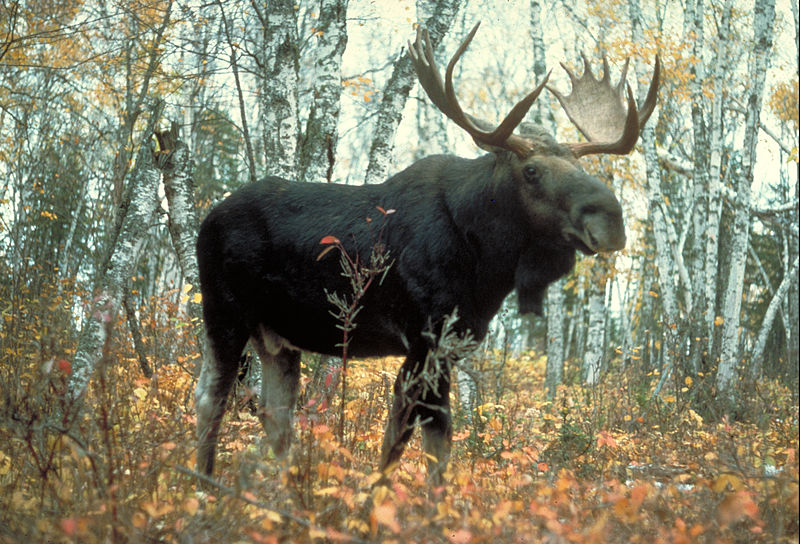
I love the story about the elderly Athabascan woman who was asked how to make moosehide moccasins.  Her reply?  “Well, first you kill a moose.”

moose (WITD)

In other words, have a seat.  This is going to take a while.

When I’m asked, “How do you write a novel?”  My answer is, “Well, first you break a heart.”

And not just any old heart, but the heart of the main character. When an author writes a novel, his/her goal is to tell a story so compelling that the reader doesn’t want to put it down. That means the novelist must establish a strong connection between the reader and the book’s main character. The only sure way to do that is through emotions.

I might not know what it’s like to live thousands of years ago in the Aleutian Islands, but I can relate to an Aleut woman who loses the man she loves in a vicious raid. I feel the emotional connection, and I want to read her story, live her life, and discover how she finds love again. Because she and I are sisters. We both know what it is to have a broken heart. (Okay, I admit it. I’m advertising one of my own novels, Mother Earth Father Sky.)

So, if you’re a writer, how do you go about breaking that main character’s heart? You do it by knowing your main character so well that you understand what is at the center of her soul. Ask yourself these questions: What is most important thing/person/belief in her life? What is the foundation of her self-esteem? What does she love most? Once you know that, then you’ve solved your problem, and what you must do is take that most precious thing away from her. Then she’s in the fight of her life as she tries to survive and win back what she’s lost. Suddenly you have a plot; you have a story. You’ve pushed your character off the two-dimensional page and made her come alive in your reader’s mind.

Tell me about your main character. What is at the center of his or her self-esteem? What does he love the most? What will break her heart?

Blessings, Sue    *Writing the Third Dimension, copyright, 2010 Sue Harrison*

Sue HarrisonBestselling author, Sue Harrison, has written two Alaska trilogies: The Ivory Carver Trilogy and The Storyteller Trilogy, and a middle readers’ book SISU. Prior to the publication of her novels, Harrison was employed at Lake Superior State University as a writer and acting director of the Public Relations Department and as an adjunct instructor in creative writing and advanced creative writing. For more information, click here. To inquire about booking Sue for workshops or speaking engagements this year, click here.

Thanks for joining us! Please feel free to leave your questions and comments.  Next installment February 28, 2013.