
Interview with Walter Danley, & 5 books to give away!

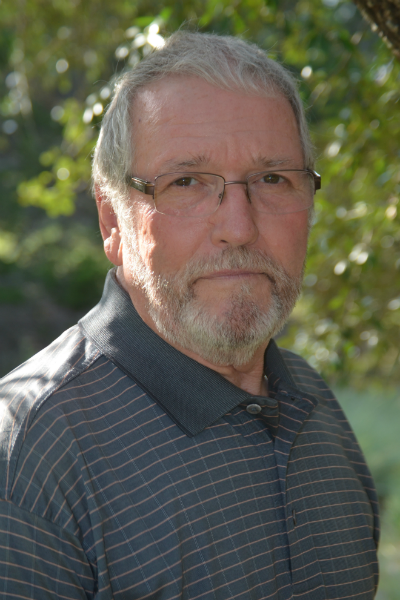
WalterDanley400x600It is my pleasure to welcome and introduce to you author Walter Danley. Read my review of his first novel, The Tipping Point,hereWalter Danley has been living an interesting life, highlights of which you can read on his website noted at the end of this post. Even so, Walter claims his proudest accomplishments are his five grown sons. He credits the wonderful influence of their stepmother, Christopher Norris, Broadway, film, and television actress. Walter and Christopher were married for eighteen years during the boys’ formative years. 

Walter kindly obliged me with an interview and offered five books to give away, so don’t be shy about leaving him questions or comments. He looks forward to it. Now, let’s move on with the interview.

Walter, I appreciate your agreeing to this interview. To start things off, please tell us a little about yourself.

Lynn, that could take all the time you have scheduled for this interview because I spent more than four decades in the business of commercial real estate investments. Now, I have the ability to write suspense thrillers rather than to live them! My home is in the Lone Star State of Texas. I love it there and, maybe it’s the air, I write better there. Wait, that didn’t come out right. I didn’t mean to say that my writing is better in Texas, what I intended to say is that my demeanor is more inclined to the craft of writing in the Texas Hill Country.

It’s good you have a place that positively affects your writing. When did you first know you wanted to be a writer? Who or what inspired you? or discouraged you?

The first time I tried retirement, back in ’86, was a great opportunity to start to write. Speaking of conducive atmospheres to write, that was one of the best. My partners and I had just sold our investment business, (there were forty (40) different businesses under the firm’s banner that we sold in 1986), CBS had just green-lighted my wife’s TV series, TRAPPER JOHN, M.D., for another year and we had a lovely home on the beach in Malibu. It was then I decided to write The Great American Novel, walk our Golden Retrievers on the sand and fully enjoy the good life. The euphoria only lasted for two weeks, then a pal called me to help on an apartment acquisition … and I went back to work. Sorry for that long first question answer.

On inspiration, I’ve always been a voracious reader. Five-hour plane trips across country and hours waiting in airports make reading a necessity. But my inspiration comes primarily from the great writers of suspense and thrillers I like to read. A good story, told by a great story-teller, will always been inspiring to me.

Fortunately, no one has discouraged me from writing. Friends and family, even ex-wives have all been super supportive, and I really do appreciate that.

As a writer, do you do much reading? Who were/are your favourite authors or books?

As I said earlier, I’ve always been a voracious reader. On my list of authors whose books I will stand in line to buy, the DLG’s are some of the best, the Double Letter Guys. You know them better as Michael Connelly, Nelson DeMille, Patricia Cornwell, Ken Follett, Clive Cussler, and the never to be forgotten, Dean Koontz. I’m thinking that to boost my writing career I might change the spelling of my name to Waltter Dannlley one day soon. All of my favorites were penned by the DLG’s.

Interesting idea! I am considering a pen name myself, but haven’t settled on anything yet. I already have the double n’s. Have you ever felt like giving up? When did you finally believe in yourself so you can say “I am a writer” or “I can do this”?

Several weeks ago an interviewer asked me your question with a little bit of a twist. She said, “What made you think you could write a novel?” The question was one I’ve never been asked before, so it took a few beats to sink in. What I told her, and bless her heart for publishing the answer, was, “I never considered that I couldn’t write a novel.” Enough, already. Let’s get to your next question, Lynn.

Do you have a motto or Bible verse or quote that you try to live by and that helps to keep you on track?

My grandmother, Pearl Danley, will turn over in her grave that I don’t have a favorite Bible verse, but I do try to live by a quote from Mark Twain. “If you tell the truth, you don’t have to remember anything.”

Yes, that is a good quote to remember. Have you ever written or published anything before your novel, The Tipping Point? If so, what do you remember about your very first time to be published, how did that happen?

Lynn, not in the sense of your question, but yes I did author a Continuing Education Course for the University of California. It was called, CREATIVE AND UNCONVENTIONAL FINANCE and I taught that course to real estate agents and brokers on several of the UC campuses for many years. Not the same as having your novel published, but close to that feeling to have 70 – 80 professionals in your audience for eight hours.

That’s surely a confidence builder! What inspired you to write The Tipping Point?

Annie Six, my Golden, did. In Malibu, walking the dogs on the beach I would be outlining in my head the book that twenty years later would become THE TIPPING POINT. I’d speak to myself, a line or describe a scene, and Annie would bark twice if she liked it. That was one really smart dog. Some of the characters and situations are modeled after events that actually happened over my career. What I was trying to figure out on the beach with Annie and Sun Dance was how to knit together the different stories so there would be a logical arc for the characters and the story.

Everyone’s a critic, so they say. 😉 How long did it take you to write The Tipping Point? What, if any, research did you have to do? And how did you come up with that title?

Interesting questions you have there, Lynn. How long. The process of writing took about six months, but I had to interrupt the writing for the research. The story takes place during the year 1978 and ends in January of the next year. I had to rewrite many sections because things that today we all take for granted didn’t exist. Things like cell phones, for example. Originally, I had the FBI agent using a Glock 22 pistol. That particular weapon wasn’t invented until 1979 and the FBI adopted it as an issue weapon in the early 80’s. I had a wonderful section on DNA and it worked so well in the story arc. The problem is that DNA and the tests to identify it came about years after the story time.

What I didn’t do in picking the title was to research it. It turns out that Amazon has several books with THE TIPPING POINT title or sub-title. That was a mistake. On the other hand, I heard from one reader that bought my book, thinking it was the (slightly more famous) one by Malcolm Gladwell. He said that he was going to return it, but started to read it and liked the story very much and kept my book. Now, to answer the specific questions. Garth Wainwright, speaking with Tommy Shaw about the “why” of fraud and murder, calls the introduction of mind-altering drugs into the company the tipping point. He goes on to describe the dictionary definition (which I wish I’d not included verbatim) of a tipping point. I used that as the title as it denotes the arc of the story and the changes that take place with Wainwright.

It’s good you are paying attention to details for accuracy and the timeline. Did you write a little of yourself into any of the characters? Do you have a favourite?

I’m sure that some of the real me slipped into a few of the characters. After all, I was there when some of these events took place. It is like your children, you don’t have a favorite one over the others, but in the sequel, the character of Lacey Kinkaid, now Wainwright, will be my favorite for reasons that I cannot reveal here.

Now, that peaks one’s curiosity! Since The Tipping Point is book one of The Wainright Mysteries, how may books do you plan to include in this series? Or are there going to be only this one and its sequel?

I don’t have “a number” in mind for the series. After the sequel, I am going to try a different genre. A historical western with a fantasy twist is the untitled work which I am researching. 

I understand The Tipping Point is being released in print, but can you tell us a little about your experience with releasing The Tipping Point as an E-book first?

In hindsight, I think that both editions should have been released at the same time. Just suppose you read print versions only. Maybe you don’t even have an E-Reader, but a friend tells you about THE TIPPING POINT and how much she enjoyed it. You check with your book store, and they don’t have it. They check and tell you that it is available in electronic format, but not in print. A potential reader is lost. What positive value that review may have generated is lost on all the readers who want a print book. A simultaneous release of both versions will avoid that mistake.

If you will allow me the courtesy of a small digression, Lynn, as you know, I’m about to publish the 2nd edition of THE TIPPING POINT, and the way that came about may be of interest to your readers. I was fairly deep into the sequel, INSIDE MOVES, when it dawned on me that for the sequel to work properly, a few things would need to be changed in the original story. Of course, I might have changed the direction of the sequel, but it made both books better stories to stay with the sequel storyline. My writer friends all told me not to go back and change the original story. After all, it was already published. It had already gotten some great reviews. It was already out there. What convinced me to rewrite the 1st edition was that I could use this opportunity to change something that was confusing to some readers.

In the 1st edition, when a new character appears in the story, I had them introduce themselves in the first person. When that scene concludes, the narrator takes over again in a third person point-of-view narrative. Each new character appears and speaks in first person. I stole this technique from F. Scott Fitzgerald. It worked really well for him, for me, not so much. The problem with having the POV moving back and forth is that I have many characters in the story. So now I had two reasons to ignore my friends’ advice and go ahead with the 2nd edition.

That is helpful to know. What is your writing time like? How do you find time to write?

I write best in the early morning hours. My Muse wakes me up before dawn when it’s still and quiet. On cool days (yes, we have some of those in Texas!) I take my laptop out to the deck where I can feel the breeze and smell the wild flowers. And I write. As the day gets warmer, I move back into my home office and write as long as the Muse will sit on my shoulder and the words flow. I’m trying to break a very bad habit I have during the first draft. My inclination is to correct and edit as I write. It slows the pace and interrupts the flow of the prose. My preferred method is to put the draft out as fast as I can type, don’t stop for spelling, or editing or anything, just keep pumping out the words. I’m getting better at that and I think that it helps with other aspects of the craft.

Yes, I agree. Solid editing time can follow that instead of interrupting the actual writing. What other interests do you have aside from writing?

That would be wood working as the number one interest. My brother lived in Hawaii and I in Laguna Beach, CA. We both had woodworking hobbies, although Bobby was a far better craftsman than I. We had seen each other only four times in the forty years he lived on the island. When Bobby retired, he and Mary moved to Boerne, Texas. Four years ago, so did I and we were able to reconnect in this small town in the Texas Hill Country. We combined our shops into one of the best equipped and organized woodshops anywhere.

When the Muse abandoned me, I’d go to the shop over at Bobby’s house and build something, anything. It was an enjoyable diversion and usually would focus my mind on the work left in my computer. And I’d have a new table or cabinet or box. My brother passed away last year and his daughters sold his house. I had to move all the equipment and tools into a storage unit. My woodworking days are over, but I had three great years with Bobby that would never have happened if not for a woodshop we shared.
 
Now, in order to distract the Muse, I shoot trap and skeet. Breaking clay disks with a shotgun isn’t the same kind of relaxation, but it seems to work for me.

I’m sorry, Walter, about the loss of your brother. It’s so good you had those three years to share an interest.

How do you consistently write? Do you have writing goals – daily? weekly? monthly? long-range?

I know that you are supposed to have specific writing goals and write them down, keep track of how you are doing the goals, etc. No, I don’t do that. It just isn’t the way my head works, I guess. I write as long as the words flow, sometimes without interruption. My record to date was one session of over 36 hours. Of course, the writing from the last few hours did require some very heavy editing.

Wow! That’s true binge writing. Do you have another project in the works? Any hints you can share with our readers about that?   

Now that the editors have the 2nd edition, I can go back to finish the sequel, INSIDE MOVES.  My publisher hopes to have that out for the holidays. I hope that a miracle happens and I can get the work done in time for that. I have also been working on a different kind of novel. The story intrigues me and the genre is new. It is not titled yet, and that is going to be an issue for the marketing department, but I describe it as a historical western with a fantasy twist. Most of what I have is a ton of research and file folders full of dialog and scene descriptions, but I know the story and am very excited about it. If I hadn’t promised a sequel in the WAINWRIGHT MYSTERY series to so many of my readers, I’d be writing it now. In the story, the Santa Monica (CA) Mounted Police unit agree to participate in the Bandera (TX) parade and rodeo roundup, 1,500 miles away. While in Bandera, the self-proclaimed Cowboy Capital of the World, an accident to the Capitan of SMMP puts him into post-civil war Texas. The juxtaposition of  a 2014 law man in 1873 lawless frontier town just sounds like so much fun!

Almost like time travelling, sounds interesting. I believe it will be written in its time. 🙂 Finally, is being a writer/author all you had hoped or thought it would be? Do you have any advice for hopefuls? 

Writing is a hoot! I love it and after retiring I have the time and resources to do it. From those walks with Annie Six and Sun Dance on the Malibu beach, I’ve wanted to do this, but advice, no I don’t give advice. It would be presumptuous of me to do that. But I do have a suggestion for young writers. Read as much as you can, both literary works and about what is happening to the publishing industry. Stay on top of that news because it changes almost daily. Know about the business that you want to join. It is the only way to avoid drastic mistakes.

That is a very good suggestion. Thank you, Walter, for this interview and for offering copies of The Tipping Point.

Lynn, thank you for the opportunity to chat with you. If your readers would like to contact me, here is a list of places they can easily find me.

WalterDanley.com                                    
Facebook 1 and Facebook 2                  WalterMysterious400x600           
LibraryThing                 
Twitter                           
LinkedIn                            
Google Plus               
Pinterest:                      
Amazon Author Page
Goodreads                      
Smashwords–With publication of 2nd Edition, Smashwords will distribute this title
Book Links: (* American, UK, etc.)  All of Amazon foreign stores
The Tipping Point. Walter DanleyNow, Readers, if you would like a chance to win a 1st edition copy of The Tipping Point (which is an adult novel) leave a question or comment here for the author. Tell your friends, too. Walter Danley has offered not one, not two, but FIVE e-copies of the 1st edition of The Tipping Point! Using the “random name picker” tool, at 6:00 PM EST on July 6, 2014, one name will be selected; July 7 one more name will be selected; July 8 the final three winners will be selected. An entrant can only win once, but one comment puts that person’s name into each draw if not selected. I will notify all winners and an e-copy will be sent to them directly from Walter after they reply to me for verification.

Please encourage a new author – LEAVE YOUR COMMENTS AND QUESTIONS for him and you could win a book! And remember to check your inbox July 6, 7, and 8.

Thanks for reading, and … Creative Musings!  🙂


Book trailer for An Astronaut’s Guide to Life on Earth – by Chris Hadfield

Just a quick post today…

On July 1 I posted my book review of Chris Hadfield’s book An Astronaut’s Guide to Life on Earth. I should have also mentioned again the post I had written about his talk about facing one’s fear; you can watch it here.

An Astronaut's Guide to Life on EarthToday I am posting the trailer for his book, which I would have included yesterday had I thought to look for one.  (Thanks to Erik for the heads-up about this.) It is so funny and I hope you will enjoy it.  Click here to watch it.


Do book trailers increase your interest in a book? Do they help you make a decision about buying a book?

Thanks for reading, and … Creative Musings!  🙂
Book Review: An Astronaut’s Guide to Life on Earth – by Chris Hadfield

An Astronaut's Guide to Life on EarthBook: An Astronaut’s Guide to Life on Earth
Author: Chris Hadfield
Publisher: Random House Canada
Date: October 29, 2013
Genre: memoir; space science
Pages: 336, hardcover
Price: $28.00 – $32.00
My Rating: WOW!  or, A must-read book about life and attitude in Space and on Earth
 

Since July 1 is important for Canada, (HAPPY CANADA DAY TO MY FELLOW CANADIANS!), I have selected a fantastic book to review today.

While at the Credit Union one morning in early June, I noted their news board. On June 25 Chris Hadfield was coming to Truro, about two hours’ drive from where I live in Nova Scotia. Oh. My. Gosh! I excitedly told my sister who went online and obtained tickets for five of us to go hear him speak. I headed to the bookstore to buy his book — and one for my sister for her birthday. What a good decision. This well-written book, An Astronaut’s Guide to Life on Earth, is full of “AMAZING”, not to mention how I feel about Chris Hadfield – the Canadian astronaut who was commander of the International Space Station.

When Chris was nine years old he watched – on a neighbour’s TV on July 20, 1969 – the Apollo moon landing, and knew right then what he wanted to be when he grew up. From that point onward everything he did was to obtain his goal to be an astronaut, even though here in Canada there was not yet a space agency.

In An Astronaut’s Guide to Life on Earth Chris Hadfield tells about his journey. After the Introduction appetizer, he has divided the book into three sections: Part 1 – Pre-Launch; Part 2 – Liftoff; Part 3 – Coming Down to Earth.

Part 1 – Pre-Launch
  1. The Trip Takes a Lifetime
  2. Have an Attitude
  3. The Power of Negative Thinking
  4. Sweat the Small Stuff
  5. The Last People in the World
  6. What’s the Next Thing That Could Kill Me?
Part 2 – Liftoff
                  7. Tranquility Base, Kazakhstan
                 8. How to Get Blasted (and Feel Good the Next Day)
                 9. Aim to Be a Zero
               10. Life off Earth
                11. Square Astronaut, Round Hole
 
Part 3 – Coming Down to Earth
               12. Soft Landings
               13. Climbing Down the Ladder
 

This is an exciting, interesting, incredible adventure told in an easy-to-read way. Chris Hadfield‘s humility and humour shine through as he shares what he has learned and accomplished both on and off Earth. What he had to do to realize his dream is daunting. What he shares about life is sound and inspiring.

The paragraph that spoke to my heart is as follows:

If you start thinking that only your biggest and shiniest moments count, you’re setting yourself up to feel like a failure most of the time. Personally, I’d rather feel good most of the time, so to me everything counts: the small moments, the medium ones, the successes that make the papers and also the ones that no one knows about but me. The challenge is avoiding being derailed by the big, shiny moments that turn other people’s heads. You have to figure out for yourself how to enjoy and celebrate them, and then move on.  – Page 267, An Astronaut’s Guide to Life on Earth
 

 This book is thoroughly enjoyable. It is not only about travelling and living in Space, but also about his work as a fighter jet pilot when he lost several friends in flying accidents. In flowing conversational language he takes us all through the difficult journey that opened his way into NASA and eventually to commanding the space station where he conducted a record-setting number of scientific experiments. He also handled emergencies while in Space and became well-known for his activity on Twitter and his incredible photographs taken during his five-month stay on the space station he had helped build.

If you enjoy non-fiction, An Astronaut’s Guide to Life on Earth by Chris Hadfield is such a good book to spend time absorbing. The information he provides is riveting. Even if you aren’t sure about the genre I recommend you give this book a try. It is so worth it.

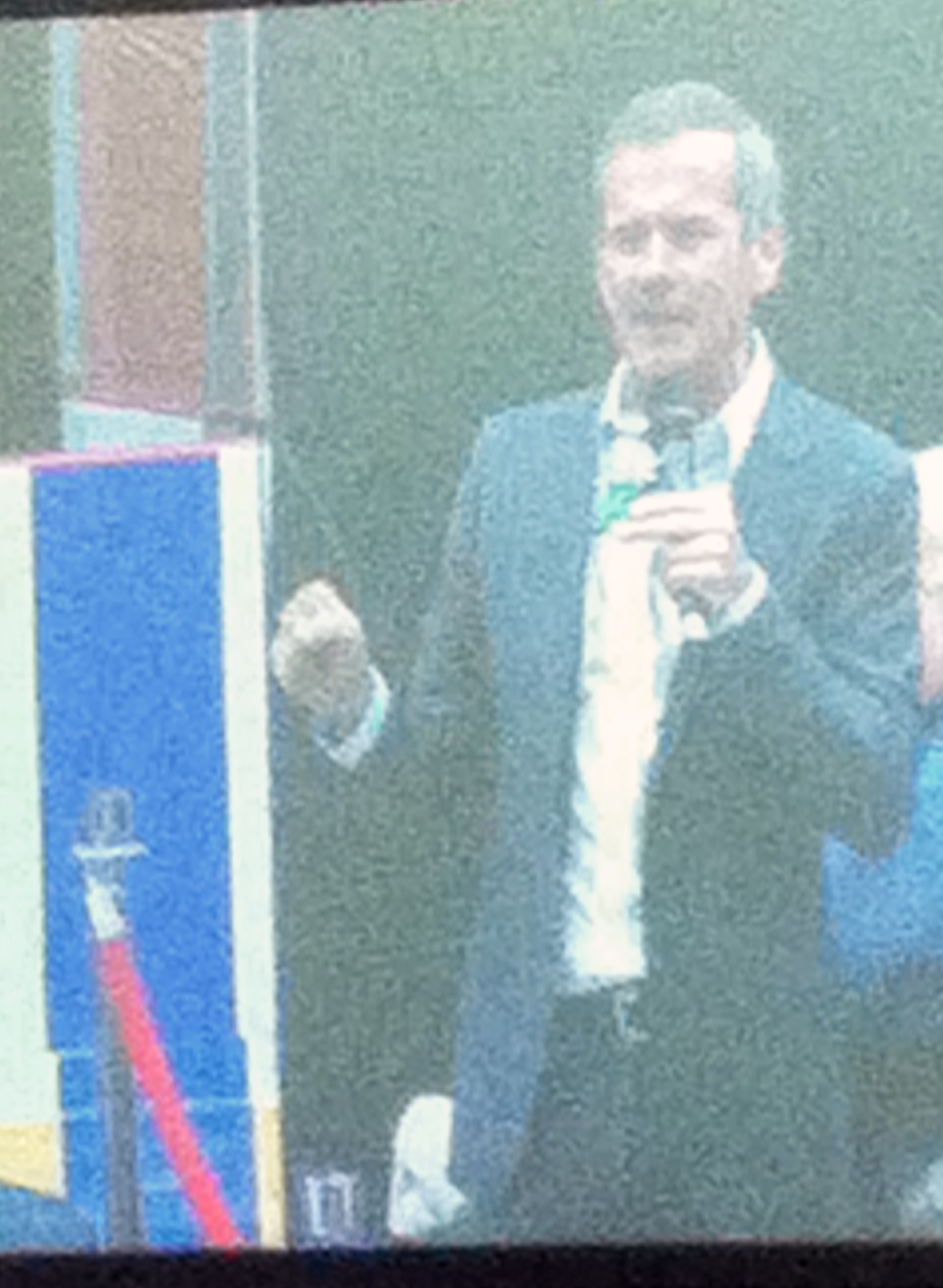
A footnote: Chris Hadfield.2.06-25-14This image of Chris Hadfield is foggy because it was taken off the big screen in the community centre where he spoke. Chris is personable, interesting, funny, focused, well-spoken, humble, (good-looking – does that count?), Canadian … and I am so proud of him. I would have liked to tell him he’s an inspiration to me, but it wasn’t possible to get close enough with approximately 2800 people there.  *alas!*

If you buy only one book this year, may I suggest it be An Astronaut’s Guide to Life on Earth by Chris Hadfield. It will educate and inspire you.

You can find An Astronaut’s Guide to Life on Earth listed on my BUY THE BOOK! page.

 Thanks for reading, and … Creative Musings!  🙂
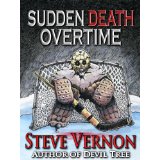


Book Review: Sudden Death Overtime – by Steve Vernon

Sudden Death OvertimeBook: Sudden Death Overtime
Author: Steve Vernon
Publisher: Crossroad Press
Date: February 10, 2012
Genre: dark humour; fantasy novelette; horror
Pages: 123
Price: Kindle under $1.00
My rating: dark humour with shock value
 

Steve Vernon is an author who writes like no one I have read thus far. His freedom with the written word is astonishing. It’s as if every thought he has spills out onto paper and has to be shared. Every dark thought, as applies here.

Sudden Death Overtime does not fit my usual reading, because horror is not a genre I particularly enjoy, but I expect this is a dark fantasy unlike most others. This book (novelette because it is short) is sure to satisfy readers who like this genre, but it is not for young readers.

Steve Vernon writes well. His capturing of human nature and the could-care-less attitudes in conversation are true to life, including the coarse and vulgar language between men who are less than etiquette conscious. His imagination is spooky, in this case, horrific!

There is a totally black tour bus that shows up in odd places in a northern Canadian community and people start disappearing. There are four old men who still love hockey enough to clear the ice every Saturday for the kids in the community. There are vampires … and those determined old men … and hockey … and gore. And a twist at the end.

If you like hockey, vampires, horror, dark humour, and you don’t mind coarse language, then you will like this book. Steve Vernon has them all in Sudden Death Overtime. It is a short read that packs a wallop.

You can find Sudden Death Overtime  listed on my BUY THE BOOK! page.

Thanks for reading, and … Creative Musings!  🙂
A book reviewer’s 10 tips for authors, OR do yourself a favour – admit you aren’t perfect

As I was saying in my last post which you can read here, no matter what I read I tend to notice errors in spelling, punctuation, anything not quite fitting together. It is distracting. As a reviewer, I have found those things also make it harder to write a review when I am bothered by them, but I try to stick to the story. Since I began in 2010 I have featured seventy books here on my blog. If the books are sold or offered on the following sites I also post my reviews on Amazon.com, Amazon.ca, Chapters.Indigo, Library Thing, Shelfari, BookLook Bloggers (if received through them), and Goodreads. My posts are noted on Twitter, Google+, and in LinkedIn. Several other books I have not covered here on my blog but I have posted short reviews on Amazon and other sites. This means they get a lot of coverage, so surely authors want their books to be the best they can be with that much exposure.

As you know, I want to be an author of children’s books. With that in the back of my mind, I notice those things that hurt and I try to remember the things that help. Most writers who seriously want to improve their craft look for tips and helps along the way. Some take classes or full courses, some sit in on writers’ discussions. Even though you didn’t ask, I have a few suggestions which I hope will be of benefit.

Especially for those who are self-publishing or who are trying to cut corners by omitting a good editor …

1. DON’T! Please don’t fool yourself into thinking you don’t need an editor. The editing phase is extremely important if you want to be taken seriously. It is painful to read an otherwise good story that has many misspelled words, punctuation and grammar mistakes. If your work is self-published and starts selling, you don’t want negative reviews because of things you could have avoided. Do yourself a favour – admit you aren’t perfect.

2. On the other hand, don’t leave all the work to an editor. Chances are, your work – if found to be full of errors that could have been easily fixed by you – can be set aside out of exasperation, returned to you, or worse – refused with no hope of a second chance. You don’t want those delays or the disappointment, so do as much of the clean-up as you can first. Don’t chance looking as if you didn’t care enough to make it presentable. Obtain and use a good dictionary and a Thesaurus. Get someone you trust to do an honest read-through before you even hire an editor. Many writers find joining a like-minded critique group is very helpful. Do yourself a favour – admit you aren’t perfect.

3. Take your time. What’s the rush, anyway? Once you get it all down on paper (or computer file) put it away for a few weeks. When you take that first draft out again read it as if you never saw it before. (Yes, I did say FIRST draft.) Read slowly so that you don’t assume what is there, and you can read what is actually on the page. This is the time to do your own editing before you hire someone to do it. Start your rewrite – yes, I mean write it over again working the bugs out of it. (Keep your first copy in case some things you took out work better after revision.) Many authors do several rewrites, and then an editor usually advises more changes. Do yourself a favour – admit you aren’t perfect.

4. If you are not writing longhand and are counting on your computer’s spell check to find and fix your blunders, toss that idea now! Their are many weighs two due it rite and a spell cheque program is knot all ways the best oar only way too go! (How many errors did you find in that last sentence?) It is so easy for a computer program to change your words into something you aren’t intending to say at all. You have the brain, your computer has a program. Use the checker for the obvious things, but be sure of them – and use your dictionary, one with synonyms, antonyms, and homonyms. Take the time to do the research. Do yourself a favour – admit you aren’t perfect.

5. Don’t use a reviewer as your editor. Errors are distractions but not the reviewer’s job to point out to you. Once you finish writing the story you have yet to do the work. Having written that last sentence does not mean the work is done. Now you start reading from the beginning – out loud to yourself, fixing it, picking it apart, rewriting it. If you aren’t sure of your spelling or how to word something, look for books that teach you. Or take a course. Do yourself a favour – admit you aren’t perfect.

6. Don’t take yourself – or your writing – too seriously. Your story may be interesting to you, but it may not come across to others the same way. Make it interesting. Write your story in a captivating way. Read up on how to do that. Solid writing as free of errors as possible helps, and saying it in a natural way that is not stilted and preachy is more inviting to the reader. Be ready to take criticism, because criticism will come. Do yourself a favour – admit you aren’t perfect.

7. Don’t assume any word that sounds the same as the one you are trying to rhyme it with is the right word to use. If you are going to write a story in rhyme, study how to write good rhyme, rhythm, time, and … again, use your dictionary. Do yourself a favour – admit you aren’t perfect.

8. Punctuation is a serious snag to many writers. Invest in a good book that guides you through that part. Get help to avoid broken quotations, know where to insert commas, and to not use too many exclamation points!!! Do yourself a favour – admit you aren’t perfect.

9. Remember to watch out for details that pull your story along, but can get mixed up in your flurry of writing and rewriting. Interview their characters. Keep notes or an outline just for yourself to get to know them – describe them, their adventures, the scenes, and whatever else will add to your story. Even then mistakes can happen. That’s what editing is for, and very careful rereads. Do yourself a favour – admit you aren’t perfect.

10. Be Patient. If you want it done right and well, take your time. Revise, revise, revise. Don’t write it, immediately send it to a reviewer or editor, and expect them to polish it to a fine shine. Take time to make it the best you can before you send it out into the world of “let’s see what we can make of this.” Your work is an extension of your genius and imagination, take your time to get the help you need to give it the best chance. Do yourself a favour – admit you aren’t perfect.

An extra tip: Look for things such as these examples in your writing —

  • One of your characters is suffering a broken left arm from an accident, but later when he is trying to get out of the vehicle his right arm hangs uselessly.  Remember your details.
  • Your character stands to talk with someone and then he stands to leave having not sat again. Watch those scene changes.
  • Be sure if you change a character’s name that you are consistent all the way through your book. When a reader comes across a character who acts as if he has been there all along but was never mentioned before, the reader has no way of knowing it’s a missed change of name.
  • When editing, read carefully to see that your action scenes don’t intrude upon one another or get out of order, such as your character running from someone dangerous, then two paragraphs later the chase is just beginning. 

There are other things to watch for, and I’m sure you can think of some. What you see in your mind, and then writing it to make sense on paper, are two different things. Be sure you take the time you need to make it work. And then know when to stop.

If you want to write a book … do it right. And do it well, the best you can. I enjoy reading books like that. 

Finally … Don’t worry, just write. And will you do yourself a favour? Admit you aren’t perfect. It will be more fun that way.

What tips do you have to add to my list?

Thanks for reading, and … Creative Musings!  🙂


How I got into Writing book reviews

Tuesday is one of my usual days to post a book review. Obviously, I didn’t manage to do that this week, for which I apologize. I’m not sure I will even get one ready for Thursday, but I am still reading as much as I can.

There have been a few personal things come up to alter my course a bit. On Friday I had a scheduled few hours’ hospital stay, Saturday I was still getting my energy back from that, Sunday was my dad’s 89th birthday and also Father’s Day – so we had a family gathering at his house. Among our group there are five fathers. It was a great barbecue day and we had lots of delicious food to enjoy. Sunday was also my first day back at my dad’s for my week, which this time will be three to give my sister a needed break. Then Monday was my grandson’s ninth birthday! (Time is passing quickly!) Today, Tuesday, I took my little Meyya to the groomers and while she was there I enjoyed a pleasant afternoon with a friend. So you see, I have been busy in various ways. But that doesn’t stop the books from coming to me; yesterday another arrived in my mail and I’m trying to remember where I won it or chose it! (I really must keep better track.)

In lieu of a book review I want to talk a little about writing them. Writing reviews isn’t something I planned to be doing; it simply evolved. In 2010 I was excited to win a book in a writers chat room and mentioned a little about it here. Later, through what was then called BookSneeze – now BookLook Bloggers – I won a Max Lucado book in exchange for a review. Early in 2011 I reread author Laura Best’s first novel and reviewed it here in support of her work. That year, after Laura’s book, I reviewed fifteen others because I enjoyed it. I had become a book reviewer! Occasionally I receive requests for reviews, but I now have such a backlog of novels to read first that I don’t/can’t always accept. I am trying to get caught up, which is not as simple as it may sound.

When writing reviews, sometimes it isn’t easy to put into words what impressions I feel from the story I was immersed in. I try always to be fair no matter if the content appealed to me or not. What trips me up is that I tend to notice errors in spelling, punctuation, details. I say it ‘trips me up’ because they seem to stand right out as if screaming ‘Here I am! Notice me!’ and pull me right out of the story.

I really don’t want to write bad reviews because of that, or at all, because the errors are not the story, but they do affect an observant reader. Instead I try to be honest about my findings without trashing a book.

Even after a writer’s hard work there may be much yet to be done. Sometimes the typos and conflicts are glaringly noticeable and very distracting to the reader. In my next post I will be presumptuous and present a few tips – or maybe more like observations – for authors, especially those who are self-publishing or are trying to cut corners.

Thanks for reading, and … Creative Musings!  🙂


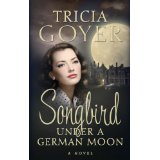
Book Review: Songbird Under a German Moon – by Tricia Goyer

Songbird Under a German MoonBook: Songbird Under a German Moon
Author: Tricia Goyer
Publisher: Summerside
Date: June 13, 2011
Genre: Christian romance; historical fiction
Pages: 320
Price: Kindle $7.77
My Rating: dramatic fiction to interest romance readers


Songbird Under a German Moon by Tricia Goyer is set in the post WWII years in Germany. The story begins in a noisy twin engine airplane that is transporting Betty – a twenty-year-old singer – with several soldiers on their way to Germany,  but already there is drama. The plane is having engine trouble and must try to make a safe emergency landing in Nuremberg, Germany.

In Bayreuth, Germany, there is a famous opera house – Festspielhaus – where Hitler was said to enjoy operas, especially those of Richard Wagner. This opera house is where the musical entertainment is being performed for the soldiers, not far from the house where Hitler had sometimes stayed and where the ladies are now living between performances. But there is something creepy about that war damaged building, something unsettling.

When Betty, and Frank, a photographer for the military, first see one another romance is soon in the air. But Frank is not all he appears to be; he has a secret. He is not the only one with a secret, though, and when there is a murder those secrets start being revealed. Realizing her life may be in danger, Betty thinks she can trust Frank to help her.

Some scenes seemed a little stilted in this story, perhaps a bit unrealistic when dealing with human emotions in relationships, but the drama pulls one’s attention in another direction. It was easy to get interested in Songbird Under a German Moon by Tricia Goyer. 

Interesting facts, around which Songbird Under a German Moon was written,  about Festspielhaus opera house, Wahnfried house, and Richard Wagner can be found on the Internet.

If you enjoy historical fiction with romance and a Christian flavour this may be the book for you. You can get a history lesson at the same time!

You can find Songbird Under a German Moon listed on my BUY THE BOOK! page.

Thanks for reading, and … Creative Musings!  🙂