Sue Harrison’s Writing the Third Dimension, Part 28: One More Time – Fourth Draft

Welcome back! For the rest of this year we invite you to return here, specifically on the fourth Thursday of each month for the newest installment of Sue Harrison’s teaching: Writing The Third Dimension. You can read and learn from all the fabulous segments from 2013-2015 by clicking on the page title WRITING THE THIRD DIMENSION, found under Writers’ Helps & Workshops on the drop-down menu. Please feel free to ask questions and leave comments for Sue. Now for the topic for month twenty-eight:

*****

“Writing the Third Dimension” – part 28: One More Time – Fourth Draft

In my growing-up years, our elementary school classrooms each  included a two-shelf “library,” and, during the first ten weeks of every school year, I would work my way through all the library books. Then I would read through to the end of my reading book, and then my social studies book. After that, I would sit at my desk during rainy recesses and be bored. Until I “took up” drawing.

In the third grade, I was fascinated with Disney characters, and I drew my way from Snow White to Cinderella, Mickey and Minnie and on to Dumbo, and all the rest. I kept my drawings in a notebook in my desk, a “family” that I belonged to during my school days. As I became more adept at drawing, I noticed an odd phenomenon. When I completed a drawing, I was delighted with it. It looked perfect to my eyes, but the next day, when I took it out, I would notice that somehow overnight in my desk, that drawing had become far less than perfect, and usually the whole thing had a persistent slant one way or the other.

IMG_1862

One of my imperfect drawings! Ilagix is an Aleut word that means peace in the sense of friendship.

Now as an adult and a novelist, whatever gets “put away” as a perfect scene is never perfect the next day and even becomes worse the next week or the next month. When I’m up-close to my work, I just don’t see the imperfections. I need a little distance. I handle that need in two ways.

First, I let my writing “rest. ” Unfortunately, with deadlines clamoring, that rest period is usually limited to a couple of weeks, a month at most. That’s why my second solution to this problem is so important. I have readers. In the writing world, these readers are called Beta Readers.

These folks are friends who aren’t afraid to tell me about the book’s imperfections. They don’t mind sharing their ideas, and they don’t get their feelings hurt if I choose not to implement their suggestions.

My readers fall into two categories. Some read scenes only, and they read for specific knowledge areas. My father, for example, has degrees in soil sciences and agriculture. He reads my “plant and soil” sections. My husband reads action scenes. Other friends read for animal husbandry and others for topography. Some read the hunting scenes, and others concentrate on the details of my setting.

My second group of readers read the whole manuscript. When my mother was able to edit, she read my manuscripts for typos and grammar. Her gift was languages, and she was particularly good at catching the problems in the writing itself. I have one reader who is an expert at personality disorders, and several who bring the younger-generation focus to the manuscript.

With my current manuscript, I also plan to hire a professional editor. His specialty is reading for flow, market appeal, and vision, but I won’t send him my manuscript until I’ve made the corrections and changes suggested by my Beta Readers.

When I’ve received their suggestions, I do one huge marathon session that lasts about a week, maybe two, and write in their corrections. That’s it for Fourth Draft.  If you guess that it ranks right up there as one of my favorites, you’re right! And I marvel at the ideas and the wisdom of those people so willing to help me for nothing but my gratitude and a paltry mention in the Writer’s Acknowledgements.

How do you feel about letting others read your work? Nervous, anxious to share, shy, reluctant?

Strength to your pen,

Sue

 *Writing the Third Dimension, copyright, 2010 Sue Harrison*

Sue HarrisonBestselling author, Sue Harrison, has written two bestselling Alaska trilogies: The Ivory Carver Trilogy and The Storyteller Trilogy – all of which went digital in May 2013. She also wrote a middle readers’ book SISU. Prior to the publication of her novels, Harrison was employed at Lake Superior State University as a writer and acting director of the Public Relations Department and as an adjunct instructor in creative writing and advanced creative writing. For more information, click here. To inquire about booking Sue for workshops or speaking engagements this year, click here.

Thanks for joining us! Please feel free to leave your questions and comments. We invite you to come back June 25, 2015, for part 29.
 

Sue Harrison’s “Writing the Third Dimension”, part 27: One More Time – Third Draft

Welcome back! For the rest of this year we invite you to return here, specifically on the fourth Thursday of each month for the newest installment of Sue Harrison’s teaching: Writing The Third Dimension. You can read and learn from all the fabulous segments from 2013-2015 by clicking on the page title WRITING THE THIRD DIMENSION, found under Writers’ Helps & Workshops on the drop-down menu. Please feel free to ask questions and leave comments for Sue. Now for the topic for month twenty-seven:

*****

“Writing the Third Dimension” – part 27: One More Time – Third Draft

I love writing Third Drafts! Third Drafts don’t involve the hard mental work necessary in writing a First Draft, and Third Drafts rise above the disillusionment of the Second Draft. By the time I’m writing a Third Draft, I’ve accepted the fact that my novel is not, and never will be, perfect. Acceptance escorts me into that place of hope where happy novelists live. Perhaps, just perhaps, my book will touch someone’s heart.

During the Second Draft of a novel, I dissect the book – scene by scene and chapter by chapter. I rewrite it the same way. With the Third Draft, I read the novel in one big gulp.  Here’s the process:

1. I read the novel, usually the version that “resides” on my computer.

2. As I read, I leave myself notes where changes are necessary. Sometimes I need to cut or expand descriptive passages. Sometimes, I need to delete a repetitive scene or an “already-been-said” dialog. If I find that I should add a chapter or two or even three, I write myself a short paragraph, within the text, that tells me what action needs to occur, which characters are involved, and what motivates those characters.

3. After I’ve read the entire novel, I go back and make the noted changes.

4. If I’ve added any new chapters, I read them through several times to smooth the edges and make sure they meld into the rest of the novel.

5. I print out the whole thing, three-hole punch the pages, and place them into a binder.

6. That’s it. Third Draft done!

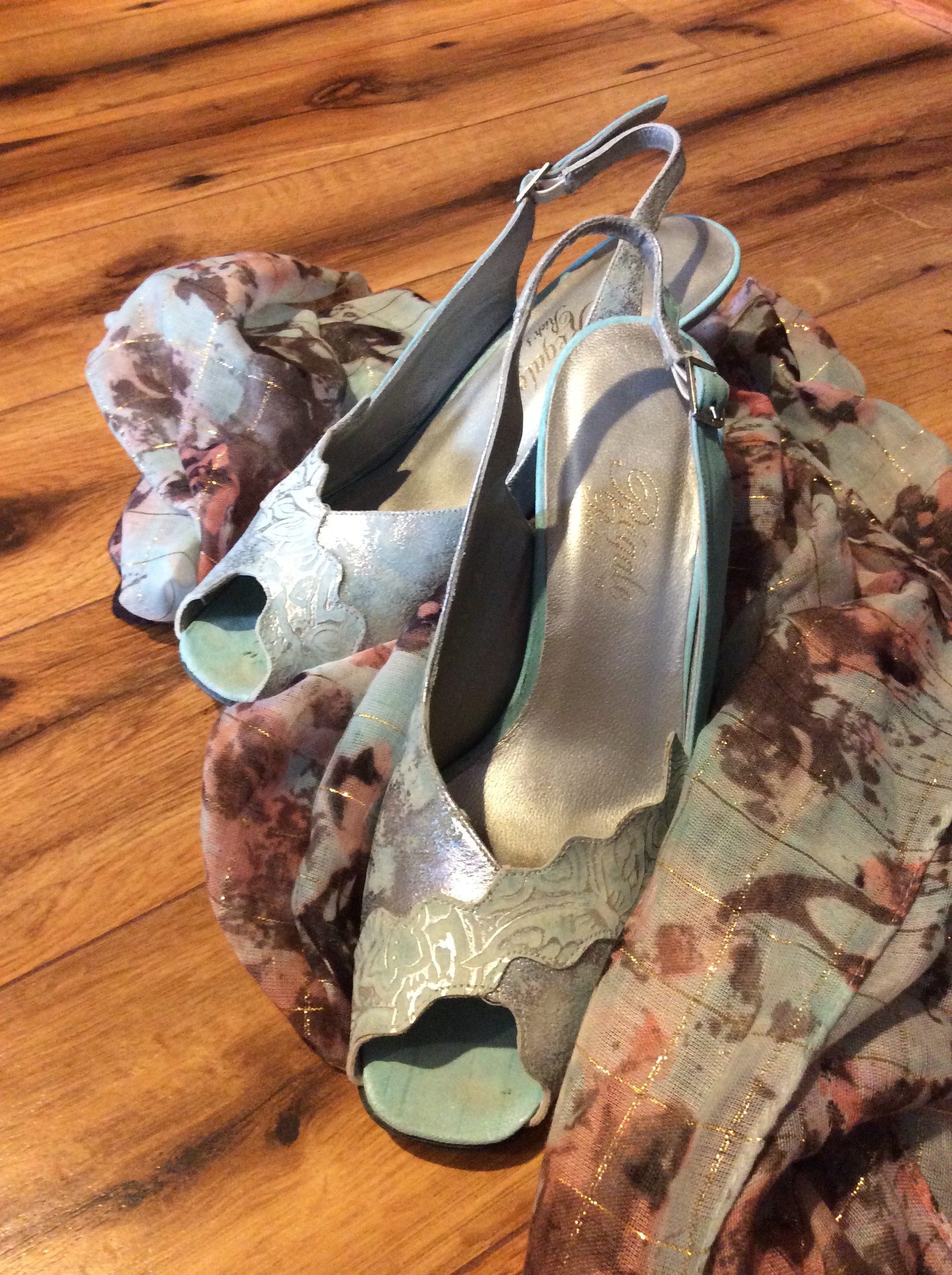
This is another celebration time for me. My husband and I will have a dinner “out” or maybe go to a movie, or I might just stop at our local shoe store…. *grin*

shoes


Question for you: How do you celebrate the small victories in your life?

Strength to your pen!

Sue

 *Writing the Third Dimension, copyright, 2010 Sue Harrison*

Sue HarrisonBestselling author, Sue Harrison, has written two bestselling Alaska trilogies: The Ivory Carver Trilogy and The Storyteller Trilogy – all of which went digital in May 2013. She also wrote a middle readers’ book SISU. Prior to the publication of her novels, Harrison was employed at Lake Superior State University as a writer and acting director of the Public Relations Department and as an adjunct instructor in creative writing and advanced creative writing. For more information, click here. To inquire about booking Sue for workshops or speaking engagements this year, click here.

Thanks for joining us! Please feel free to leave your questions and comments. We invite you to come back May 28, 2015, for part 28.


Sue Harrison’s “Writing the Third Dimension” – Part 26: One More Time – Second Draft

Welcome back! Over the next several more months we invite you to return here, specifically on the fourth Thursday of each month for the newest installment of Sue Harrison’s teaching: Writing The Third Dimension. You can read all the segments by clicking on the page title WRITING THE THIRD DIMENSION, found under Writers’ Helps & Workshops on the drop-down menu. Please feel free to ask questions and leave comments for Sue. Now for the topic for month twenty-six:

*****

“Writing the Third Dimension” – part 26: One More Time – Second Draft

You’ve just accomplished something that few people ever do. You’ve finished the First Draft of your novel. You’ve written it down on paper, or it’s on your computer, or floating around on The Cloud somewhere. I hope you treated yourself to a wonderful celebration.

I also hope you’ve completed that celebration, because the Second Draft looms large.

In my experience, the Second Draft is always easier than the First Draft; however, I’ve also found that each Second Draft turns out to be more difficult than I thought it would be.

Here’s why. When I complete the First Draft, I envision my novel as an amazing work of literature. I’m at the top of my form. I can hear the critics’ applause. Then I begin the Second Draft. The first chapter usually goes very well. Second, not quite so well. By the end of the third chapter, I’m winded. In the fourth, I’m horrified. This novel is NOT amazing. It’s not even CLOSE to amazing. Oh, rats, oh rubbish. The critics will boo and hiss. Oh my poor, poor readers — I’ve let them down eternally. *Sigh* *Whimper*

You get the picture. It’s not the rewriting that’s so tough. It’s the discouragement. I’m not perfect, and, far worse, neither is my novel.

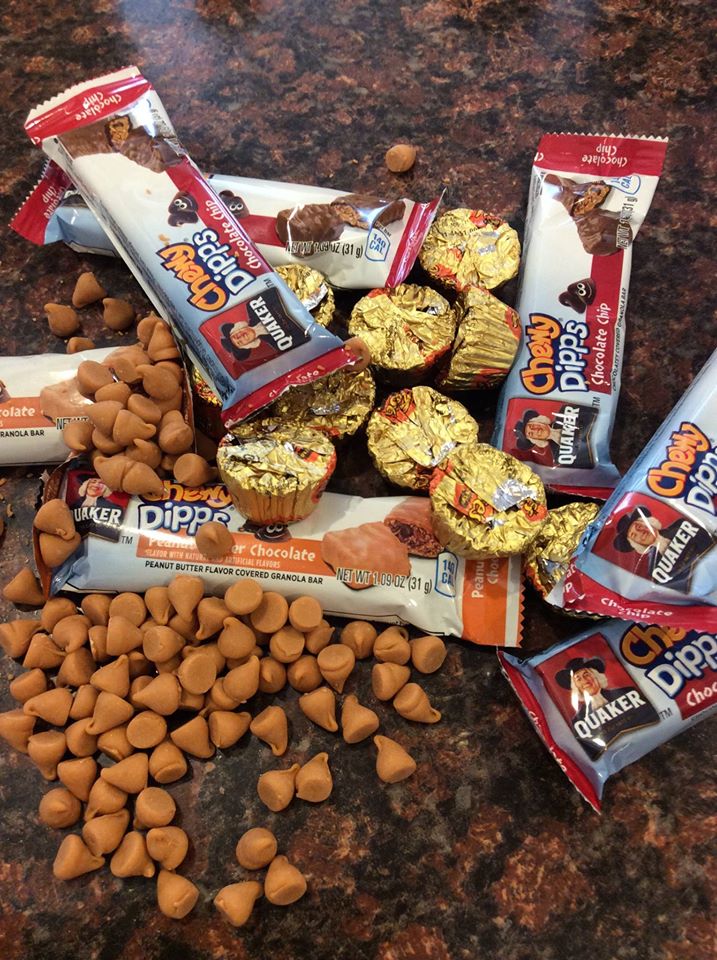
I wallow in self-pity for an hour or two. Then I raid the cupboards for something fattening, and I eat it.

candies


Then I decide that none of that has helped my ego or the novel, so I do the brave thing. I go back and attack the Second Draft not as the wimp that I am, but as the warrior I intend to become, which means I don’t do the easy stuff. I don’t worry about typos, spelling, or even research. Second Draft is all about “major repairs.” I concentrate on two  areas — point-of-view-character development and plotline. I work chapter by chapter, and, within each chapter, I work scene by scene.

I ask myself these two questions:

1. Does this chapter or scene advance my plot onward and upward toward that far off eventual climax? If not, I chart out a quick outline of what I need to do to make the plot work.

2. Do my characters’ actions illustrate what the reader will eventually discover about those characters regarding their motivations,  emotional baggage, needs, and abilities?

Then I rewrite the scene or the chapter.

Over the years, I’ve adopted a “Second Draft coping mechanism.” During Second Draft, I seldom skip backwards within the novel to make minor changes in earlier chapters simply because in Chapter Forty-Seven or Chapter Sixty-Two I decided to add some odd little quirk. I leave myself a note within the manuscript. For example, [“Sue, go back and give Jorn unusually large hands.”] I do the same thing with areas that need more research. [“Sue, look up Eastern European elm trees — shape of leaves.”]

I’ve found that if I go backwards in the manuscript during the Second Draft to make minor changes, I tend to get caught in a loop, and I keep rewriting the same few chapters over and over again, because it’s easier than going on with the remainder of the novel to address plotline failures and weak characterization.

Yes, as I write the Second Draft, I’ll rearrange my words, shorten or lengthen descriptive passages, and sometimes throw in new scenes or new minor characters. Sometimes even a whole new chapter. Nonetheless, in my novels, Second Draft is all about admitting and correcting imperfections on the “big screen” of plot and characterization.

Question for you: Do you write your first draft by hand, record it as an “audible,” or do you work on a typewriter or  a computer? (There’s no wrong answer on this. Every writer should do what is comfortable for him or her. I’m just curious.)

Strength to your pen!

Sue

*Writing the Third Dimension, copyright, 2010 Sue Harrison*

Sue HarrisonBestselling author, Sue Harrison, has written two bestselling Alaska trilogies: The Ivory Carver Trilogy and The Storyteller Trilogy – all of which went digital in May 2013. She also wrote a middle readers’ book SISU. Prior to the publication of her novels, Harrison was employed at Lake Superior State University as a writer and acting director of the Public Relations Department and as an adjunct instructor in creative writing and advanced creative writing. For more information, click here. To inquire about booking Sue for workshops or speaking engagements this year, click here.

Thanks for joining us! Please feel free to leave your questions and comments. We invite you to come back April 23, 2015, for part 27.

Sue Harrison’s “Writing the Third Dimension” – part 25: The End

Welcome back! Over the next several more months we invite you to return here, specifically on the fourth Thursday of each month for the newest installment of Sue Harrison’s teaching: Writing The Third Dimension. You can read all the segments by clicking on the page title WRITING THE THIRD DIMENSION, found under Writers’ Helps & Workshops on the drop-down menu. Please feel free to ask questions and leave comments for Sue. Now for the topic for month twenty-five:

*****

“Writing the Third Dimension” – part 25: The End

You’ve worked so hard writing the first draft of your novel, and finally, finally, there you are — one last chapter left to go. After a marathon that has required every ounce of your strength and endurance, you can see the finish line.

You gulp in a deep breath, and, on a huge burst of adrenalin, you tie up remaining threads of the plot and proudly type those two words you have been striving toward throughout the whole, long process:

THE END

TaDa!! Celebrate!!

InflatableBalloons

I hate to burst your balloons, but, before you celebrate, you need to answer a few questions. If you answer “yes,” then you really have finished your first draft. If you answer “no,” you need to go back and work on those last few chapters. Groan!

Don’t get discouraged. Even if you need to rewrite, you can handle it. After all, you’ve already written hundreds of pages. This will be easy-peasy. Well, almost easy-peasy.

Let’s dive into those Before-You-Celebrate questions:

1. Last month we talked about the climax of your novel. Does your final page take place only a chapter or two after the climax?  Yes? Then hooray! If not,  you may need to shorten this after-climax portion. You risk losing your readers’ attention if you prolong the unwinding that occurs after the novel’s emotional high.

2. In your excitement at nearing the end of your novel, have you continued to show your scenes rather than tell them to the reader? It’s so tempting to rush through that last chapter.

3. Did you avoid the classic error of allowing one of your characters to indulge in a long-winded monologue to tie up any loose ends? Good! Then celebrate. If not, rewrite so that some of the information is doled out in a short scene or two, and any necessary monologue is brief!

4. And by the way, did you tie up all those loose ends? If you are planning a sequel, then a few loose ends are fine! If not, you need to weave them into the natural progression and outcome of your storyline.

5. Did you refuse to end your novel with a “Deus ex machina” scene? In ancient Greek plays, the endings were often based around a Greek god coming down in a “machine” (a basket hooked to a pulley system) to “magic” away all the problems. Don’t allow a contrived ending to spoil your previous hard work.

All right. Now, are all your answers YES? Hooray!! Then Celebrate! (And next month, we’ll talk about second drafts. Mwahahaha….)

Tell me about your first draft experience. Do you enjoy writing first drafts or is that the most difficult part of the process for you?

Strength to your pen!

Sue

*Writing the Third Dimension, copyright, 2010 Sue Harrison*

Sue HarrisonBestselling author, Sue Harrison, has written two bestselling Alaska trilogies: The Ivory Carver Trilogy and The Storyteller Trilogy – all of which went digital in May 2013. She also wrote a middle readers’ book SISU. Prior to the publication of her novels, Harrison was employed at Lake Superior State University as a writer and acting director of the Public Relations Department and as an adjunct instructor in creative writing and advanced creative writing. For more information, click here. To inquire about booking Sue for workshops or speaking engagements this year, click here.

Thanks for joining us! Please feel free to leave your questions and comments. We invite you to come back March 26, 2015 for part 26.

It’s my WordPress anniversary!

I received a congratulatory reminder this evening from WordPress that …

Today, January 9, is my five-year anniversary!

On this date in 2010 I joined the WordPress blogging world and it’s one of the best things I’ve done for my writing.

Unfortunately, I am not off to a great start with anything in this new year, but I hope to improve soon.  I have to, don’t I? 🙂

How are you doing with your goals, aspirations, dreams so far this year?

Thanks for reading, and … Creative Musings!  🙂

The cut’s been made, please vote for your favourite story

It wasn’t until a friend sent me an email this evening saying she was sorry I didn’t make the finalists that I learned … my story, Blizzard Blessings, didn’t make the cut!  😦

Of course, I was quite disappointed, but I’ve had half an hour to let it settle in. It’s okay, mostly. Yes, I would have loved for mine to be one of the twelve stories chosen of the one hundred entries, but I knew it was going to be a hard decision to make. I didn’t envy Susanna and her helpers at all. I think I would have been more shocked than I am disappointed had I been in the twelve finalists.

I will be voting but I have it down to two stories and can’t decide between them yet. I’ll let it wait and read them again tomorrow before voting.

PLEASE GO HERE AND VOTE FOR THE STORY YOU LIKE THE BEST.   Thank you!

I haven’t given up on my little story, though.  There may be something good in store for it yet.

Thanks for reading, and … Creative Musings!  🙂

My story entry in Susanna Hill’s 4th Annual Holiday Contest

Yesterday I found out that Susanna Hill is hosting her 4th Annual Holiday Contest right now. The challenge is to write a story for children in no more than 350 words, the theme being wild weather that impacts the holidays in some way. I decided to give it a try, so this is my first attempt. Next I have to link back to Susanna’s blog so my story can be connected to the contest, and then the entries are narrowed down to a few finalists whose stories are posted next Monday or Tuesday (Dec. 15 or 16). Those stories are then voted on by anyone wanting to read them. I hope you will go to Susanna’s blog and add your vote, even if it isn’t for my story. You have from Dec. 15 or 16 till Dec. 18 at 5 PM EST to VOTE.

Thanks for reading, and … Creative Musings!  🙂

Now, here’s my story in 349 words.

 Blizzard Blessings

Suzie frowned out the window, her chin resting on her hands. It was Christmas Eve day and it was snowing – a lot! “Daddy, can’t we go to the pet store anyway?”

“I’m sorry, Suzie; there’s too much snow. The wind is blowing so hard we could get stuck in a snowdrift and not get back home tonight. Remember, you have to be in bed for Santa to come.”

Suzie pouted. “But you said for Christmas I could get a pet to live in the cage I found in the attic. I have it all ready!”

“Pouting won’t make the blizzard go away, Suzie. You have to wait until after Christmas now,” Daddy said. “How about we stay safe inside and read the Christmas story together?”

In the meantime, at the North Pole the elves were helping Santa load his sleigh. Soon he would be on his way, bringing gifts to all the girls and boys while they slept.

Santa picked up his warm red hat to wear that stormy night. When he gave it a shake out dropped a sleepy, little white mouse. “Sylvester! Ho! Ho! Ho! You can’t live in my cozy hat,” said Santa.

The little mouse sadly scurried away. Every time he found a nice place to live he was told “No!” – not in the dollhouse, not in the red fire engine, not in the drum set, not even in Santa’s hat. Where could he go?

That night Santa climbed into his sleigh. “Ho! Ho! Ho! What blustery weather for old Santa!”

Everyone was sound asleep when Santa landed his sleigh at Suzie’s house. He reached into his pack. “What’s this!” He pulled out a little white mouse. “Ho! Ho! Ho! Sylvester mouse! You can’t live in my pack, and it’s too stormy for you outside.” He looked around. “Look here! I see just the place for you. Merry Christmas, Sylvester.” Sylvester’s whiskers twitched from excitement.

Christmas morning Suzie squealed, “Daddy! Daddy! Look what Santa brought me!”

Under the Christmas tree, in the old cage from the attic, sat a happy little white mouse.