Sue Harrison’s “Writing the Third Dimension” – part 6: 20/20 vision

Welcome! Over the next many months we invite you to return here, specifically on the fourth Thursday of each month for the newest installment of Sue Harrison‘s teaching: Writing The Third Dimension. You can read all the segments by clicking on the page title WRITING THE THIRD DIMENSION, found under Writers’ Helps & Workshops on the drop-down menu. Please feel free to ask questions and leave comments for Sue. Now for the topic for month six:

******

“Writing the Third Dimension” – part 6: 20/20

This post is one of the most important in our series, “Writing The Third Dimension,” so “listen up” (as one of my favorite teachers used to say.)  Employing the following technique can turn an ordinary novel into that book you just can’t put down.

For years this technique was a secret owned by only the most elite bestselling novelists, but then somebody normal – like you and me – figured it out, and now we can all use it to our advantage. Hooray!

File:Conrad von Soest, 'Brillenapostel' (1403).jpg

That secret is to allow the reader to see life through the 20/20 vision of the character’s eyes instead of the one-person-removed vision of the author. It’s all about showing, not telling. Showing is more difficult to do, but every time an author forsakes the showing approach for the easier and quicker I’ll-just-tell-you method, the reader is shortchanged and the story suffers.

Compare these two paragraphs: (Warning: neither one is great literature. I’m just trying to prove my point!)

1) A deep scum-covered pond lapped against the steps of the back porch. The whole house leaned toward the water as though it would someday sink beneath the dark surface. A tangle of willow trees grew at the edges of the pond, obscuring it from anyone on the road.

2) Devon stepped out on the back porch. His throat tightened. The whole backyard was a dark scum-covered pond. Water lapped against the porch steps, and Devon felt his feet slide against the rotting boards. He grabbed the porch rail. He couldn’t swim. If he fell in, he would never get out, and the tangle of willow that grew around the pond was so thick that no one on the road would ever see him.

Paragraph one doesn’t pull you in like paragraph two. Why? Paragraph one is description only. Paragraph two adds the sweet spice of emotion, because the reader is seeing the scene through the character’s eyes.

It’s hard for an author to admit, but characters are usually a lot more interesting than any author ever could be. When my readers pick up one of my novels about Alaska, 7000 B.C., they  don’t want to hear about it from someone who has never been there (like Sue Harrison). They want to hear about it from someone who is living there right now (like the woman Chagak in Mother Earth Father Sky).

I suggest that you practice the writing skill of showing-not-telling by looking through your own manuscript or through a book you are reading. When you find a paragraph of pure description (There are times when pure description is needed – a later post about that!) , rewrite it from a character’s up-close, 20/20, emotion-drenched point of view!

Have fun! Any questions?

Sue

*Writing the Third Dimension, copyright, 2010 Sue Harrison*

Sue HarrisonBestselling author, Sue Harrison, has written two Alaska trilogies: The Ivory Carver Trilogy and The Storyteller Trilogy, and a middle readers’ book SISU. Prior to the publication of her novels, Harrison was employed at Lake Superior State University as a writer and acting director of the Public Relations Department and as an adjunct instructor in creative writing and advanced creative writing. For more information, click here. To inquire about booking Sue for workshops or speaking engagements this year, click here.

Thanks for joining us! Please feel free to leave your questions and comments. We invite you come back July 25, 2013, for part 7.

Sue Harrison’s “Writing the Third Dimension” – part 5: CRASH! SMASH!

Welcome! Over the next many months we invite you to return here, specifically on the fourth Thursday of each month for the newest installment of Sue Harrison‘s teaching: Writing The Third Dimension. You can read all the segments by clicking on the page title WRITING THE THIRD DIMENSION, found under Writers’ Helps & Workshops on the drop-down menu. Please feel free to ask questions and leave comments for Sue. Now for the topic for month five:

******

“Writing the Third Dimension” – part 5: CRASH! SMASH!

When my oldest brother was in grade school, he discovered the delight of racing little plastic cars on a miniature track. He and my dad would each take a car and a controller and race and race and race. The winner was always elated, but I think they had the most fun when one of the cars would accidentally fly off the track, crash into the other car, and carry it off across the room, plastic parts flying.

If you are a writer, there’s a lesson to be learned in the art of crashing.  Novelists need to be experts at destruction, specifically, the destruction of their main character’s heart. We touched on this subject in my first Writing the Third Dimension post, but we need to dig a bit deeper into the process.

If you have a good understanding of your main character’s self-image issues (See Part 1 of Writing the Third Dimension: Heart Breaker), it’s time for you to take that wonderful person (or horrible person, if we’re talking about the villain)  and rip his or her world apart. You have to grab whatever that person loves most and smash it to smithereens. If you have a complex novel, with several main characters and a villain or two, you need to do that smashing stuff with every one of them.

Here are a few tips about smashing:

1. Your character’s central self-image can be smashed at any time in the novel, or even before the novel begins, but I’ve found the most effective smashing usually occurs within the first few chapters.

2. If you destroy your main character’s self-image BEFORE the novel begins, avoid the temptation to TELL the reader all about it in the first chapter. Or in the second chapter. Or ever in the novel. Feed it to your reader in small tasty bites. (We’ll discuss how to do this in a future post.)  Your reader wants to guess a bit about why the main character acts, talks, and defines the world as he does.

3. The most effective smashing occurs after the reader has bonded with the character.  Your reader will best bond through emotions.  In the first few chapters, the reader wants to know what your character loves, what your character enjoys, what your character hates. Let your reader see your character’s heart. Then SMASH! In my novel, Mother Earth Father Sky, I dedicated the first chapter to opening the main character’s world to the reader. It is a world foreign to most people because the novel takes place thousands of years ago in Alaska, but, by the end of the chapter, the reader knows that the main character, Chagak, is a young woman in love with the man who has just arranged to marry her. The reader learns that Chagak holds a place of respect in the village and is close to her parents and siblings. Then SMASH! Her whole world is destroyed by marauders, and she is the sole survivor.  Which brings us to point number 4.

4. Smashing hurts your heart. Be ready for that. If you don’t shed tears for your characters, your readers won’t shed tears either.

5. In longer, more complex novels, your main character may experience several SMASH situations in his or her life. A good example of this is the classic novel, Jane Eyre by Charlotte Bronte. Jane’s world crashes when, as a child, she must go live with her self-serving aunt and wicked cousins. It crashes again when she loses her best friend at boarding school, and it crashes yet again when she uncovers the great secret hidden by the love of her life.  Charlotte Bronte was a master at pulling her readers in by destroying her characters’ worlds.

Likewise, your novel will pull in your readers when you make judicious use of the art of crashing.

How do you feel about smashing? Are you good at destroying your characters’ worlds, or is that difficult for you?

Blessings and Happy Writing!

Sue

*Writing the Third Dimension, copyright, 2010 Sue Harrison*

Sue HarrisonBestselling author, Sue Harrison, has written two Alaska trilogies: The Ivory Carver Trilogy and The Storyteller Trilogy, and a middle readers’ book SISU. Prior to the publication of her novels, Harrison was employed at Lake Superior State University as a writer and acting director of the Public Relations Department and as an adjunct instructor in creative writing and advanced creative writing. For more information, click here. To inquire about booking Sue for workshops or speaking engagements this year, click here.

Thanks for joining us! Please feel free to leave your questions and comments. We invite you come back June 27, 2013 for part 6.

Sue Harrison’s “Writing the Third Dimension” – part 4: Fatal Flaw

Welcome! Over the next many months we invite you to return here, specifically on the fourth Thursday of each month for the newest installment of Sue Harrison‘s teaching: Writing The Third Dimension. You can read all the segments by clicking on the page title WRITING THE THIRD DIMENSION, found under Writers’ Helps & Workshops on the drop-down menu. Please feel free to ask questions and leave comments for Sue. Now for the topic for month four:

******

“Writing the Third Dimension” – part 4: Fatal Flaw

When I was in college, I overheard a young woman say to a friend, “Well, I can be friends with a girl who is smart, and I can be friends with a girl who is beautiful, but I just can’t stand a girl who’s beautiful and smart.”


That’s a very good summary of how your readers are going to feel about your main character if he or she is too perfect. We know our own vulnerabilities only too well. When we meet someone who is too talented, too beautiful, or too smart, all that perfection eats away at our self-esteem. So, unless you’re writing a spoof, please give your characters vulnerabilities. Your readers need to identify with the main character. Character flaws pull your reader into your novel, make that reader stick with you through 400 or more pages of story, and – best of all – inspire your readers to buy your next book. Perfection just doesn’t cut it!


If you’ve read any of the TWILIGHT series, you know that the main character Bella is a total klutz. She’s also not aware of her own beauty and not very popular. Those flaws help make Bella a very loveable character. I have to admit that nothing makes me ‘forgive’ a gorgeous Hollywood starlet more readily for her beauty than her sincere lament about her squinty eyes or crooked teeth.


Let’s face it. We all tend to romanticize life. In mid-winter we dream of life on the beach – warm sun, snacks and cold drinks in the cooler, family time… But in real life, beach days also include ants, sunburn, and sand – all over our hands, in our food, and in our bathing suits. Even the most romantic of readers want their novels to include a bit of sand in the beach scene and, more importantly, imperfection in their main characters.


DSCF3190


One caution – be careful with character flaws. Don’t make them so terrible that your reader turns away in disgust. For example, it’s probably not a good idea for your protagonist to be mean to children or dogs.


We all have character flaws. I, alas, like Bella, am a klutz. I also have a tendency to talk too much when I’m nervous. The main character in my current WIP (work in progress) is drop-dead gorgeous, except that her face is plastered with freckles. She’s also made some very unwise life choices. Are you working on a novel or short story? What’s your character’s flaw? Let’s share some ideas by composing a list.


What character flaws have you used within your writing, noticed in your reading, or put up with in real life?

Any questions for me?  Please feel free to ask!


Blessings and Happy Writing!


Sue


*Writing the Third Dimension, copyright, 2010 Sue Harrison*


Sue HarrisonBestselling author, Sue Harrison, has written two Alaska trilogies: The Ivory Carver Trilogy and The Storyteller Trilogy, and a middle readers’ book SISU. Prior to the publication of her novels, Harrison was employed at Lake Superior State University as a writer and acting director of the Public Relations Department and as an adjunct instructor in creative writing and advanced creative writing. For more information, click here. To inquire about booking Sue for workshops or speaking engagements this year, click here.

Thanks for joining us! Please feel free to leave your questions and comments. We invite you come back May 23, 2013, for part 5.

Sue Harrison’s “Writing the Third Dimension” – part 1: Heart Breaker

Welcome, everyone! Have you ever wished you could sit in on one of Sue Harrison’s writers workshops? Now you can, a few minutes at a time. Over the next many months you are invited here for a writers workshop, the fourth Thursday of each month, for Sue Harrison‘s teaching about Writing The Third Dimension. Sue invites you to ask questions and leave comments, to which she will gladly respond. If you miss one segment, you can still have access to them all. Just mouse over Writers’ Helps & Workshops on my drop down menu, then click on Writing The Third Dimension.

When I asked her what it means to write the third dimension, Sue explained, “Basically, the concept is for writers to write their characters, scenes, and plots in such a way that they “pop” off the two-dimensional page and assume a three-dimensional presence in the reader’s mind – as if the reader had actually lived the story.”  Now we are going to learn how to do that.  🙂

*************

“Writing the Third Dimension” – part 1: Heart Breaker

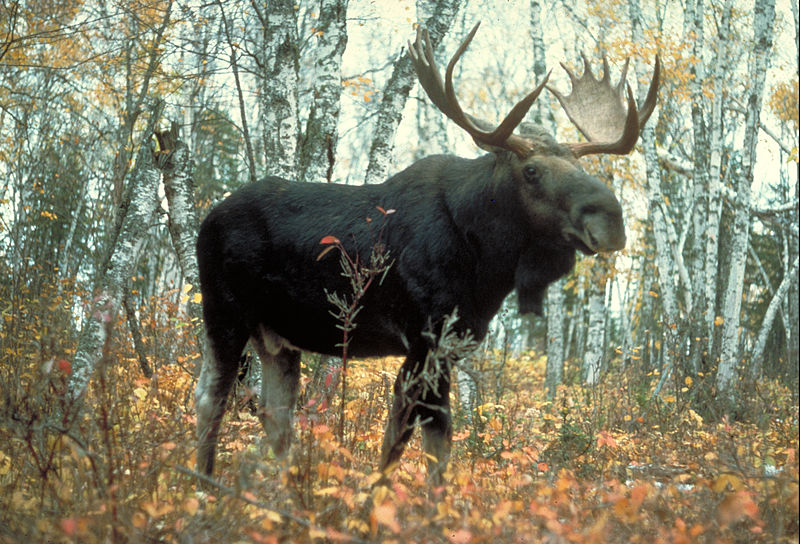
I love the story about the elderly Athabascan woman who was asked how to make moosehide moccasins.  Her reply?  “Well, first you kill a moose.”

moose (WITD)

In other words, have a seat.  This is going to take a while.

When I’m asked, “How do you write a novel?”  My answer is, “Well, first you break a heart.”

And not just any old heart, but the heart of the main character. When an author writes a novel, his/her goal is to tell a story so compelling that the reader doesn’t want to put it down. That means the novelist must establish a strong connection between the reader and the book’s main character. The only sure way to do that is through emotions.

I might not know what it’s like to live thousands of years ago in the Aleutian Islands, but I can relate to an Aleut woman who loses the man she loves in a vicious raid. I feel the emotional connection, and I want to read her story, live her life, and discover how she finds love again. Because she and I are sisters. We both know what it is to have a broken heart. (Okay, I admit it. I’m advertising one of my own novels, Mother Earth Father Sky.)

So, if you’re a writer, how do you go about breaking that main character’s heart? You do it by knowing your main character so well that you understand what is at the center of her soul. Ask yourself these questions: What is most important thing/person/belief in her life? What is the foundation of her self-esteem? What does she love most? Once you know that, then you’ve solved your problem, and what you must do is take that most precious thing away from her. Then she’s in the fight of her life as she tries to survive and win back what she’s lost. Suddenly you have a plot; you have a story. You’ve pushed your character off the two-dimensional page and made her come alive in your reader’s mind.

Tell me about your main character. What is at the center of his or her self-esteem? What does he love the most? What will break her heart?

Blessings, Sue    *Writing the Third Dimension, copyright, 2010 Sue Harrison*

Sue HarrisonBestselling author, Sue Harrison, has written two Alaska trilogies: The Ivory Carver Trilogy and The Storyteller Trilogy, and a middle readers’ book SISU. Prior to the publication of her novels, Harrison was employed at Lake Superior State University as a writer and acting director of the Public Relations Department and as an adjunct instructor in creative writing and advanced creative writing. For more information, click here. To inquire about booking Sue for workshops or speaking engagements this year, click here.

Thanks for joining us! Please feel free to leave your questions and comments.  Next installment February 28, 2013.