Sue Harrison’s “Writing the Third Dimension” – part 21: the Dreaded Pace Plague

Welcome back! Over the next several more months we invite you to return here, specifically on the fourth Thursday of each month for the newest installment of Sue Harrison‘s teaching: Writing The Third Dimension. You can read all the segments by clicking on the page title WRITING THE THIRD DIMENSION, found under Writers’ Helps & Workshops on the drop-down menu. Please feel free to ask questions and leave comments for Sue. Now for the topic for month twenty-one:

********

“Writing the Third Dimension” – part 21: The Dreaded Pace Plague

Last month we talked about decreasing the tension at certain points in your novel or your story (See # 20. Down, Down, Down) We included the unavoidable tension-easers like page breaks and the ends of chapters, and the scripted, necessary tension-easers that keep the readers “in” the story by varying the pace of the action.

IMG_1426Photograph Copyright 2002, Neil Harrison.

Today, we’ll discuss those tension easers that are NOT wanted. Most of these are self-explanatory and easily corrected if the writer is watchful. Here’s my list:

1. A difficult word or name.

If you’ve read my Alaska novels, you know that I’m incredibly guilty in this area. Most of the names of my main characters in these novels are Native words. I was aware of the negative aspect of this choice, but I decided the authenticity was worth it. Maybe I was right or maybe I was wrong, but if you elect to use difficult names or words be sure you weigh the consequences. They do slow the reader down.

2. A poorly constructed sentence.

One of the best ways to catch these in your writing — besides having a good editor — is to be sure one of your rewrites is verbal. When you stumble over your own sentence, you know it needs tweaking.

3. The author tells the story instead of showing it through the character’s eyes.

I could write a book about this one, so to shorten things up, I’ll just refer you to post #6 in this series, “20/20.”

4. Typos and grammatical errors.

A last careful rewrite, which I’ll discuss in a future post, is essential to eliminate this problem. Nonetheless, a few mistakes will still creep in. Most readers will tolerate those few.

5. Long passages of description.

Today’s readers prefer to have description offered in small doses. Cut, cut, cut! You’ll be able to give the same information via the more pace-friendly method of using a sentence on one page and two sentences on another, a phrase here and there.

6. Blatant preaching, even if the main character is the preacher.

Readers pick up a novel because they want a story. Let the story carry your theme and play out any convictions you are trying to address. Your reader will find it more convincing and you’re more likely to win a following for your second novel!

7. Non-visual writing.

If you can’t see it when you write it, close your eyes and visualize until you can. Then, write the scene.

8. Lack of sensory description.

Your readers want to know not only what your characters do but what they hear, taste, feel, see, and smell!

9. Long internal monologues by your characters.

What I said about preaching? Ditto.

10. Stilted and unrealistic dialogue.

Read your dialogue out loud. Everyone uses a different vocabulary for speaking than they do for writing. For your dialogue, use a speaking vocabulary. If you’re having trouble with a dialect or just everyday language in your dialogues, watch and LISTEN to a television show or a movie. Then write.

11. Factual errors in research.

Some readers care desperately about this and some don’t. I’m one of those desperate ones. Although I understand that mistakes happen, and the most carefully researched novels can have errors, a poorly researched novel can make me livid, especially if the errors are manufactured to support the author’s agenda. Do your research. If readers know you’ve done your best, they’ll forgive you for an occasional mistake, and author’s notes are a great place to ask for this forgiveness!

Well, that’s my list. Please add to it! I’d love your input.

Strength to your pen!

Sue

 *Writing the Third Dimension, copyright, 2010 Sue Harrison*

Sue HarrisonBestselling author, Sue Harrison, has written two Alaska trilogies: The Ivory Carver Trilogy and The Storyteller Trilogy, and a middle readers’ book SISU. Prior to the publication of her novels, Harrison was employed at Lake Superior State University as a writer and acting director of the Public Relations Department and as an adjunct instructor in creative writing and advanced creative writing. For more information, click here. To inquire about booking Sue for workshops or speaking engagements this year, click here.

Thanks for joining us! Please feel free to leave your questions and comments. We invite you to come back November 27, 2014, for part 22.

Sue Harrison’s “Writing the Third Dimension” – Part 20: Down, Down, Down

Welcome back! Over the next several more months we invite you to return here, specifically on the fourth Thursday of each month for the newest installment of Sue Harrison‘s teaching: Writing The Third Dimension. You can read all the segments by clicking on the page title WRITING THE THIRD DIMENSION, found under Writers’ Helps & Workshops on the drop-down menu. Please feel free to ask questions and leave comments for Sue. Now for the topic for month twenty: 

********

“Writing the Third Dimension” – part 20: Down, Down, Down

In my last few posts, we’ve talked about increasing the tension in your novel or story, but you know that old saying, “What goes up must come down.” So today let’s talk about coming down off those tension highs.

1476101_10202851031740638_1363769618_n_002* photo credit given at end of article

Tension reduction isn’t always a bad thing. Sometimes the writer needs to give his or her reader “a rest.” If the tension is too high for too long, it can wear your reader out. Too much tension can also rend the veil of disbelief. I’m sure that’s happened to you in your reading life, those books where you think, come on that’s way over the top. At other times, we urge our readers onto a downramp so we can gain enough momentum to swoop them up even higher a few paragraphs or pages later.

Like all tricks of the trade, easing tension takes on the added dimension of the artistic when it’s done effectively. First, let’s address that issue by listing two general classifications of tension-easers.

A. The unavoidable. The unavoidable includes chapter breaks, the turn of a page, or the finger swipe across the screen of your eReader. These are mechanical in nature and not of great concern. Often you can use the unavoidable moments of relaxed tension to your advantage. You might want to check back and read post #19 in this series, “By Hook, Not by Crook,” which discusses effective chapter breaks.

B. The desired. These instances of relaxed tension are the result of well-executed pacing and include the following:

1. A shift in the point-of-view character

2. The solution to a small mystery or a large mystery

3. The completion of a very tense scene

4. A short paragraph of back story

5. A sentence or two of description

The tension-easers in the second category — I’m sure you can think of others I haven’t listed — can be effective tools in any novelist’s arsenal. It’s really all about pace. I usually edit for pace when I’m working on the third draft of my novels, which is one of my “hard copy” reads. I three-hole punch the printed pages of my novel and put them in a binder so I feel like I’m reading a book. Then I get out my red pen! Here’s what I look for:

1. When I catch my mind wandering, I need to up the pace with more tension. (See post #18. Tension)

2. If I begin reading so fast that I forget I’m editing, my pace is probably fine. (My editing might need a kickstart, though!)

3. If a scene does not place a strong visual image in my mind, I probably need to pull back  on the tension and slow the pace with a tension-easer, usually a sentence of description or a very short bit of back story.

4. If I crack up at the implausibility of the scene, I need a change of pace. Often, it’s time to cross out then rewrite whole pages until I have reestablished a believable scenario and my upramp isn’t quite so steep.

I’ve purposely left out one huge category of tension-easers. Those we don’t want to include in our novels.  I hope you’ll come back next month, and we’ll talk about The  Dreaded Pace-Plague!

How do you adjust the tension or the pace of your novel?

Strength to your pen!

Sue

* Photograph, copyright David Massongil, 2010. Used with permission. Thank you, David, I love this photo!

*Writing the Third Dimension, copyright, 2010 Sue Harrison*

Sue HarrisonBestselling author, Sue Harrison, has written two Alaska trilogies: The Ivory Carver Trilogy and The Storyteller Trilogy, and a middle readers’ book SISU. Prior to the publication of her novels, Harrison was employed at Lake Superior State University as a writer and acting director of the Public Relations Department and as an adjunct instructor in creative writing and advanced creative writing. For more information, click here. To inquire about booking Sue for workshops or speaking engagements this year, click here.

Thanks for joining us! Please feel free to leave your questions and comments. We invite you to come back October 23, 2014, for part 21.

Sue Harrison’s “Writing the Third Dimension” – Part 19: By Hook, Not By Crook

Welcome back! Over the next several more months we invite you to return here, specifically on the fourth Thursday of each month for the newest installment of Sue Harrison‘s teaching: Writing The Third Dimension. You can read all the segments by clicking on the page title WRITING THE THIRD DIMENSION, found under Writers’ Helps & Workshops on the drop-down menu. Please feel free to ask questions and leave comments for Sue. Now for the topic for month nineteen:

********

“Writing the Third Dimension” – part 19: By Hook, Not by Crook

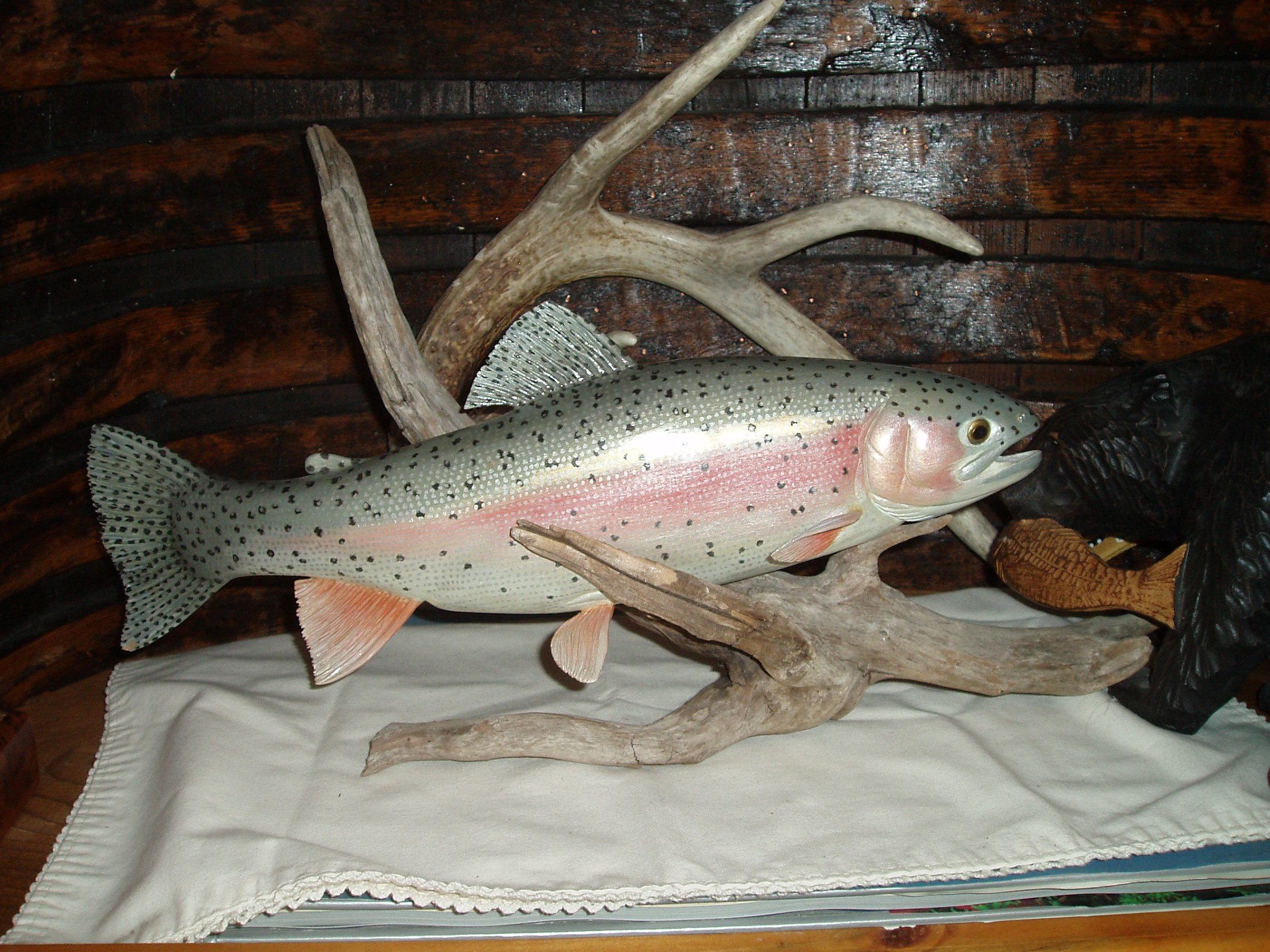
What do a fisherman and a writer have in common?

OLYMPUS DIGITAL CAMERA

Yes, you’re right! Using a hook! How did you ever guess?

If you’ve read any how-to books about the craft of writing a novel, then you’ve read about the all-important hook — that sentence or idea which draws the reader into the story right from the first page on.

This post isn’t about that huge hook. It’s about another place within your novel that benefits when you append a hook. The end of a chapter. I’m one of those novelists who believe, that in our current reading climate, most readers prefer short chapters. I know there are exceptions, but long chapters can make a reader feel like she is listening to a long, boring diatribe.

Short chapters ramp up the tension, allow for more fluid point-of-view changes, and help the writer segue more easily into a new scene. However, shorter chapters mean more chapter endings and chapter endings can be a problem.

When I write, my goal is to pull the reader into the story and to do everything I can to keep him there. So the reader lives and breathes and sees the world as if he were the main character. Chapter endings remind the reader that he or she lives in another world. No matter how many positives exist because of a chapter break, those breaks also act like stop signs in the continuum of the story. Pop! The reader is back into real life. He or she sets down the book and goes about regular business. So you, the writer need an edge to bring him or her back as soon as possible, and that edge is the proverbial hook.

Basically, I observe two rules when I end a chapter with a hook.

1. The hook is short, contained in only a sentence or two or three.

2. The hook is honest. It doesn’t set up bogus expectations.  You don’t want your reader to feel cheated. The crooked hook: “Albert caught his breath. He was staring  into the golden eyes of a snarling cheetah.” The disillusionment, next chapter: “Of course, the cheetah was only a poster on the wall in Albert’s bedroom.”

I’m not at all the best  hook writer in the business. I’m afraid I’m not even in the top 1000, but I own the copyrights to my novels and my works-in-progress, so rather than cite hooks from other writers’ copyrighted novels,  I’ll close this post with a few examples of chapter-end hooks that I have written. I hope they’ll convey what I mean and give you some examples to draw from as you write your own hooks.

From MOTHER EARTH FATHER SKY, Chapter 25: “Then Kayugh took his daughter to the beach while the others finished burying his wife.”  [The hook: If he can’t even bear to see his wife buried, how will Kayugh be able to survive his grief?]

From CRY OF THE WIND, Chapter 41: “‘River Ice Dancer,’ she said, holding out her hand, ‘you are cold, and my bed is very warm.’” [The hook: Will River Ice Dancer fall into the wily hands of the temptress K’os?]

From BONE FIRE (work-in-progress), Chapter 3: “If Rose wasn’t still pregnant when they got there, the Spirit-caller wouldn’t take her in trade. Then what would Villr do? Watch his own daughter die?” [The hook: Why would his daughter die? What are Villr’s horrible plans for the main character Rose?]

Remember, you want to draw your reader back to your novel, even after the disruption of a chapter break. A small hook will do, a tease that will make your reader want to stay in the story. Be quick. Be honest.

Strength to your pen!

Sue

*Writing the Third Dimension, copyright, 2010 Sue Harrison*

Sue HarrisonBestselling author, Sue Harrison, has written two Alaska trilogies: The Ivory Carver Trilogy and The Storyteller Trilogy, and a middle readers’ book SISU. Prior to the publication of her novels, Harrison was employed at Lake Superior State University as a writer and acting director of the Public Relations Department and as an adjunct instructor in creative writing and advanced creative writing. For more information, click here. To inquire about booking Sue for workshops or speaking engagements this year, click here.

Thanks for joining us! Please feel free to leave your questions and comments. We invite you to come back September 25, 2014, for part 20.

Sue Harrison’s “Writing the Third Dimension” – part 18: Tension

Welcome back! Over the next many months we invite you to return here, specifically on the fourth Thursday of each month for the newest installment of Sue Harrison‘s teaching: Writing The Third Dimension. You can read all the segments by clicking on the page title WRITING THE THIRD DIMENSION, found under Writers’ Helps & Workshops on the drop-down menu. Please feel free to ask questions and leave comments for Sue. Now for the topic for month eighteen:

********

“Writing the Third Dimension” – part 18: Tension

My editor recently read the first 20,000 words of a novel I’m writing called BONE FIRE. BONE FIRE is set circa 6000 B.C. in Eastern Europe near the Danube River’s famed “Iron Gates,” and 20,000 words comprise approximately 1/5 of the novel. To my delight, she liked what I’ve written so far, and, even better, she also designated where I should ramp up the tension. Advice like that is absolutely golden to a novelist, because tension is what grabs readers and pulls them into the story.

IMG_0444 As a novelist, my goal is to entice readers into my story and keep them there. Achieving that depends on a number of factors, but let’s assume that my reader loves my chosen genre, that she wants to escape into a novel, and she has time away from distractions and life’s mundane chores. If that is the case, then the pulling-in and the keeping-there depends mainly on my storytelling skills. Yikes! That’s a little scary, but not quite so scary if I remind myself that I can use a relatively simple writing device to help make my story more captivating.

And that writing device is…?

Tension! (Give yourself a gold star if you already knew because you read the title of this post.)

All right, I can hear you say, “Aw come on, Sue. Tension is NOT simple.”

Well, maybe not simple, and maybe not even easy, but definitely a skill that almost any writer can learn. I like to visualize tension as a ladder my readers ascend. Step by step they climb toward the high point or climax of the novel.

Through the years, I’ve found a variety of ways to tighten the tension, lift my story, and entice my readers to take that next step up.

1. Internal conflict. (See Writing the Third Dimension, Part 16: “Conflicted.”)

2. External conflict. (See Writing the Third Dimension, Part 17: “Curses Foiled Again.”)

3. Small mysteries. (Why is the main character afraid of cats? Who is that man watching from the shadows?)

4. Large mysteries. (Who killed John Doe?)

5. The use of short, quick paragraphs or sentences. (These will make the reader read more quickly and up-pace the tempo in a subtle way.)

6. Unexpected emotional responses from the characters. (When John gives Mary the new car, she becomes angry. The reader was expecting her to celebrate.)

7. Confrontation between characters through dialogue or physical action.

8. An unexpected turn or detour in the main plot line.

9. A teaser at the end of a chapter that makes the reader want to continue to the next chapter. (I’ll discuss how to write teasers in my August post.)

10. A poor decision made by one of the characters.

11. An undercurrent of foreshadowing about what may happen next. (Subtle is the by-word here.)

12. Heartache moments.

13. Moments of small victory when your point-of-view character conquers the odds to succeed.

14. A change in the rhythm of your words. (I’m referring here to actual word choices. If your chosen “voice” for the novel is flowery, you might choose to write a short section in very succinct and harsh-sounding words. Or vice versa. Let your ears be the judge of how well this works. Read your rhythm changes out loud to check their effectiveness.)

15. A first kiss or any romantic meeting.

16. Rescue and the need for rescue.

17. Pain. Physical, mental, emotional. (Be sure you present this as a “showing” event. You shouldn’t tell your reader, “Joe was in agony.”  Show the reader that Joe is suffering through his words, actions, and angst.)

18. Cutting unnecessary wordiness. (Especially awkward words like wordiness!)

How do you ramp up the tension in your novels or stories? Share with us!

Strength to your pen!

Sue

*Writing the Third Dimension, copyright, 2010 Sue Harrison*

Sue HarrisonBestselling author, Sue Harrison, has written two Alaska trilogies: The Ivory Carver Trilogy and The Storyteller Trilogy, and a middle readers’ book SISU. Prior to the publication of her novels, Harrison was employed at Lake Superior State University as a writer and acting director of the Public Relations Department and as an adjunct instructor in creative writing and advanced creative writing. For more information, click here. To inquire about booking Sue for workshops or speaking engagements this year, click here.

Thanks for joining us! Please feel free to leave your questions and comments. We invite you to come back August 28, 2014, for part 19.

Sue Harrison’s “Writing the Third Dimension” – part 17: Curses, Foiled Again!

Welcome back! Over the next many months we invite you to return here, specifically on the fourth Thursday of each month for the newest installment of Sue Harrison‘s teaching: Writing The Third Dimension. You can read all the segments by clicking on the page title WRITING THE THIRD DIMENSION, found under Writers’ Helps & Workshops on the drop-down menu. Please feel free to ask questions and leave comments for Sue. Now for the topic for month seventeen:

********

“Writing the Third Dimension” – part 17: Curses, Foiled Again!

You’ve probably heard the old Chinese curse (maybe from me), “May you live in interesting times.”

Interesting times — war, famine, storms, earthquakes — are terrifying to live through. However, within the framework of a novel, interesting times are wonderful to write about and to read about.

mount st. helens(Photo, public domain)

 I purposely set my first trilogy (The Ivory Carver Trilogy) just prior to, during, and shortly after a large volcanic eruption that rocked the Aleutian Islands thousands of years ago. According to archaeological and geological studies, this eruption left a very clear ash layer, which is relatively easy to date within plus or minus 50 years. I chose a date (7056 B.C.) within that time frame for the first novel of the trilogy, and that allowed me to enhance the realism. These “hey-this-really-happened” moments add definition and believability to a novel. In the case of a volcanic eruption, it also serves as an effective external conflict — man versus nature.

Although many wonderful novels are based only on internal conflict, you are more likely to please your readers if you use both internal and external conflicts.

External conflicts include man-against-man (wars and rumors of war, revenge, arranged marriages, blackmail); man-against-nature (earthquakes, storms, famine, plagues, animals); man-against-machines (robots, razor sharp pendulums, crazed vehicles); man-against-spiritual beings (devils, angels, gods); man-against-entity (governments, corporations, alien civilizations).

The most important thing to keep in mind as you develop external conflicts is to keep your characters in-character. In other words, a man who hates kids probably won’t fight a government entity to protect them. Of course, wouldn’t it be a great story if he did? If he does, however, be sure you give him proper motivation for doing so. Why the change of heart?

Another thing to remember about external (and internal) conflict is that if a conflict does not pierce the heart of your character(s), your readers will be yawning. How do you pierce the heart? Here’s a few ideas:

1. Use your conflicts to test, grow, or destroy your characters.

2. Use conflicts as foils to highlight your character’s desires, strengths, and/or weaknesses.

3. Use conflicts to force your character into rip-out-the-heart choices.

4. Use conflicts to grow your main character’s problems into something larger than his or her daily life.

5. Use conflicts to make your character suffer — mentally, spiritually, or physically.

These techniques help you touch your readers’ hearts, and that’s how writers build their reading audiences.

What types of external conflicts do you like to read about?

Strength to your pen!

Sue

*Writing the Third Dimension, copyright, 2010 Sue Harrison*

Sue HarrisonBestselling author, Sue Harrison, has written two Alaska trilogies: The Ivory Carver Trilogy and The Storyteller Trilogy, and a middle readers’ book SISU. Prior to the publication of her novels, Harrison was employed at Lake Superior State University as a writer and acting director of the Public Relations Department and as an adjunct instructor in creative writing and advanced creative writing. For more information, click here. To inquire about booking Sue for workshops or speaking engagements this year, click here.

Thanks for joining us! Please feel free to leave your questions and comments. We invite you come back July 24, 2014, for part 18.

Sue Harrison’s “Writing the Third Dimension” – part 16: Conflicted!

Welcome back! Over the next many months we invite you to return here, specifically on the fourth Thursday of each month for the newest installment of Sue Harrison‘s teaching: Writing The Third Dimension. You can read all the segments by clicking on the page title WRITING THE THIRD DIMENSION, found under Writers’ Helps & Workshops on the drop-down menu. Please feel free to ask questions and leave comments for Sue. Now for the topic for month sixteen:

********

“Writing the Third Dimension” – part 16: Conflicted!

Conflict stands as the quintessential lifeblood of a novel. To pull your readers in and keep them involved in your story, you have to walk a narrow path between too little conflict and too much conflict.

Too little conflict will start your readers yawning. Too much conflict will rend the “veil of disbelief” and pop your readers out of the story. (As in, “Give me a break nobody suffers that much angst over a piece of burnt toast.”)

IMG_0154Toast burned and photographed by Sue.

Let’s simplify by dividing conflict into two broad categories — internal and external. Today, we’ll talk about internal. Next month, we’ll discuss external.

Internal conflict is all about what’s going on inside your character, mentally and emotionally. Internal conflict is vitally important because it builds a bridge between your character and your reader. Readers relate to strong emotions. We all know what it is to love, hate, feel jealous, be afraid, and experience all those other potent feelings. It’s the “do I love him or hate him” anguish of the romance novel (Jane Eyre, right?). It’s the “who am I and why are they trying to kill me” of suspense novels (Jason Bourne). I could go on, but I’ll spare you.

Of course, these emotional connections lead us back to the “show don’t tell” admonitions of so many how-to writing books and articles. Just to remind all of us (including myself) how “show don’t tell” relates to internal conflict, I’ll pull an example from one of my current manuscripts.

This quote is from BONE FIRE, a novel set in ancient Europe. The main character, Rose, has been kidnapped and is traveling North with her abductor. Rose grieves so much for her lost home and family that she would rather be dead than go peacefully with the kidnapper, but she is pregnant, and she wants the baby to live.

Now I could throw the above paragraph — with a few tweaks — into the middle of the novel and be done with the matter, but that won’t create an adequate bond between Rose and my readers.  Instead, in a series of scenes, I illustrate her internal conflict through her actions. Here’s one short example:

“…that part of Rose which lived inside her head traveled back over the trails to the Mother River until she reached her village. There she floated over the deserted houses, looking for Kittle, and the grandmother, and the old man Dat. When she did not find them, she came back to her own body and slept, and in the morning, when Villr [her kidnapper] offered her food, she ate.”

The best internal conflict isn’t only about choices, it’s about choices that carry immense emotional baggage. Your character has to bleed (really or figuratively) no matter what choice he or she makes. Rose’s choice is between death and life, but, if she chooses life, she is choosing to leave behind who she is, who she loves, and all that she knows. If she chooses death, she is also choosing to kill her own unborn baby. Either way, she’s hurting, big time.

Thank goodness that for a novelist, the choice is a bit easier. Choose internal conflict. Choose to pull your reader in with difficult choices and strong emotions.

What’s your main character’s name? What kind of internal conflict does he or she face?

Strength to your pen!

Sue

*Writing the Third Dimension, copyright, 2010 Sue Harrison*

Sue HarrisonBestselling author, Sue Harrison, has written two Alaska trilogies: The Ivory Carver Trilogy and The Storyteller Trilogy, and a middle readers’ book SISU. Prior to the publication of her novels, Harrison was employed at Lake Superior State University as a writer and acting director of the Public Relations Department and as an adjunct instructor in creative writing and advanced creative writing. For more information, click here. To inquire about booking Sue for workshops or speaking engagements this year, click here.

Thanks for joining us! Please feel free to leave your questions and comments. We invite you come back June 26, 2014, for part 17.

Sue Harrison’s “Writing the Third Dimension” – part 15: Tools of the Trade

Welcome back! Over the next many months we invite you to return here, specifically on the fourth Thursday of each month for the newest installment of Sue Harrison‘s teaching: Writing The Third Dimension. You can read all the segments by clicking on the page title WRITING THE THIRD DIMENSION, found under Writers’ Helps & Workshops on the drop-down menu. Please feel free to ask questions and leave comments for Sue. Now for the topic for month fifteen:

********

“Writing the Third Dimension” – part 15: Tools of the Trade

In the second grade, my classmates and I learned to write paragraphs. To ease us into the task, our teacher, Mrs. Stockinger, wrote a paragraph on the blackboard and told us to copy what she had written. Although the paragraph was only two or three lines, I remember that assignment as grievously laborious. I’m glad I didn’t know then that we would soon have to compose our own paragraphs and even write a whole story full of paragraphs.

Good grief, whatever was Mrs. Stockinger thinking?

She was thinking that the ability to write a viable paragraph would be a useful tool during our academic lives and beyond.

IMG_0159

If you’re writing a novel, then it’s safe to bet that someone at sometime showed you how to write paragraphs. You were probably taught that a good paragraph begins with a topic sentence and goes on to explain or develop the premise set by that sentence.

That’s a great place to start, but, because we’re writing novels, let’s consider a few more novel-pertinent ideas about writing paragraphs.

1. Most of the time, you should keep your paragraphs relatively short. Readers today grew up with television, and, therefore, with stories conveniently nipped into bite-sized pieces. Unlike our ancestors of the 1800s, we’re used to ideas presented succinctly. To modern readers, long paragraphs are akin to a monotone speaker.

2. Unless the reader is enjoying an audio edition or using Braille, the act of reading is a visual experience. Even before a reader delves into the words or the story, the page imprints on the brain — white space versus black letters. I used to keyline page layouts for a small university press. You’d be amazed how much time we spent considering column widths, margins, photograph placement, and caption sizes. Odd as it sounds, readers drift away when a page doesn’t contain enough white space. Ebooks have introduced a whole array of new possibilities, but still, as a writer, don’t be afraid to chop up your chapters with a few one-sentence or even one-word paragraphs. They rest the eyes, and they add pleasing visual variety.

3. Paragraph lengths impact the Voice or Voices you have chosen as the vehicle to carry and tell your story. You can test this for yourself. Read aloud a page of your manuscript. Now rewrite it with longer or shorter paragraphs. Read it aloud again. The difference is amazing, isn’t it? And that’s what I want to get across. The lengths of your paragraphs make a difference, and knowing that fact places a very useful tool into the hands and the mind of a writer.

4. Long chapters are discouraging to many readers. I love to insert a couple of one-page chapters in my suspense novels. That bit of choppiness ramps up the tension — another tool to add to your collection.

So there you have it. Writers can use chapter and paragraph length as tools to tweak their novels.

What’s your tendency? Short or long paragraphs? Short or long chapters? Which do you prefer to read?

Strength to your pen!

Sue

*Writing the Third Dimension, copyright, 2010 Sue Harrison*

Sue HarrisonBestselling author, Sue Harrison, has written two Alaska trilogies: The Ivory Carver Trilogy and The Storyteller Trilogy, and a middle readers’ book SISU. Prior to the publication of her novels, Harrison was employed at Lake Superior State University as a writer and acting director of the Public Relations Department and as an adjunct instructor in creative writing and advanced creative writing. For more information, click here. To inquire about booking Sue for workshops or speaking engagements this year, click here.

Thanks for joining us! Please feel free to leave your questions and comments. We invite you come back May 22, 2014, for part 16.