Sue Harrison’s “Writing the Third Dimension” – part 4: Fatal Flaw

Welcome! Over the next many months we invite you to return here, specifically on the fourth Thursday of each month for the newest installment of Sue Harrison‘s teaching: Writing The Third Dimension. You can read all the segments by clicking on the page title WRITING THE THIRD DIMENSION, found under Writers’ Helps & Workshops on the drop-down menu. Please feel free to ask questions and leave comments for Sue. Now for the topic for month four:

******

“Writing the Third Dimension” – part 4: Fatal Flaw

When I was in college, I overheard a young woman say to a friend, “Well, I can be friends with a girl who is smart, and I can be friends with a girl who is beautiful, but I just can’t stand a girl who’s beautiful and smart.”


That’s a very good summary of how your readers are going to feel about your main character if he or she is too perfect. We know our own vulnerabilities only too well. When we meet someone who is too talented, too beautiful, or too smart, all that perfection eats away at our self-esteem. So, unless you’re writing a spoof, please give your characters vulnerabilities. Your readers need to identify with the main character. Character flaws pull your reader into your novel, make that reader stick with you through 400 or more pages of story, and – best of all – inspire your readers to buy your next book. Perfection just doesn’t cut it!


If you’ve read any of the TWILIGHT series, you know that the main character Bella is a total klutz. She’s also not aware of her own beauty and not very popular. Those flaws help make Bella a very loveable character. I have to admit that nothing makes me ‘forgive’ a gorgeous Hollywood starlet more readily for her beauty than her sincere lament about her squinty eyes or crooked teeth.


Let’s face it. We all tend to romanticize life. In mid-winter we dream of life on the beach – warm sun, snacks and cold drinks in the cooler, family time… But in real life, beach days also include ants, sunburn, and sand – all over our hands, in our food, and in our bathing suits. Even the most romantic of readers want their novels to include a bit of sand in the beach scene and, more importantly, imperfection in their main characters.


DSCF3190


One caution – be careful with character flaws. Don’t make them so terrible that your reader turns away in disgust. For example, it’s probably not a good idea for your protagonist to be mean to children or dogs.


We all have character flaws. I, alas, like Bella, am a klutz. I also have a tendency to talk too much when I’m nervous. The main character in my current WIP (work in progress) is drop-dead gorgeous, except that her face is plastered with freckles. She’s also made some very unwise life choices. Are you working on a novel or short story? What’s your character’s flaw? Let’s share some ideas by composing a list.


What character flaws have you used within your writing, noticed in your reading, or put up with in real life?

Any questions for me?  Please feel free to ask!


Blessings and Happy Writing!


Sue


*Writing the Third Dimension, copyright, 2010 Sue Harrison*


Sue HarrisonBestselling author, Sue Harrison, has written two Alaska trilogies: The Ivory Carver Trilogy and The Storyteller Trilogy, and a middle readers’ book SISU. Prior to the publication of her novels, Harrison was employed at Lake Superior State University as a writer and acting director of the Public Relations Department and as an adjunct instructor in creative writing and advanced creative writing. For more information, click here. To inquire about booking Sue for workshops or speaking engagements this year, click here.

Thanks for joining us! Please feel free to leave your questions and comments. We invite you come back May 23, 2013, for part 5.

Sue Harrison’s “Writing the Third Dimension” – part 3: The Boyfriend List

Welcome! Over the next many months we invite you to return here, specifically on the fourth Thursday of each month for the newest installment of Sue Harrisons teaching: Writing The Third Dimension. You can read all the segments by clicking on the page title WRITING THE THIRD DIMENSION, found under Writers’ Helps & Workshops on the drop-down menu. Please feel free to ask questions and leave comments for Sue. Now for the topic for month three:

************

“Writing the Third Dimension” – part 3: The Boyfriend List

When I was twelve, I wrote a Boyfriend List. My list included all the dream qualities I considered ideal in a boyfriend. Most of it was very superficial: blue eyes, good athlete, smart, cute, and nice. Cute and nice? Ah well, I was only twelve.

Writing that list didn’t help me much during the angst years of junior high; however, it was the first indication that I would take after my maternal grandfather and become a list writer. I live on lists. Grocery lists, lists of goals, book idea lists, books I’ve read, housework to-do… I could go on, but I’ll spare you. If you are a list-maker, you’re going to like what I have to say next. If not, please give my suggestions at least a bit of consideration. I think they will be helpful for you as you write your novel.

You’ve been fostering a friendship with your main character. You’ve been carrying this brand new person in your head, having conversations with him, asking questions, getting to know her. That’s the creative Right Brain part. Now comes the Left Brain stuff. You need to write everything down. If you’re a “fly by the seat of your pants” kind of writer, you might resist doing that, but sometimes creativity has to bow to analysis. Your novel will have a much better chance to make it all the way to publication if you know your character so well that you convey his motivations and reactions so that they make sense to the reader throughout the novel. (And you also want the blue-eyed girl in the first chapter to still have blue eyes in the last chapter.) 

Most of you have done a character sketch, maybe when you were in junior high or high school. A character sketch? Yes, all this has been leading up to that old standard, the character sketch. (No histrionics, please!)

My usual character sketch includes these items: name, age, race, birth date, nationality, birthplace, hair color, eye color, skin color, facial characteristics, body type, unusual physical characteristics (tattoos, birthmarks, freckles and so on), weight, height, body language/mannerisms, voice, speech quirks (clichés, catch phrases), time period in which she/he lives, favorite food, favorite animal and television show and movie and book and music, favorite person, his/her parents, siblings, relatives, pets, jobs held, and schooling.

The list could be almost endless, and I’m sure that you’ll think of characteristics that I haven’t included. Your character sketch will vary, novel to novel. A character who lives in the 1800s will not have a favorite television show, of course, but he may have a favorite saddle. In my Alaska trilogies all characters have brown eyes and dark hair, so that was easy, but I needed to use other physical characteristics to help me – and my readers – differentiate one character from another. That was a little more complex.

You’ll need a sketch for each main character and probably for your primary villain. You may find yourself changing things in your character sketch as you progress through this novel, so an area for “additional notes” is a good idea. Don’t be afraid to throw in MORE than you probably need to know. Even though these facts may never come to light within the novel, the more you understand about your character, the better job you’ll do writing about him. Also, you never know when an unexpected twist may change the course of your novel. Characters do have a tendency to wrestle the keyboard away from the writer. That’s when I benefit from re-reading my character notes.

My character sketches get pretty messy by the end of my novel and often degenerate into layers of sticky-notes, but at least I have a reference to what I’ve done, changed, thought, and decided during the weeks and months of writing. 

What works best for me is to keep two ring binders for each novel I’m writing. One binder is for the chapters of my current draft. (You’ll need a four- or five-inch binder for this.) I use dividers between each chapter for easy reference. The other binder is for my research notes and also includes my character sketch notes and good stuff like the people to include in my author’s acknowledgements, reviewers who may want to read an ARC (advanced reader’s copy) of the novel, and maps. 

It comes down to this. You don’t need to keep all the little stuff in your head. Make lists, fill notebooks, write character sketches. That will leave room in your brain for the muse to stretch out and get comfortable!

(And as for me, it turns out that a writing a Boyfriend List was good preparation for creating novels. Who knew?)

My question for you: Are you a left-brained, analytic person or more of a seat-of-the-pants kind of writer? 

Any questions for me?

Happy Writing and Many Blessings!

Sue

*Writing the Third Dimension, copyright, 2010 Sue Harrison*

Sue HarrisonBestselling author, Sue Harrison, has written two Alaska trilogies: The Ivory Carver Trilogy and The Storyteller Trilogy, and a middle readers’ book SISU. Prior to the publication of her novels, Harrison was employed at Lake Superior State University as a writer and acting director of the Public Relations Department and as an adjunct instructor in creative writing and advanced creative writing. For more information, click here. To inquire about booking Sue for workshops or speaking engagements this year, click here.

Thanks for joining us! Please feel free to leave your questions and comments. We invite you come back April 25, 2013, for part 4.

Sue Harrison’s “Writing The Third Dimension”- part 2: Cut the Puppet Strings!

Welcome! Over the next many months we invite you to return here, specifically on the fourth Thursday of each month for the newest installment of Sue Harrison‘s teaching: Writing The Third Dimension. You can read all the segments by clicking on the page title WRITING THE THIRD DIMENSION, found under Writers’ Helps & Workshops on the drop-down menu. Please feel free to ask questions and leave comments for Sue. Now for the topic for month two:

************

“Writing the Third Dimension” – part 2: Cut the Puppet Strings!

One of my little life treasures is a slip of paper from my uncle that is filled with handwritten notes about characterization. Uncle Bill was a composer, symphony conductor, and concert pianist, very eccentric and very brilliant. When I was in college, I worked up enough nerve to begin sending him some of my short stories.  He became my coach, cheerleader, and harshest critic, exactly what I needed at that time.  I finally wrote a novelette and sent that 40,000 words of drivel to him.  

Uncle Bill wrote a critique of my novelette, and, when he was at the post office to mail that critique to me, he ripped a deposit slip out of his checkbook and wrote this on the back: [his words and spelling] “Your characters must be so real they even defy the author.  They wake you up in the middle of the nite and spit right in your eye. You are not creating puppets that do what you want but live living beings that act their life right in front of you. You will do well to write it down fast enough when this happens.” In the critique, one of  his sentences reads: “I know more about the sidewalk [in your manuscript] than I do about your main character.” My manuscript had a fatal flaw. I had managed to write 40,000 words without allowing any of my characters to step off the page and assume three dimensions. I’d written a whole novelette about people who were merely puppets, and their strings were showing.

In my first “Writing the Third Dimension” post here on Polilla Writes, we talked about carrying your characters around in your head until you know them well enough to understand what will destroy them. That’s identifying the huge center of your character, but you also have to know all those quirky little things that will make your character real and loveable and irascible, those attributes that will make your character memorable to your readers.

If you are just beginning your novel, or if, in rereading your manuscript, you feel that your characters are stiff and fake, buy, beg, or scarf up a three-ring binder. Fill it with lined loose-leaf paper, or, if you’re a techie, start a file on your computer or iPad. As you carry your main character around in your head, take notes about him or her. Don’t try to get too organized about this. Right now you’re a hunter-gatherer. Hunt for the stuff and jot it down. When you’re answering the telephone, stop and think how your main character would answer the telephone. When you’re ordering pizza, decide what your main character would like on his pizza. If you’re clicking through the channels on your television, figure out what your main character would watch. What would he read? What car would she buy? Where does he like to vacation? If you’re writing about a different era than modern times, what horse would she ride? What fabric would she choose for her new dress? What did he name his spaceship? Write it all down.

Cut out photographs from magazines or eZines and save them until you have a composite picture of what your main character looks like. Here’s a huge secret about writing that I’ll tell you now and also tell you again in later posts. If your visualization of your character (or a setting or an item) is fuzzy in your mind, it will be visually fuzzy to your reader. That’s one of the few rules of writing that’s pretty much set in stone. Learn to see your character in action in your mind. How does he run? Like Harrison Ford? How does she smile? Like Julia Roberts?  Close your eyes and visualize until you see that character so clearly you could be watching her on television.

Last month, we were looking at the big picture – the center of your character’s being, his self-esteem, her reason for living. This month, we’re talking about the details, figuring out all the small stuff that makes people real. Next month? The whole picture. Remember, the stronger your characters, the better chance you’ll have to be published, which means that I’ll get to read your books. I can’t wait!

My questions for you: What color is your main character’s hair?  What does your main character love to do in his free time?

Any questions for me?  Please feel free to ask!

Blessings and Happy Writing!

Sue

*Writing the Third Dimension, copyright, 2010 Sue Harrison*

Sue HarrisonBestselling author, Sue Harrison, has written two Alaska trilogies: The Ivory Carver Trilogy and The Storyteller Trilogy, and a middle readers’ book SISU. Prior to the publication of her novels, Harrison was employed at Lake Superior State University as a writer and acting director of the Public Relations Department and as an adjunct instructor in creative writing and advanced creative writing. For more information, click here. To inquire about booking Sue for workshops or speaking engagements this year, click here.

Thanks for joining us! Please feel free to leave your questions and comments. We invite you come back March 28, 2013, for part 3.

Sue Harrison’s “Writing the Third Dimension” – part 1: Heart Breaker

Welcome, everyone! Have you ever wished you could sit in on one of Sue Harrison’s writers workshops? Now you can, a few minutes at a time. Over the next many months you are invited here for a writers workshop, the fourth Thursday of each month, for Sue Harrison‘s teaching about Writing The Third Dimension. Sue invites you to ask questions and leave comments, to which she will gladly respond. If you miss one segment, you can still have access to them all. Just mouse over Writers’ Helps & Workshops on my drop down menu, then click on Writing The Third Dimension.

When I asked her what it means to write the third dimension, Sue explained, “Basically, the concept is for writers to write their characters, scenes, and plots in such a way that they “pop” off the two-dimensional page and assume a three-dimensional presence in the reader’s mind – as if the reader had actually lived the story.”  Now we are going to learn how to do that.  🙂

*************

“Writing the Third Dimension” – part 1: Heart Breaker

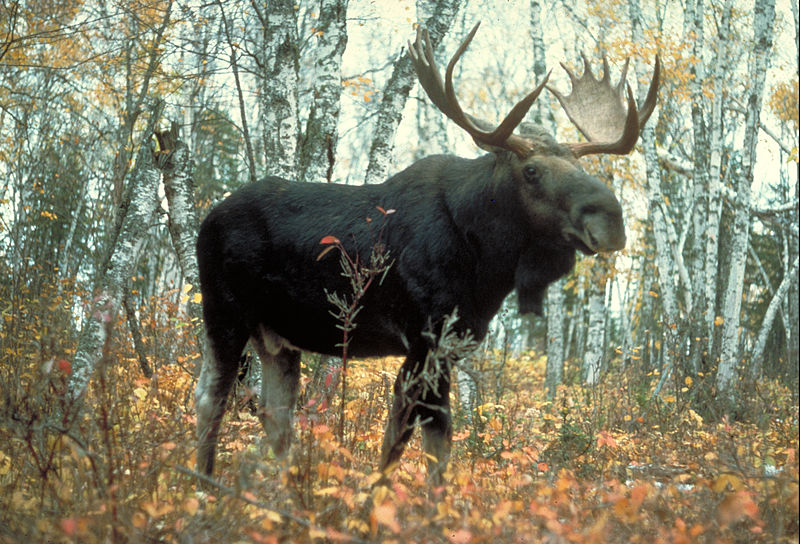
I love the story about the elderly Athabascan woman who was asked how to make moosehide moccasins.  Her reply?  “Well, first you kill a moose.”

moose (WITD)

In other words, have a seat.  This is going to take a while.

When I’m asked, “How do you write a novel?”  My answer is, “Well, first you break a heart.”

And not just any old heart, but the heart of the main character. When an author writes a novel, his/her goal is to tell a story so compelling that the reader doesn’t want to put it down. That means the novelist must establish a strong connection between the reader and the book’s main character. The only sure way to do that is through emotions.

I might not know what it’s like to live thousands of years ago in the Aleutian Islands, but I can relate to an Aleut woman who loses the man she loves in a vicious raid. I feel the emotional connection, and I want to read her story, live her life, and discover how she finds love again. Because she and I are sisters. We both know what it is to have a broken heart. (Okay, I admit it. I’m advertising one of my own novels, Mother Earth Father Sky.)

So, if you’re a writer, how do you go about breaking that main character’s heart? You do it by knowing your main character so well that you understand what is at the center of her soul. Ask yourself these questions: What is most important thing/person/belief in her life? What is the foundation of her self-esteem? What does she love most? Once you know that, then you’ve solved your problem, and what you must do is take that most precious thing away from her. Then she’s in the fight of her life as she tries to survive and win back what she’s lost. Suddenly you have a plot; you have a story. You’ve pushed your character off the two-dimensional page and made her come alive in your reader’s mind.

Tell me about your main character. What is at the center of his or her self-esteem? What does he love the most? What will break her heart?

Blessings, Sue    *Writing the Third Dimension, copyright, 2010 Sue Harrison*

Sue HarrisonBestselling author, Sue Harrison, has written two Alaska trilogies: The Ivory Carver Trilogy and The Storyteller Trilogy, and a middle readers’ book SISU. Prior to the publication of her novels, Harrison was employed at Lake Superior State University as a writer and acting director of the Public Relations Department and as an adjunct instructor in creative writing and advanced creative writing. For more information, click here. To inquire about booking Sue for workshops or speaking engagements this year, click here.

Thanks for joining us! Please feel free to leave your questions and comments.  Next installment February 28, 2013.

We have a Sue Harrison book winner! & Important announcement for writers!

This post is a doubly exciting one for me, a two-part privilege.

PART ONE:

Announcing the winner of a Sue Harrison novel:

My young grandson came to visit us awhile this evening, so at 6 PM EST (7:00 for me) I asked him to draw one name out of the basket of entries — the name of one person to win a Sue Harrison novel, winner’s choice of title.  The winner is ……   ** drum roll **

snare-drum-th

 Bill G.!!

Congratulations,  Bill! Please check your email for my request for your mailing address and the title of the book you want to receive from Sue Harrison, if you haven’t already said that in your comment.  She will happily get that book into the mail for you. 🙂

THANK YOU, EVERYONE, FOR PARTICIPATING! It was fun for both Sue and me.

PART TWO:

Have you been watching my countdown clock? It now says 2 days to go! I can’t stand the wait, so here is what I’ll be bringing you that I have been eagerly waiting to tell you.  🙂  On Thursday morning,  January 24, at 8:00 EST (9:00 for me) a new series begins here on my blog, then the fourth Thursday of each month the next installment will be posted. Curious?

This is for you, if:

  • you are a writer,
  • you are a writer of fiction,
  • you have been thinking about trying your hand at writing fiction,
  • you are a fiction writer who would love some tips about how to give your characters more depth,
  • you want to learn more about fiction writing but don’t have the time or money to spare right now to go to a workshop,
  • you are a Sue Harrison fan.

That’s right!  Sue Harrison has enthusiastically agreed to guest post here, but then offered much more than that. She will post here once a month, the fourth Thursday of each month, so that you can learn from her experience. How cool is that!!

Now you know why I am excited about this! Sue is going to teach us about Writing The Third Dimension Here is how she describes it: “Basically, the
concept is for writers to write their characters, scenes, and plots in such
a way that they “pop” off the two-dimensional page and assume a
three-dimensional presence in the reader’s mind – as if the reader had
actually lived the story.

I’m thinking this will be of help to me when I finally put my attention to the editing and revising of my NaNoWriMo novel – which I have to finish writing first. It should even help with writing picture books. I’m sure it will be of help to you in your writing.

I am also going to set up a page for this series so that not only can you find Sue’s posts here, but you can also click on the page WRITING THE THIRD DIMENSION (under Writers’ Helps & Workshops on the drop down menu), and link back to whichever topic you want to study.

I   AM   EXCITED !!  I hope you will come back and check this out. For your convenience, you can sign up for emails to be informed of when there is a new post on my blog. (top left corner) I don’t want you to miss any of Sue’s teaching. Rest assured that I do not use anyone’s addresses for anything else. It’s all done automatically through WordPress, anyway. 🙂

Thanks for reading, and … Creative Musings!  🙂

Reminder: book giveaway January 22, and news!!

Hello everyone!  I have exciting reminders and news for you!

Picture_Cartoon_Character_with_a_String_Tied_around_Its_Finger_to_Help_Remember_in_an_Illustrated_Stock_Photo_111209-153839-316001REMINDER #1:

This is to remind you of the giveaway of one of Sue Harrisons books tomorrow. If you have left a comment, you have a chance to win!! If you have not left a comment HERE, what’s stopping you? You have until 6 PM EST, Tuesday, January 22 to do so. 

REMINDER #2:

If you are keeping note of my COUNTDOWN CLOCK, you will see there are only three days to go!  To go? Go where, you might ask?  

hint 1: On the morning of January 24 the first installment of an exciting monthly feature will be posted.

hint 2: It is a help for writers.  You won’t want to miss this!

hint 3: It is offered by an accomplished author.

This is a great time for you to sign up for email notifications of new posts on my blog. 

NEWS

If you have been following my blog, you will know that we have been under added stress with cancer diagnosis, surgery, recovery, and waiting for test results. Those results were received this morning — the lengthy pathology report summed up that my husband is cancer free! When I called and told him he laughed with relief. It is such a load off us with all else going on. I think when he walks in the door tonight I might cry with happiness. 🙂 What he doesn’t know until he gets home is that we are going out to celebrate tonight with our family (eight or nine of us) to dinner at Swiss Chalet. It feels like a new day.

I heard on the radio this morning that today, January 21, is known as Blue Monday. As my sister-in-law said: “Blue Monday debunked!!”  🙂  It also is known as International Hug day. I can assure you, my husband is going to be sufficiently hugged today, starting with me!  🙂 A big Thank you, to everyone who prayed.

Reminders: Leave a comment for your chance to win a book; sign up for email notifications to new posts on my blog; come back to find out what the special feature is all about.  Full details on that tomorrow when the winner of Sue Harrison’s book is announced.

Thanks for reading, and … Creative Musings!  🙂


Interview with Sue Harrison, and book giveaway

I’m pleased to introduce to you Sue Harrison, author of Mother Earth Father Sky which I reviewed HERE. Please read the review if you haven’t already.
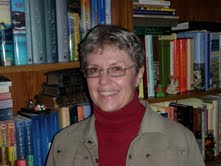
Sue HarrisonSue Harrison was born and brought up in Michigan, USA, and graduated summa cum laude from Lake Superior State University. Prior to the publication of her novels, Harrison was employed at Lake Superior State University as a writer and acting director of the Public Relations Department and as an adjunct instructor in creative writing and advanced creative writing. Sue is a Distinguished Service Award Honoree of the Michigan Delta Kappa Gamma Educator’s Sorority.  She is a member of the Society of Midland Authors, The Authors Guild, the American Christian Fiction Writers, and the Upper Peninsula Publishers and Authors Association. Her novels have been published in more than twenty countries and in thirteen languages.
 

Sue, I’m honoured to welcome you to my blog! You have been a faithful follower and commenter for some time here, but now we have a better chance to get to know Sue Harrison, the author of bestselling novels, in a more personal way. Please begin by telling us a little about yourself.

Just a rough sketch here, Lynn. I’ve been a Christian since I was five years old when a neighbor girl, about 8 years old, led me to the Lord. How’s that for “child evangelism?” When I was 9, I fell for the boy I’d grow up to marry. We were married when we were 19. We worked our way through college and our children were born when we were in our early 20s. Most of our married life, we have lived in Michigan’s Upper Peninsula. We have two daughters and a son. Our firstborn, a daughter, died in infancy. Our son is married and we have two granddaughters. Our daughter has just returned from 10 years of missionary service in Europe. I love books, reading them and writing them, and I love the outdoors. I’m a certified scuba diver, enjoy gardening, needlework and weaving, and travel. I play 7 musical instruments, although none of them impressively. I was raised in a very musical family. My mother was a professional musician from age 13, and her brother one of the conductors of the ABC symphony and also a composer best known for his Alaskan Symphony. I have four siblings.

Wow! At 9 you found your life partner? Astonishing! You live a very full life; when did you first know you wanted to be a writer? Who or what inspired
you?

I decided I would be a novelist after falling in love with words at age 10. That was when my paternal grandmother introduced me to the work of Laura
Ingalls Wilder.

Another surprising fact! As a writer, do you do much reading? Who were/are your favourite authors or books?

I’m very eclectic reader, am usually reading four or five books at the same time, and read about 100 books a year. I have too many favorites to give them all space here, but at the top of my list is, of course, Laura Ingalls Wilder and also Dorothy Dunnett, particularly her Lymond Chronicles.

Have you ever felt like giving up? When did you finally believe in
yourself so you can say “I am a writer”?

There were times when I wondered if God wanted me to stop writing. That has
been a battle for me particularly in the last ten years, which have been very intensive parent care years for me. I don’t have to explain that to you, Lynn. You know exactly how that impacts your life and your career. For the first four and half years I was the primary caregiver for my mom-in-law who had Alzheimer’s. During that time, my writing was often limited to less than an hour a week. You just can’t write novels during an hour a week. It doesn’t happen. After she passed away, I was still caring for my father-in-law but able to reserve two to three hours a day a few days a week to write. Now I’m also caring for my parents, but that is less intensive. They are by nature more independent and also understand how important my writing is to me, so we’ve been able to bring in other caregivers and preserve much of my writing time.

As to the second part of that question. I first felt like a real writer when my first short story was published in a small college magazine. It happened again for me with the publication of each of my novels. In between and since then, I seem to have to prove to myself all over again – every day – that I’m a real writer.

Strange how even the most accomplished doubt themselves at times.
Do you have a motto or Bible verse or quote that you try to live by and that helps to keep you going?

I have a Bible verse taped to my computer screen. It is from Zephaniah 3:17.”The Lord thy God in the midst of thee is mighty; he will save, he will rejoice over thee with joy, he will rest in his love, he will joy over thee with singing.”

I also have two other quotes taped on my screen: Ralph Waldo Emerson, “Never
lose an opportunity for seeing anything that is beautiful, for beauty is God’s handwriting, a wayward sacrament.”

The last is a business-like quote that my husband gave me by Kristine Kathryn Rusch. “As an artist in today’s society, you are responsible for your own successes and failures. Do your best to capitalize on the former and survive the latter. You won’t always make the right choices, but now, at least, you have choices. And that’s a very, very good thing.”

Excellent quotes, and that Bible verse is one of my favourites!
What do you remember about your first book being published, how did that happen?

I probably remember every second of it, so I won’t bore you with a blow-by-blow description. I’d been trying to find an agent for my first novel MOTHER EARTH FATHER SKY. In those days there was no internet so I was
limited to finding agent names and addresses in books. I had one little book that I’d purchased. It listed agents in alphabetical order. I started at the A’s and went on through. Almost 5 years (and a complete rewrite) later, I was in the W’s and getting desperate. In November I sent a query to Rhoda Weyr of the Rhoda Weyr Literary Agency. A couple weeks later, she asked for a complete manuscript. In January she called and asked me to be her client. She also asked for some minor changes. I completed those in 3 days and sent the ms back to her. At the end of March she called and said some editors would like to talk to me. The first “editor” was the president of Random House. The second was a VP of Doubleday. My husband was sitting across the kitchen table from me when I took the call from Doubleday and he realized by my side of the conversation that she (Loretta Barrett) was trying to sell ME on choosing Doubleday. I looked at him and he had tears running down his cheeks. His crazy wife was actually going to sell that dang novel she’d been working on for 10 years. MEFS went to auction with 5 bidders. After 3 days, we still had 3 bidders and we chose to go with Doubleday.

How sweet to have such a supportive husband.  What are the novels you have had published thus far, and of those, which did you most enjoy writing?

Mother Earth Father Sky, My Sister the Moon, Brother Wind, Song of the River, Cry of the Wind, Call Down the Stars and Sisu. I can’t choose any one of them as my favorite to write. I loved writing them all.

What process do you go through when writing and perfecting a book or article?

With novels and articles, I basically go through the same process. I spend a
certain period of time getting it all in my head. I don’t write an extensive outline, just jot down ideas. I let my characters ride around in my head for
about a year before I begin writing the book, and then I sit down and write,
usually about 5 to 10 typewritten pages a day. At the halfway point, I stop, go back and read what I’ve written. Then I continue on and finish my first draft. With my novels, I rewrite at least 6 full drafts. My research comes before, during and after.

What method do you use to keep track of your writing ideas?

I have an idea folder.

What inspired you to write your trilogies? and stand-alone novels?

A number of factors influenced my decision to write the two Alaska
trilogies: my experience growing up in a woodsy, almost wilderness
environment; my father’s and my husband’s love of the outdoors; my
fascination with Native American cultures; my interest in Native languages;
the research of Dr. William Laughlin. My one stand-alone published novel is
for middle readers. My children’s lives influenced that book and my
experiences as a mom and wife. The novels I’m writing now – romantic
suspense for the inspirational market – are an expression of my faith and of
my love of reading mystery and suspense novels.

How long did it take you to write each book or set? What research
did you have to do? And how did you come up with the titles?

I began the research for all my Alaska books in 1978. I finished writing the
last book in 1999, and I estimate that I spent 9 of those years researching
to write the novels. The rest was writing time. My research included learning about the cultures, lifestyles, art, and languages of Alaskan Native peoples. I also studied influencing cultures, including many of the Native cultures of what is now Canada, the Native peoples in the northern and western parts of what are now the lower 48 states of the USA, and the traditions and some of the legends of Native peoples in eastern Siberia and SE Asia. I also studied geography, geology, the archeological digs in Alaska, and Native survival skills and artwork.

The title Mother Earth Father Sky is from a very well-known Tewa poem. The
other two Ivory Carver Trilogy titles – My Sister The Moon and Brother Wind,
just seemed to fit in with the family theme of that first title. My second trilogy was titled by one of my editors, Ellen Edwards. My titles for that trilogy were cumbersome, and she was afraid buyers might shy away from purchasing the novels. Her titles are Song of the River, Call of the Wind, and Call Down The Stars.

Did you write a little of yourself into any of the characters? Do
you have any favourites?

My favourite characters are both from my first trilogy, both lead charactersand both women: Chagak and Kiin. I think writers can’t help but put a bit of themselves into every character. My main characters are much more courageous and much stronger than I am. They are what I wish I were. My villains are what I hope I’m not!

Did you find any part of the stories difficult to pull together? Was any individual book more difficult to write? If so, how did you
stick with it?

I had the most trouble writing the third book of the first trilogy, Brother Wind. I was working with a new publisher with that book, and they preferred that I first write an extensive outline, which I’d not done with my first two novels. I wrote a 60-page outline, and by the time I’d completed the first half of the novel, I realized that I might as well throw that outline away. My characters had hijacked the story and sent it on a new course. I was a bit discouraged and set the novel aside for about a week. During that time I wrote the first half of SISU, a middle reader’s book, set in Michigan in current time. That seemed to break the gridlock for me, and I was able to finish Brother Wind. Later, my husband suggested that I finish SISU. I did, and, although my publisher William Morrow made an offer for the novel, we decided to go with a small Michigan publisher, Thunder Bay Press, to prolong the life of the book. Now more than ten years later, it’s still in print.

Tell us about the honours/recognition your books received.

The Alaska trilogies were very well received. Several of them have been chosen in top ten “reader’s choice” situations. Mother Earth Father Sky was selected as one of 1991’s Best Books for Young Adults as a crossover from the adult market by the American Library Association. It was also a national and international bestseller and received a boxed review in the New York Times Book Review. The Ivory Carver Trilogy was re-released in an omnibus edition in Sweden. Mother Earth Father Sky was performed as a radio drama in Japan and Norway. Brother Wind was selected as a Book of the Month by my German publisher. Mother Earth Father Sky and My Sister the Moon were both main selections of the Literary Guild. My Sister the Moon was a Baker & Taylor national bestseller and a bestseller to libraries. Sisu has been selected as Accelerated Readers Book in the US.

That is so amazing! How do you find time to write when you are busy with life?

Sometimes I can’t. That’s a great and distressing time for me when that occurs, but I believe it happens with all writers. When I had a fulltime job, I woke up at 5 in the morning, Monday through Friday, without exception other than Christmas and Thanksgiving. Then I wrote for an hour and a half until my family got up. Now I often put in 14- or 15-hour days in order to find time to write despite the care and housekeeping I do for our parents.

That’s commitment! What other interests do you have for a change from writing?

I’ve mentioned some of these above. I love to read, knit, sew, weave,garden, and I walk for exercise. I play 7 musical instruments: piano, flute, baglama, viola, double-bowed psaltery, mandolin, and mountain dulcimer. I have a hammered dulcimer, but make no claims yet to be able to play it. I participate weekly with a jam group. Lots of fun, and I’m also a vocal performer. I love to travel, and my husband and I try to get away for a week at least once a year. Prior to our parent care responsibilities we traveled extensively in Europe, the Caribbean and, of course, Alaska.

How do you consistently write? Do you have writing goals – daily?
Weekly? Monthly? Long range?

My writing goals are more along the line of trying to write at least 3 and preferably 5 days a week for 2 or 3 hours in the morning. I also spend quite
a few evenings writing blog posts. I try to finish at least one of my romantic suspense novels each year.

Do you have another project in the works? Any hints you can share with our readers about that?

I have two novels – BILLIONS and PRODIGY – with my agent, Rachelle Gardner of Books & Such Literary Agency right now. I’m hoping she can find publishers for them in the inspirational market. BILLIONS is about a billionaire and a waitress who are both hostages in a con game for millions. PRODIGY features a young woman who is a luthier known for her exquisite handmade violins. Here’s PRODIGY’s “hook” – A kidnapped child. A violin. A closet.

The novel I’m working on at the moment is in the first-draft-half-finished stage. The working title is WARP. It’s about a young widow who has two young children. She weaves tapestry copies of masterpieces, but against her will has been drawn into criminal activity by her dead husband’s family. It’s all about survival, and I’m having a ball writing it.

Intriguing! I’ll have to watch for your new titles. Finally, do you have any advice for hopefuls?

Three simple things: 1. Read, read, read. 2. Write, write, write. 3. Learn
to believe in yourself by reaching out to the One who made you.

Oh, what excellent advice; thank you, Sue! And thank you for this  wonderful interview.

Check out Sue Harrison’s website: www.sueharrison.com and click on “Appearances 2013” to find out where she is speaking. Perhaps she will soon be somewhere near you, or you can book her for a speaking engagement or writers’ workshop.

Now for our first giveaway of 2013. Are you interested in winning a copy of one of Sue’s books? Please leave a comment about this interview and also mention which of her books you would like to win if your name is drawn. At 6 PM EST on Tuesday, January 22, one name will be pulled from the basket and I will contact the winner for a mailing address so Sue can send the chosen book! How great is that!  🙂

Thanks for reading, and … Creative Musings!  🙂