I’m participating in NaNoWriMo and PiBoIdMo 2013!

November is again a busy writing month for me. I signed up for National Novel Writing Month for my fourth year, and Picture Book Idea Month for my third year – having passed on it in 2012. I am going to make an honest attempt to do both again even though my life situation (caregiving) has not changed.
3886950-fountain-pen-writing-paper-with-black-inkAfter midnight last night a thought came into my mind, then an idea was taking shape, then the thought became the title, and before I went to bed I had a rough ‘rough draft’ of a story for a picture book. Day one accomplished for PiBoIdMo!

Not so for NaNoWriMo, I regret to say, as I have not written a word there yet. I am still writing the novel I began in NaNo 2010, since I’ve worked on it only during the last three Novembers. My word count is a combined total of 123,900 – give or take a few words. When I stopped near midnight of November 30’12 it was at a place one would call a “cliffhanger”, and was a bit exasperating to my sister who read it all after NaNo had ended last year. 😉  She was not happy with where I stopped and told me emphatically I had to finish the story! Even I am not sure what is going to happen next, but my characters will gradually let me know when I get into it again … which should have been today, but that’s not happening!

If you are asking, ” What is she talking about?!” I will briefly explain.

NaNoWriMo – or National Novel Writing Month – is the worldwide challenge to write a novel (really a novella) of 50,000 words in 30 days. You have to start with a fresh idea to ‘win’, but there are many who are NaNo Rebels, which is perfectly fine, too. I won (reached the goal of 50k) the first year but the next two years I participated as a Rebel in order to add to the novel I had begun and want to finish. This year I am doing the same.

If you are interested in checking out NaNoWriMo, click here. If you are taking part in it this year, let me know if you want a buddy.

PiBoIdMo – or Picture Book Idea Month – is the brainchild of Tara Lazar which she started in 2009. It is quickly becoming the widely known challenge to write a picture book idea a day during the 30 days of November. It’s for those writers who don’t want to take on creating a novel but would enjoy participating in a book writing challenge. Some of us do both. 🙂 Each day you write something … anything … a title, the name of a character, an idea for a story, or even a whole draft if it works out for you, so at the end you should have at least 30 ideas for picture books! Cool, huh? I think so! Oh, and there are super guest posts, lots of writing genius shared, and even prizes! I love that I end up with so many ideas for PB’s, even if I ‘win’ nothing. It is sort of like a conference but with so much added.

If you are interested in signing up for – or checking out – PiBoIdMo, click here. Registration closes SOON, so hurry!

Now I must create a new page for my NaNo updates so if you want to keep track of what I am managing to do you can read it there. Click on the NaNoWriMo updates (2013) link at the top of the page. Besides, if you want to cheer me on, Heaven knows I need it! 🙂 It may be crazy for me to be taking this on since I am behind in reading, reviewing, interviewing, but sometimes I need a change of pace to get refreshed and inspired anew. At least, I hope that’s what will happen! 🙂

Are you participating in either of the above challenges?

Thanks for reading, and … Creative Musings!  🙂

Sue Harrison’s “Writing the Third Dimension” – part 3: The Boyfriend List

Welcome! Over the next many months we invite you to return here, specifically on the fourth Thursday of each month for the newest installment of Sue Harrisons teaching: Writing The Third Dimension. You can read all the segments by clicking on the page title WRITING THE THIRD DIMENSION, found under Writers’ Helps & Workshops on the drop-down menu. Please feel free to ask questions and leave comments for Sue. Now for the topic for month three:

************

“Writing the Third Dimension” – part 3: The Boyfriend List

When I was twelve, I wrote a Boyfriend List. My list included all the dream qualities I considered ideal in a boyfriend. Most of it was very superficial: blue eyes, good athlete, smart, cute, and nice. Cute and nice? Ah well, I was only twelve.

Writing that list didn’t help me much during the angst years of junior high; however, it was the first indication that I would take after my maternal grandfather and become a list writer. I live on lists. Grocery lists, lists of goals, book idea lists, books I’ve read, housework to-do… I could go on, but I’ll spare you. If you are a list-maker, you’re going to like what I have to say next. If not, please give my suggestions at least a bit of consideration. I think they will be helpful for you as you write your novel.

You’ve been fostering a friendship with your main character. You’ve been carrying this brand new person in your head, having conversations with him, asking questions, getting to know her. That’s the creative Right Brain part. Now comes the Left Brain stuff. You need to write everything down. If you’re a “fly by the seat of your pants” kind of writer, you might resist doing that, but sometimes creativity has to bow to analysis. Your novel will have a much better chance to make it all the way to publication if you know your character so well that you convey his motivations and reactions so that they make sense to the reader throughout the novel. (And you also want the blue-eyed girl in the first chapter to still have blue eyes in the last chapter.) 

Most of you have done a character sketch, maybe when you were in junior high or high school. A character sketch? Yes, all this has been leading up to that old standard, the character sketch. (No histrionics, please!)

My usual character sketch includes these items: name, age, race, birth date, nationality, birthplace, hair color, eye color, skin color, facial characteristics, body type, unusual physical characteristics (tattoos, birthmarks, freckles and so on), weight, height, body language/mannerisms, voice, speech quirks (clichés, catch phrases), time period in which she/he lives, favorite food, favorite animal and television show and movie and book and music, favorite person, his/her parents, siblings, relatives, pets, jobs held, and schooling.

The list could be almost endless, and I’m sure that you’ll think of characteristics that I haven’t included. Your character sketch will vary, novel to novel. A character who lives in the 1800s will not have a favorite television show, of course, but he may have a favorite saddle. In my Alaska trilogies all characters have brown eyes and dark hair, so that was easy, but I needed to use other physical characteristics to help me – and my readers – differentiate one character from another. That was a little more complex.

You’ll need a sketch for each main character and probably for your primary villain. You may find yourself changing things in your character sketch as you progress through this novel, so an area for “additional notes” is a good idea. Don’t be afraid to throw in MORE than you probably need to know. Even though these facts may never come to light within the novel, the more you understand about your character, the better job you’ll do writing about him. Also, you never know when an unexpected twist may change the course of your novel. Characters do have a tendency to wrestle the keyboard away from the writer. That’s when I benefit from re-reading my character notes.

My character sketches get pretty messy by the end of my novel and often degenerate into layers of sticky-notes, but at least I have a reference to what I’ve done, changed, thought, and decided during the weeks and months of writing. 

What works best for me is to keep two ring binders for each novel I’m writing. One binder is for the chapters of my current draft. (You’ll need a four- or five-inch binder for this.) I use dividers between each chapter for easy reference. The other binder is for my research notes and also includes my character sketch notes and good stuff like the people to include in my author’s acknowledgements, reviewers who may want to read an ARC (advanced reader’s copy) of the novel, and maps. 

It comes down to this. You don’t need to keep all the little stuff in your head. Make lists, fill notebooks, write character sketches. That will leave room in your brain for the muse to stretch out and get comfortable!

(And as for me, it turns out that a writing a Boyfriend List was good preparation for creating novels. Who knew?)

My question for you: Are you a left-brained, analytic person or more of a seat-of-the-pants kind of writer? 

Any questions for me?

Happy Writing and Many Blessings!

Sue

*Writing the Third Dimension, copyright, 2010 Sue Harrison*

Sue HarrisonBestselling author, Sue Harrison, has written two Alaska trilogies: The Ivory Carver Trilogy and The Storyteller Trilogy, and a middle readers’ book SISU. Prior to the publication of her novels, Harrison was employed at Lake Superior State University as a writer and acting director of the Public Relations Department and as an adjunct instructor in creative writing and advanced creative writing. For more information, click here. To inquire about booking Sue for workshops or speaking engagements this year, click here.

Thanks for joining us! Please feel free to leave your questions and comments. We invite you come back April 25, 2013, for part 4.

Sue Harrison’s “Writing The Third Dimension”- part 2: Cut the Puppet Strings!

Welcome! Over the next many months we invite you to return here, specifically on the fourth Thursday of each month for the newest installment of Sue Harrison‘s teaching: Writing The Third Dimension. You can read all the segments by clicking on the page title WRITING THE THIRD DIMENSION, found under Writers’ Helps & Workshops on the drop-down menu. Please feel free to ask questions and leave comments for Sue. Now for the topic for month two:

************

“Writing the Third Dimension” – part 2: Cut the Puppet Strings!

One of my little life treasures is a slip of paper from my uncle that is filled with handwritten notes about characterization. Uncle Bill was a composer, symphony conductor, and concert pianist, very eccentric and very brilliant. When I was in college, I worked up enough nerve to begin sending him some of my short stories.  He became my coach, cheerleader, and harshest critic, exactly what I needed at that time.  I finally wrote a novelette and sent that 40,000 words of drivel to him.  

Uncle Bill wrote a critique of my novelette, and, when he was at the post office to mail that critique to me, he ripped a deposit slip out of his checkbook and wrote this on the back: [his words and spelling] “Your characters must be so real they even defy the author.  They wake you up in the middle of the nite and spit right in your eye. You are not creating puppets that do what you want but live living beings that act their life right in front of you. You will do well to write it down fast enough when this happens.” In the critique, one of  his sentences reads: “I know more about the sidewalk [in your manuscript] than I do about your main character.” My manuscript had a fatal flaw. I had managed to write 40,000 words without allowing any of my characters to step off the page and assume three dimensions. I’d written a whole novelette about people who were merely puppets, and their strings were showing.

In my first “Writing the Third Dimension” post here on Polilla Writes, we talked about carrying your characters around in your head until you know them well enough to understand what will destroy them. That’s identifying the huge center of your character, but you also have to know all those quirky little things that will make your character real and loveable and irascible, those attributes that will make your character memorable to your readers.

If you are just beginning your novel, or if, in rereading your manuscript, you feel that your characters are stiff and fake, buy, beg, or scarf up a three-ring binder. Fill it with lined loose-leaf paper, or, if you’re a techie, start a file on your computer or iPad. As you carry your main character around in your head, take notes about him or her. Don’t try to get too organized about this. Right now you’re a hunter-gatherer. Hunt for the stuff and jot it down. When you’re answering the telephone, stop and think how your main character would answer the telephone. When you’re ordering pizza, decide what your main character would like on his pizza. If you’re clicking through the channels on your television, figure out what your main character would watch. What would he read? What car would she buy? Where does he like to vacation? If you’re writing about a different era than modern times, what horse would she ride? What fabric would she choose for her new dress? What did he name his spaceship? Write it all down.

Cut out photographs from magazines or eZines and save them until you have a composite picture of what your main character looks like. Here’s a huge secret about writing that I’ll tell you now and also tell you again in later posts. If your visualization of your character (or a setting or an item) is fuzzy in your mind, it will be visually fuzzy to your reader. That’s one of the few rules of writing that’s pretty much set in stone. Learn to see your character in action in your mind. How does he run? Like Harrison Ford? How does she smile? Like Julia Roberts?  Close your eyes and visualize until you see that character so clearly you could be watching her on television.

Last month, we were looking at the big picture – the center of your character’s being, his self-esteem, her reason for living. This month, we’re talking about the details, figuring out all the small stuff that makes people real. Next month? The whole picture. Remember, the stronger your characters, the better chance you’ll have to be published, which means that I’ll get to read your books. I can’t wait!

My questions for you: What color is your main character’s hair?  What does your main character love to do in his free time?

Any questions for me?  Please feel free to ask!

Blessings and Happy Writing!

Sue

*Writing the Third Dimension, copyright, 2010 Sue Harrison*

Sue HarrisonBestselling author, Sue Harrison, has written two Alaska trilogies: The Ivory Carver Trilogy and The Storyteller Trilogy, and a middle readers’ book SISU. Prior to the publication of her novels, Harrison was employed at Lake Superior State University as a writer and acting director of the Public Relations Department and as an adjunct instructor in creative writing and advanced creative writing. For more information, click here. To inquire about booking Sue for workshops or speaking engagements this year, click here.

Thanks for joining us! Please feel free to leave your questions and comments. We invite you come back March 28, 2013, for part 3.

Sue Harrison’s “Writing the Third Dimension” – part 1: Heart Breaker

Welcome, everyone! Have you ever wished you could sit in on one of Sue Harrison’s writers workshops? Now you can, a few minutes at a time. Over the next many months you are invited here for a writers workshop, the fourth Thursday of each month, for Sue Harrison‘s teaching about Writing The Third Dimension. Sue invites you to ask questions and leave comments, to which she will gladly respond. If you miss one segment, you can still have access to them all. Just mouse over Writers’ Helps & Workshops on my drop down menu, then click on Writing The Third Dimension.

When I asked her what it means to write the third dimension, Sue explained, “Basically, the concept is for writers to write their characters, scenes, and plots in such a way that they “pop” off the two-dimensional page and assume a three-dimensional presence in the reader’s mind – as if the reader had actually lived the story.”  Now we are going to learn how to do that.  🙂

*************

“Writing the Third Dimension” – part 1: Heart Breaker

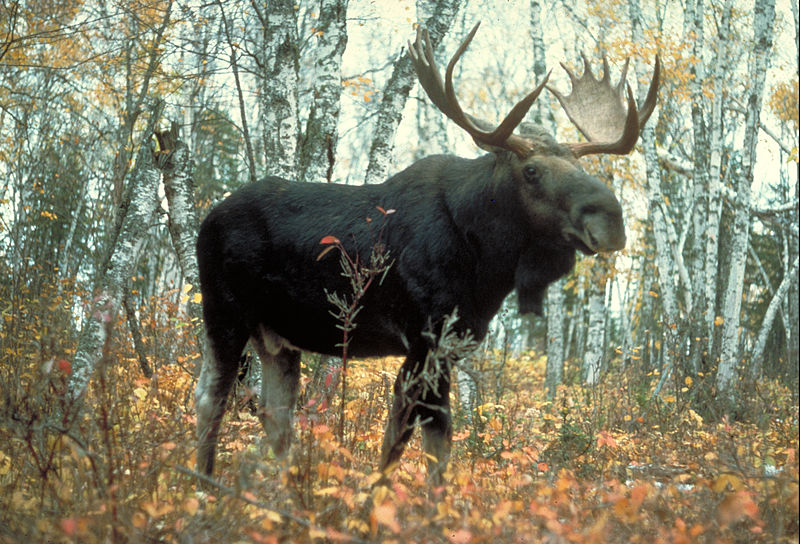
I love the story about the elderly Athabascan woman who was asked how to make moosehide moccasins.  Her reply?  “Well, first you kill a moose.”

moose (WITD)

In other words, have a seat.  This is going to take a while.

When I’m asked, “How do you write a novel?”  My answer is, “Well, first you break a heart.”

And not just any old heart, but the heart of the main character. When an author writes a novel, his/her goal is to tell a story so compelling that the reader doesn’t want to put it down. That means the novelist must establish a strong connection between the reader and the book’s main character. The only sure way to do that is through emotions.

I might not know what it’s like to live thousands of years ago in the Aleutian Islands, but I can relate to an Aleut woman who loses the man she loves in a vicious raid. I feel the emotional connection, and I want to read her story, live her life, and discover how she finds love again. Because she and I are sisters. We both know what it is to have a broken heart. (Okay, I admit it. I’m advertising one of my own novels, Mother Earth Father Sky.)

So, if you’re a writer, how do you go about breaking that main character’s heart? You do it by knowing your main character so well that you understand what is at the center of her soul. Ask yourself these questions: What is most important thing/person/belief in her life? What is the foundation of her self-esteem? What does she love most? Once you know that, then you’ve solved your problem, and what you must do is take that most precious thing away from her. Then she’s in the fight of her life as she tries to survive and win back what she’s lost. Suddenly you have a plot; you have a story. You’ve pushed your character off the two-dimensional page and made her come alive in your reader’s mind.

Tell me about your main character. What is at the center of his or her self-esteem? What does he love the most? What will break her heart?

Blessings, Sue    *Writing the Third Dimension, copyright, 2010 Sue Harrison*

Sue HarrisonBestselling author, Sue Harrison, has written two Alaska trilogies: The Ivory Carver Trilogy and The Storyteller Trilogy, and a middle readers’ book SISU. Prior to the publication of her novels, Harrison was employed at Lake Superior State University as a writer and acting director of the Public Relations Department and as an adjunct instructor in creative writing and advanced creative writing. For more information, click here. To inquire about booking Sue for workshops or speaking engagements this year, click here.

Thanks for joining us! Please feel free to leave your questions and comments.  Next installment February 28, 2013.

Book Review: Mother Earth Father Sky – by Sue Harrison

This is a slightly edited repeat, first posted June 24, 2011. I am re-posting because I have had the pleasure of an interview with the author, Sue Harrison. After the interview (coming January 17) she will be giving away one of her books to one of you – winner’s choice which title!  🙂

imagesBook: Mother Earth Father Sky
Author: Sue Harrison
Publisher: Doubleday
Date: June 1990
Genre: Prehistoric fiction
Pages: 313, hardcover
Price: US $19.95; CDN $24.95
My rating: Amazing, startling, satisfying read
 

Mother Earth Father Sky is the first book in a trilogy that takes us into the lives of an ancient North American people in Alaska. If that sounds boring, don’t be fooled.

To be honest, I hardly know what to say about this book.  At the writing of this review, having just finished reading it I’m barely back to the here-and-now, and the story of Chagak is still fresh in my mind. To say that Sue Harrison wrote an amazing prehistoric fiction novel scarcely describes what she masterfully accomplished. Over the course of nine years she studied, researched and lived in her creative mind the tale of a long ago culture in Alaska, focusing on one Aleut woman’s struggle to survive and overcome a very harsh reality. That woman, Chagak, lived in a primitive time consisting of warrior tribes, legends, crude customs, myths, and magic, but also love, family ties, and community. The author made it all come alive through the power of the written word in a very easy-to-read style. I was held from the beginning of this book to its last page – left wanting to read more about the people I had come to know.

This bestselling novel is not newly released but was published in 1990. I was fortunate to be gifted a copy and I’m so glad to have received it. If you come across Mother Earth Father Sky and you are not offended by the cruel reality and graphic descriptions of the belief system of prehistoric man, then do grab the opportunity to read this book.

You can find Mother Earth Father Sky listed on my BUY THE BOOK! page.

Thanks for reading, and … Creative Musings! :)

One NaNoWriMo day left! I think I can, I think I can …

Here it is down to the wire. One day left in National Novel Writing Month. ONE DAY!

I do not have 48343 words written, which is the total suggested for the 29th day in the challenge. What I do have is 31737 words captured. Yes, I am way behind, but in looking at what I managed last year I am ahead. In 2011 at the close of the 29th day I had 24133 words.

In checking over my progress in 2010 and 2011, I see that the most words I added to my total in one day was 8017. That was last year on the last day when I was making a valiant attempt to get closer to the goal. This year I have to write 18263 words on day 30 to have accomplished a win at 50000 words! 

I think I can, I think I can …

That’s if I need that many to finish this novel. I really don’t know even yet. I can probably stretch it out, make it longer that way, if I have time to do it. There is much that I can play with later in pulling the story together during editing to make it really work. The main thing is to finish this novel! As I have said before, that is my main goal, secondary being a NaNo win of 50K words.

As I am nearing the end of NaNo I am also gaining ground in pulling together some threads that will bring this story to an end. I just hope it can be sorted out later, because in writing it this way there are conflicting statements and unintentionally duplicated scenes that have to be fixed. But, that’s for later. For now I have a story to write.

First things first — I am about to catch some zzzzz’s and then in the morning – Day 30 – I will start writing again, because …  I am going to finish this novel! That is the plan, anyway. 🙂

How do you do with your deadlines? Do you write better under pressure or do you need lots of time to get there?

Thanks for reading, and … Creative Musings!  🙂
Nolfi book giveaway reminder & NaNoWriMo updates

Hi everyone!  Just a quick post today —

Because I’m posting between my interview (<– click here to read it) with author Christine Nolfi and her book giveaway here on November 10, I’m tempting you with a reminder of what her book looks like. Be sure to leave a comment for a chance to win a copy of The Tree of Everlasting Knowledge.


I want to update you on my NaNoWriMo progress. On the right of this page you can see the percentage graph showing my total words written. To see the whole list of daily reports please check out my updates page here.

What you will find is that I got off to a rough start, but not as slow as last year’s. Even so, I am far behind what the suggested total of words is for day 7. They suggest 11,669 words by midnight tonight and at this moment in time (4:15 PM AST) I have the big total of 2330! Okay, so it’s not a big total, but it’s something. I have a LOT of writing to do. I’m trying to steal time out of my days for it.

What I found is that when I started with NOTHING for NaNo 2010, once I began writing it was easier to let the story happen than it was to later pick up where I’d left off and keep writing and adding to it. In 2011 I had such a slow start because it was hard to get back into the story. This month I read it all again right before beginning to add to it, and saw my struggle at the end of November last year. It was a mess. It lacks flow and uniformity. It is choppy, and obviously I was grasping for vision.

Now I am again adding to my novel, ignoring the confusion and hoping for a completion during this NaNo. I don’t know if it will take another 50,000 words, but it’s okay if it doesn’t. I have a feeling I will be writing the whole month anyway. And I don’t even want to think about revisions once I find the end of my first fiction novel. That is going to be even more of a challenge to plow through.

I hope you will join me by following my progress in this writing challenge. I won’t be posting updates  this way daily, but I will be keeping track on my NaNoWriMo updates (2012) page. I invite you to please follow along. If you want to leave me a comment, please do – here or on my updates page.

Do you enter writing challenges or contests?

Thanks for reading, and … Creative Musings!  🙂