News about best-selling author Sue Harrison’s Alaska books! (Interview)

Today I’m doing things a little differently. For those of you who haven’t made this discovery yet on your own, I have an exciting announcement about Sue Harrison’s Alaska novels. Now you can purchase them for yourself for your electronic reader! Instead of a book review today, the rest of this post is a sort of interview and is dedicated to Sue for her relating of her e-book experience. Links are included to make it easy to find where you can purchase copies – if you are so tempted and just can’t resist. 🙂

My question to Sue was: Sue, I haven’t yet mentioned on my blog about your books becoming available as e-books. Do you have information for me regarding that? The following is her reply.

Lynn has asked me to share about the story of  the ebook release of my 6 Alaska novels, so this is a story about a little dream becoming a lot bigger than I ever thought it would.

In August 2012, my husband Neil mentioned that we really should look into my old contracts and see if we could get the ebook rights assigned to us by the publishers of my Alaska books, Doubleday, William Morrow, and HarperCollins. We weren’t all that motivated, thinking that it might take us a long time to jump through all the necessary hoops, but we dug out the contracts and were met with a very welcome surprise. We already owned the rights! The literary agent who represented my Alaska novels, Rhoda Weyr (now retired), had retained those rights – way back in the 1990s before ebooks were “invented,” and I am extraordinarily grateful for her foresight and wisdom.

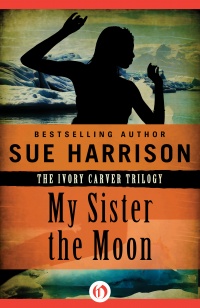
My husband set to work finding a company that would scan my novel MOTHER EARTH FATHER SKY in preparation for us to self-publish the novel in ebook format. We found Golden Images LLC, and Stan Drew and his people did a super job for us. However, our plans did an abrupt turn around when I received an email on November 7, 2012, from Maggie Lichota Crawford. Maggie was the Avon paperback editor for my first two Alaska books, MOTHER EARTH FATHER SKY and MY SISTER THE MOON. Maggie wrote that she was now working at Open Road Integrated Media, a digital publisher based in New York City. She told us that Open Road publishes many distinguished authors digitally, including James Joyce, Pearl S. Buck, Pat Conroy, William Styron, Anne Perry…. 

And they wanted MY novels?  Wow, serious happy-dancing.

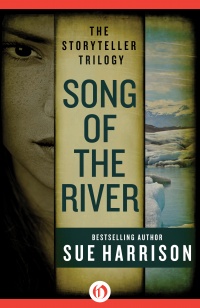
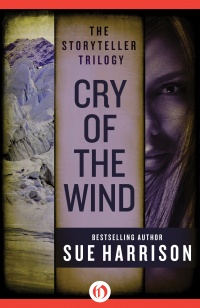
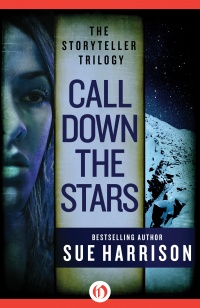
The next few months were filled with fun activities like updating and submitting my biography, reviewing cover artwork, and posing for new author photos. (Thank you, Erin Johnson!) The six novels were released in May 2013, and are available from Open Road and all ebook retailers. What a dream come true!

These are links to each novel (click link to see where to purchase book):
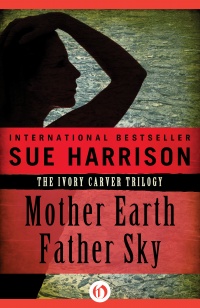
ebook mother-earth-father-sky 


Mother Earth Father Sky


ebook my-sister-the-moon


My Sister the Moon


ebook brother-wind


 Brother Wind


ebook song-of-the-river  


Song of the River


ebook cry-of-the-wind


Cry of the Wind


ebook call-down-the-stars


Call Down the Stars


But wait, we weren’t finished. Open Road decided to send producer Corey Maloney and cinematographer Luke Locurcio to our house to shoot a publicity video. Here’s the finished product:

Meet Sue Harrison   <– click here to watch the video

For those who are wondering, most of the video was shot here at our house and on our beach and surrounding woods. The hand hefting the axe is my husband’s. And no, we do not have that spectacular waterfall in our backyard. That is Tahquamenon Falls, located about an hour and a half drive northwest of us, and is one of the most recognized landmarks in Michigan’s Upper Peninsula.

Open Road had another big surprise for us in September 2013. It was a Tuesday, and I had begun the mundane work of washing bedding, cleaning, and generally getting back into a routine after a three-day weekend of company. I sat down at the computer and buzzed through the emails that had accumulated and just happened to notice that one of them was from my aunt, Ruth Danner. Ruth’s message said that she’d turned on her Kindle and up popped a very nice advertisement about my novel MOTHER EARTH FATHER SKY.

I immediately did a little sleuthing, found an email from my publicist Laura at Open Road and discovered that MEFS had been selected as the Kindle Daily Deal. Wow! Was that a shocker.

The rest of the day, I was pretty much involved in watching the numbers. (I know that’s vain.) Wednesday was more of the same. Although my novel was back to normal price, people were still buying it. During those two days, MOTHER EARTH FATHER SKY rose to #3 nationwide for Amazon ebook sales, and my author ranking rose to #4 nationwide . That author ranking lasted only a few hours, but I have to admit that it was heady to see myself ranked higher than Stephen King and Clive Cussler.

Despite all this talk about fame, please know that I know fame is a very brittle, unstable foundation for life, for self-worth, or for happiness. I’m so grateful that I don’t need accolades to tell me that I’m loved. My Bible tells me that. My family tells me that. My friends tell me that. I don’t need high author ranks to motivate me to work each day in whatever way God intends. But I did enjoy my 15 minutes of fame, and this is my opportunity to thank all of you for your support, for your help, for your kind words, and for reading my books.

Sue Harrison

Thanks, Sue, for this fabulous and thrilling story of the revival of your books! 

Thanks for reading, and … Creative Musings!  🙂


Sue Harrison’s “Writing the Third Dimension” – part 14: Ready, Set, Go!

Welcome back! Over the next many months we invite you to return here, specifically on the fourth Thursday of each month for the newest installment of Sue Harrison‘s teaching: Writing The Third Dimension. You can read all the segments by clicking on the page title WRITING THE THIRD DIMENSION, found under Writers’ Helps & Workshops on the drop-down menu. Please feel free to ask questions and leave comments for Sue. Now for the topic for month fourteen:

********

“Writing the Third Dimension” – part 14: Ready, Set, Go!

I have a terrible time making a good first impression. I either come off looking stuck up because I don’t say anything at all, or like an idiot because I talk way too much.

The good news is that most people are willing to overlook that first sentence or two that does (or doesn’t) come out of my mouth, but, when we shift our focus from social situations  to novels, that first sentence becomes all important. For many people, including editors and agents, the first sentence is all they need to determine whether or not they read the book.

So let’s discuss two important things you need to learn about writing a first sentence.

1. The first sentence doesn’t have to be written first.

Duh. Of course, you don’t need to write it first. But seriously, you don’t. Since that first sentence is so important, it sometimes stands like a wall, blocking off every strong intent, every beautiful word, every delicious story that could follow, because the writer chokes.Trust yourself, go on with the novel. Start the marathon, but, when you return to that first sentence, consider your prime target.

IMG_1426photo credit: Neil Harrison

Strangely enough, your prime target isn’t craft or artistry. It isn’t even voice, although all those things are important.

2. Your prime target is your reader.

Allow me to share the first sentences from three very different manuscripts that I’m working on. (The titles are “working titles,” which means they’ll probably be changed.)

1. From TAIL FEMALE, “I’ll be fifteen next apple harvest and I got me a baby girl one years old and she’s named Chinaberry Scott.”

2. From WISH, “If you pace it off, the cement floor measures six feet wide and nine feet long, and the ceiling stands high enough that I can’t reach the camera mounted in the corner, even with a running jump.

3. From BONE FIRE, “The morning the giant walked into the village, Rose was stirring a bag of stew that hung over the outside hearth.”

Whatever weaknesses these first sentences contain, each carries one important attribute. It targets the reader, because most readers are going to stop and say, “What?”

My best advice about your first sentence? Write a sentence that holds a bit of mystery in its gut, so it pulls your readers forward into that story you can’t wait to tell them!

Strength to your pen!

Sue

*Writing the Third Dimension, copyright, 2010 Sue Harrison*

Sue HarrisonBestselling author, Sue Harrison, has written two Alaska trilogies: The Ivory Carver Trilogy and The Storyteller Trilogy, and a middle readers’ book SISU. Prior to the publication of her novels, Harrison was employed at Lake Superior State University as a writer and acting director of the Public Relations Department and as an adjunct instructor in creative writing and advanced creative writing. For more information, click here. To inquire about booking Sue for workshops or speaking engagements this year, click here.

Thanks for joining us! Please feel free to leave your questions and comments. We invite you come back April 24, 2014, for part 15.

Sue Harrison’s “Writing the Third Dimension” – part 13: Where are you?

Welcome back! Over the next many months we invite you to return here, specifically on the fourth Thursday of each month for the newest installment of Sue Harrison‘s teaching: Writing The Third Dimension. You can read all the segments by clicking on the page title WRITING THE THIRD DIMENSION, found under Writers’ Helps & Workshops on the drop-down menu. Please feel free to ask questions and leave comments for Sue. Now for the topic for month thirteen:

********

“Writing the Third Dimension” – part 13: Where are you?

Magicians and novelists have something in common. They must learn “sleight of hand.”  You know, the old smoke-and-mirrors deal. Magicians pull rabbits out of hats. Novelists pull their readers into landscapes and time periods.

DSCF0344

If we’re out in the audience, we probably don’t have a clue how that rabbit got into the magician’s hat, and, in a really well-written book, we don’t quite understand how the author so successfully plants us into a time and a place. For magicians the secret is often roomy sleeves and quick hands. For novelists, the twin secrets are subtlety and visualization.

Let’s take a look into a novel that does a great job of transporting us into time and place. That novel is FALL OF GIANTS by Ken Follett. In the hardcover edition (page 31) Follett describes a gray house. He doesn’t come right out and say, “The house was gray.” That’s too easy, and more importantly it doesn’t touch a reader’s soul. Instead he tells us that the house is named “Ty Gwyn.” He says that Ty Gwyn is Welsh for White House (aha! we’re in Wales), but he then tells his readers that the name is ironic, because the house is covered with coal dust. It’s so dirty that it discolors the long skirts of women (time period hint) who brush too closely as they walk by.

Follett knows his readers well. They’re the folks who love big fat thick historical novels packed full of story and facts. In this paragraph, those readers receive a visual image of a dirty gray house, but they also see women in long, full skirts, they learn two words in Welsh, and they discover that this particular house is located in Welsh coal country. Now that’s the way to write setting.

So  we’ve seen the fantastic finished product, but I still haven’t addressed the how-to angle. Here’s a few ways that I help myself write settings.

1. I watch a video or a movie set in the area I’m writing about.

2. If possible, I visit the location.

3. I talk to/interview people who live there or who have visited the area.

4. I read travel books and magazine articles about that particular location.

5. I look up statistics on Wikipedia or in my handy old-fashioned set of Encyclopedia Britannica.

6. I purchase maps and study them ardently.

7. I pinpoint the location on a globe. My globe has raised areas where mountains and highlands are located. I love the tactile aspect of exploring my setting with my fingertips.

All of those ideas will help you, but here’s the best-kept secret about performing the magic trick of producing an effective setting — or any visual image — via words. Before you write it, see it in your mind. Close your eyes and imagine that place until you feel as if you were there. If you the writer have a fuzzy image in your head, then it will also appear “fuzzy” to your reader. I don’t know why it works that way, but it does. (I told you it was all about smoke-and-mirrors!)

Once you have succeeded in placing that image in your mind, then you are ready to write it for your readers.

How do you help yourself visualize settings for your stories or novels?

Strength to your pen!

Sue

(Photograph Copyright 2012, Krystal Harrison)

*Writing the Third Dimension, copyright, 2010 Sue Harrison*

Sue HarrisonBestselling author, Sue Harrison, has written two Alaska trilogies: The Ivory Carver Trilogy and The Storyteller Trilogy, and a middle readers’ book SISU. Prior to the publication of her novels, Harrison was employed at Lake Superior State University as a writer and acting director of the Public Relations Department and as an adjunct instructor in creative writing and advanced creative writing. For more information, click here. To inquire about booking Sue for workshops or speaking engagements this year, click here.

Thanks for joining us! Please feel free to leave your questions and comments. We invite you come back March 27, 2014, for part 14.

Sue Harrison’s “Writing the Third Dimension” – part 12: Whose Eyes?

Welcome back! Over the next many months we invite you to return here, specifically on the fourth Thursday of each month for the newest installment of Sue Harrison‘s teaching: Writing The Third Dimension. You can read all the segments by clicking on the page title WRITING THE THIRD DIMENSION, found under Writers’ Helps & Workshops on the drop-down menu. Please feel free to ask questions and leave comments for Sue. Now for the topic for month twelve:

********

“Writing the Third Dimension” – part 12: Whose Eyes?

Here’s what I love about reading novels. They give me the opportunity to see the world through another person’s eyes. For a novelist to provide that great joy to his readers, he has to develop full and believable characters and then choose how to convey the thoughts and ideas of those characters on the written page. That choice is all about point of view (POV).


In determining POV, every writer has two main options, first person or third person. We’ll talk about variations, like second person,  in a later blog post, but today let’s keep it simple.


First Person POV: I went for a nice walk, and I saw a pretty flower.


Third Person POV: She went for a nice walk, and she saw a pretty flower.


I know, I know, the two sentences above deserve trashing for multiple reasons, but let’s not complicate matters. Two choices. That seems pretty straight forward. So how do you decide which is best for your novel? Unfortunately, I can’t tell you that, but I can tell you how I decide which POV is best for my novels.


OLYMPUS DIGITAL CAMERA


I consider these four things:


1. The usual POV in which my genre is presented.


2. My preference.


3. The strengths and weaknesses of each POV.


4. The unique characters in my novel.


So let’s talk about #1 – the usual POVs for some common genres. In my next “Writing the Third Dimension,” I’ll discuss numbers 2 through 4.


Historical fiction is usually presented in third person POV. That’s because historical fiction often paints on a wide canvas, and most authors prefer to open the minds of many characters to their readers. Multiple third person POVs are less awkward and, to most readers, more “believable” than multiple first person POVs.


Mysteries and Who-Done-Its boast a wide variety of sub-genres. Because of the differing requirements in each of these sub-genres, readers will find some novels presented in first person POV and others in third person. If the novelist wants the main character to be as stumped by the mystery as the reader, she will often choose first person POV. If the writer wants to present what happened from multiple viewpoints, he will often choose third person POV.


Romance novels are built on a foundation of strong emotions. They are often presented in first person POV, which is able to convey emotions at a very intense level.


Young Adult novels are often told from first person POV because of that same strong emotional bond the writer is trying to forge between a main character and the reader.


Action-Adventure is another genre that is split between both POVs, but if the novel has only one main character, authors often choose first person POV.


Children’s novels, those first chapter books, are also usually written in first person POV, and that is done to help young children bond more easily with the main character.


Feel free to add to our genre list. Do you have a reading preference for POV?


Enjoy the Journey!


Sue

*Writing the Third Dimension, copyright, 2010 Sue Harrison*


Sue HarrisonBestselling author, Sue Harrison, has written two Alaska trilogies: The Ivory Carver Trilogy and The Storyteller Trilogy, and a middle readers’ book SISU. Prior to the publication of her novels, Harrison was employed at Lake Superior State University as a writer and acting director of the Public Relations Department and as an adjunct instructor in creative writing and advanced creative writing. For more information, click here. To inquire about booking Sue for workshops or speaking engagements this year, click here.

Thanks for joining us! Please feel free to leave your questions and comments. We invite you come back February 27, 2014 for part 13.

Sue Harrison’s “Writing the Third Dimension” – part 11: Break Dance!

Welcome! Over the next many months we invite you to return here, specifically on the fourth Thursday of each month for the newest installment of Sue Harrison‘s teaching: Writing The Third Dimension. You can read all the segments by clicking on the page title WRITING THE THIRD DIMENSION, found under Writers’ Helps & Workshops on the drop-down menu. Please feel free to ask questions and leave comments for Sue. Now for the topic for month eleven:

******

“Writing the Third Dimension” – part 11: Break Dance!
I don’t hear much about one of the major rules for novelists. SCHEDULE BREAK TIMES!

Yes, you DO need to schedule definite writing times. Once a week or three times a week or every day, whatever works for you. Maybe you write for an hour or three hours or eight. (Don’t burn yourself out, by the way!) Some of my writer friends give themselves a goal of words written rather than time spent writing. The important thing is to establish a definite writing schedule. Maybe a dentist appointment will intrude but definitely not laziness or the dreaded “I’d Rather Not” Syndrome. That’s a novel killer for sure.

However, writers do need breaks.

If you’re reading the “Writing the Third Dimension” posts as I write them, that means that we’re closing in on the December holiday season.

PC240246 (This is a photo of my daughter, granddaughter, and my mom!)

I usually don’t write the last two weeks of December. During the rest of the year, I also break for Sundays, vacation trips, Good Friday, Easter Monday, Thanksgiving weekend, and a few other odds and ends along the way, including a week between finishing one book and starting the next.  The important thing is that these are SCHEDULED  BREAKS. I’m not cheating on my writing time. Once you begin to cheat on your writing time, it’s very difficult to get back into a disciplined routine.

Novelists function like marathon runners. Sustained discipline is often the only difference between success and failure. For the novelist, failure doesn’t have anything to do with publication or lack thereof. Failure is failing to finish when you suspect the book you’re writing is good enough to merit completion. (And I’m assuming here that your life situation and your health remains stable.)

In honor of the holiday season, and with Lynn’s agreement, I’m taking a December break from “Writing the Third Dimension” and will dedicate most of my December time to preparing for the holidays: sewing dresses for my granddaughter’s dolls, baking, cleaning, practicing songs for Christmas performances, wrapping gifts, writing holiday cards, having a houseful of guests and, and, and…

Meanwhile to all of you, Happy Holidays, Merry Christmas, Happy Hanukkah, Happy New Year! I’m looking forward to connecting with all of you again on January 23rd. Holidays are fun but it’s always great to get back to writing!

What breaks do you schedule in your writing time?

Happy Writing and Many Blessings!

Sue

*Writing the Third Dimension, copyright, 2010 Sue Harrison*

Sue HarrisonBestselling author, Sue Harrison, has written two Alaska trilogies: The Ivory Carver Trilogy and The Storyteller Trilogy, and a middle readers’ book SISU. Prior to the publication of her novels, Harrison was employed at Lake Superior State University as a writer and acting director of the Public Relations Department and as an adjunct instructor in creative writing and advanced creative writing. For more information, click here. To inquire about booking Sue for workshops or speaking engagements this year, click here.

Thanks for joining us! Please feel free to leave your questions and comments. We invite you come back January 23, 2014, for part 12.

Sue Harrison’s “Writing the Third Dimension” – part 10: The Writer as Actor

Welcome! Over the next many months we invite you to return here, specifically on the fourth Thursday of each month for the newest installment of Sue Harrison‘s teaching: Writing The Third Dimension. You can read all the segments by clicking on the page title WRITING THE THIRD DIMENSION, found under Writers’ Helps & Workshops on the drop-down menu. Please feel free to ask questions and leave comments for Sue. Now for the topic for month ten:

******

“Writing the Third Dimension” – part 10: The Writer as Actor

In my first three Alaska novels, my characters do not sit on chairs. They don’t even sit cross-legged on the ground; they squat on their haunches. This is a very typical pose for people who live without furniture, but the problem is, other than on a few camping trips, I’ve lived with furniture all my life. So to write about my ancient Aleut people, I had to learn how to sit on my haunches. It wasn’t easy, but, by learning, I avoided having my characters do something that would not work physically.  In effect, I became an actor and acted out the “sitting on haunches” portions of the novel. Since then, when I’m writing a scene, I often get up from my chair and act it out right in my office. It’s amazing how much more convincing and realistic your words will be if you back your scenes with a healthy dose of “acting out.”

Janet_Marie_Chvatal_'Sissi'

Here are a few acting tips that might help you as you write your novel:

1. If you are writing fight scenes and have no experience in that particular arena of life, take a self-defense class. It sure helped me write more realistic and gritty fight scenes.

2. Don’t be afraid to take up a new hobby. If your main character sews quilts, buy a book, take a class, do a little quilting.

3. Use your mirror. Imagine yourself angry and look at your face in the mirror. What are you doing with your eyes? Your mouth? Your eyebrows? Don’t get overly descriptive. A word or two will do.

4. Enlist your DVD player. Watch a good movie and check out how the actors express their emotions. Replay scenes that catch your heart and keep a pad handy to jot down the first words that come to mind as you watch the actors laugh, cry, express anger, fear, dread, etc.

5. Watch babies and young children. They haven’t yet learned to guard their feelings by masking facial expressions. They are the exaggerated versions of adult facial behavior.

6. Read articles or even a book about body language.  My husband, a high school principal, had a training session in how to tell if people are lying. He shared the information with me, and since then it’s appeared in subtle ways in my short stories and my novels.  The Internet abounds with resources. Take an hour or so  and have fun learning how people express emotions with body language.

7. Pay attention to hands and feet. A person might have a good poker face, but his/her hands and fingers, feet and toes are “saying” what s/he really feels.

The next time you sit down to write, remember, you’re not only a writer; you’re an actor. Stride boldly onto the stage and become your characters!

Have fun! Any questions?

Sue

*Writing the Third Dimension, copyright, 2010 Sue Harrison*

Sue HarrisonBestselling author, Sue Harrison, has written two Alaska trilogies: The Ivory Carver Trilogy and The Storyteller Trilogy, and a middle readers’ book SISU. Prior to the publication of her novels, Harrison was employed at Lake Superior State University as a writer and acting director of the Public Relations Department and as an adjunct instructor in creative writing and advanced creative writing. For more information, click here. To inquire about booking Sue for workshops or speaking engagements this year, click here.

Thanks for joining us! Please feel free to leave your questions and comments. We invite you to come back November 28, 2013, for part 11.

Sue Harrison’s “Writing the Third Dimension” – part 9: Sing out!

Welcome! Over the next many months we invite you to return here, specifically on the fourth Thursday of each month for the newest installment of Sue Harrison‘s teaching: Writing The Third Dimension. You can read all the segments by clicking on the page title WRITING THE THIRD DIMENSION, found under Writers’ Helps & Workshops on the drop-down menu. Please feel free to ask questions and leave comments for Sue. Now for the topic for month nine:

******

“Writing the Third Dimension” – part 9: Sing Out!

Few things convey a writer’s skill more dramatically than Voice.  For something that is so important, Voice is difficult to define, but let me give it a try.  (You knew I would, right?) Voice is the “person” you hear talking in your head as you read a book.  I know that sounds rather strange, but that’s what Voice is to me – the narrator/storyteller/magic genie/ Pooh Bear/ crocodile who speaks to me from the pages. (Crocodile? Sorry. This was the best photo of a mouth that I could find…)

Gators_mouth

When a reader begins reading your novel, or agents or editors are taking that first look at your unpublished manuscript, a strong Voice will keep them reading past the first paragraph.

Here are a few quotes from authors who are gifted with strong Voices:

1.  “When Mary Lennox was sent to Misselthwaite Manor to live with her uncle everybody said she was the most disagreeable-looking child ever seen.” Frances Hodgson Burnett, The Secret Garden. (A tongue-in-cheek sentence that foreshadows both the serious and the humorous sides of this classic children’s book. The lack of a comma after the word uncle carries a subtle message that this book and its characters don’t always obey the rules.)

2.   “Awake! For Morning in the Bowl of Night Has flung the Stone that puts the Stars to Flight: And Lo! the Hunter of the East has caught The Sultan’s Turret in a Noose of Light.” The Rubaiyat of Omar Khayyam, translated by Edward Fitzgerald. (The meter and rhymes support the exotic, visual, and poetic nature of this work.)

3.  “Marley was dead, to begin with.  There is no doubt whatever about that.  The register of his burial was signed by the clergyman, the clerk, the undertaker, and the chief mourner.”  A Christmas Carol by Charles Dickens. (Short to-the-point sentences and short phrases separated by commas tell the reader that the life portrayed in this novel is harsh, and that the writer is an honest man about to relate important facts and truths of life.)

So, how do we get there (writing with a strong Voice) from here (no Voice yet established)?

First, and most importantly, we need to decide what aura we hope to convey. Let’s consider the possibilities. Where is the novel set?  What type of speech will that location suggest to our readers? Do we want our readers to hear an accent in the narrator’s words?  Is the theme of the novel something soft or harsh? What is the genre? (Genres generally have a general type of voice. Detective novels often use a quick, to-the-point voice. Romances may have more flowery and flowing voices. However, exceptions sometimes make a novel noteworthy.)

Second, we should search out published books with a similar theme or setting or in the same genre. Then the fun part: read, read, read. Their words in our heads combined with our natural writing “personality” will help us choose the best devices to use as we develop our novel’s Voice.

Here’s a list of devices.  Long phrases or short phrases.  Lots of commas or a dearth of commas.  Long and short sentences and combinations thereof.  Alliteration of words; the rhythm of our sentences; creative punctuation. Fancy words, short words, old-fashioned sounding words, modern words, made-up words.  Short or long paragraphs. Following all the rules of grammar religiously, or breaking a few rules here and there. Contractions (casual) or no contractions (formal). I’m sure you can think of more.

With my first novel Mother Earth Father Sky, I spent a month working on the Voice and used my studies of Native American languages to help me establish a general rhythm (short, short, long — a poet would say “anapestic”) that follows Native speech patterns.

Then I wrote one page. I rewrote it until I liked it, and then I read that page out loud.  And rewrote again. And read it out loud again. For days, I worked on that one page until I knew that my narrator was “speaking” my novel with a distinct Voice that conveyed my theme, my setting, and my point-of-view characters’ mindsets. Then I printed out that page and kept it handy. Each time I sat down to write, I skimmed the page and settled that Voice back into my head. That’s what worked for me. Maybe it will work for you!

Any questions or comments? How do you develop a Voice for your work?

Sue

*Writing the Third Dimension, copyright, 2010 Sue Harrison*

Sue HarrisonBestselling author, Sue Harrison, has written two Alaska trilogies: The Ivory Carver Trilogy and The Storyteller Trilogy, and a middle readers’ book SISU. Prior to the publication of her novels, Harrison was employed at Lake Superior State University as a writer and acting director of the Public Relations Department and as an adjunct instructor in creative writing and advanced creative writing. For more information, click here. To inquire about booking Sue for workshops or speaking engagements this year, click here.

Thanks for joining us! Please feel free to leave your questions and comments. We invite you come back October 24, 2013, for part 10.